The following article was first posted on https://coffeegeek.tv. Connect with us at Facebook, Twitter, Tumblr and Pinterest
from RSSMix.com Mix ID 8200593 https://coffeegeek.tv/weekenders-coffee-roastery/
The following article was first posted on https://coffeegeek.tv. Connect with us at Facebook, Twitter, Tumblr and Pinterest


Welcome back to a new feature series on Sprudge, Going Somewhere Solo, in which we profile the people behind the new wave of so-called “nano-roasters”, the tiniest of new coffee concerns pushing quality and entrepreneurship in a big way. These are seasoned coffee pros who’ve struck out on their own (often in unexpected places) to launch roasting enterprises outside of the traditional coffee shop format, instead growing their businesses within collaborative spaces, home offices, garages, and of course, online.
This week’s spotlight is on Deaton Pigot, an Australian coffee professional with an extensive CV whose most recent role is as the founder of Take Flight Coffee in Los Angeles, California.
Hi! Tell us what your roasting business is called and where you’re located.
Hi there! My company is called Take Flight Coffee roasting out of Los Angeles, California since July 2016.
What equipment are you currently roasting on?
I have access to two roasters: a mid-90s Probat L12 and a mid-60s Probat G60.

Who else is involved in the business right now?
I’m a sole practitioner and at the time of this I have four staff members on board: Chelsea Pigot, Customer Relations Manager; Douglas Meils, Roaster and Quality Control Specialist (formally of Intelligentsia and Handsome Coffee fame); Eric Freeman, Production; Dalton Sargent, Production. In March, I will have a Sales Person on full time as well.
What’s your background in the coffee industry?
I have had a coffee job of some sort for 24 years which is crazy to think, so I will put in point form my background from when it started to get really interesting for me.
National Barista Trainer and Coffee Quality Control, Lazumba, Wollongong, Australia
Roaster and Retail Manager, Bewley’s Coffee, Dublin, Ireland
Roaster and Quality Control Specialist, Intelligentsia Coffee, Los Angeles, USA
Operations Manager and Green Coffee Buyer, Toby’s Estate Coffee, Brooklyn, USA
Founder, Take Flight Coffee, Los Angeles, USA

How are you currently sourcing your coffees? What do you look for?
I do all my own sourcing. Over the years I have made fantastic relationships at origin and I firmly believe maintaining these relationships is an integral part of my business. In my first 12 months of operations, I expect that most of my offerings will be from direct relationships that I have established over time.
Aside from working with people who I like and admire all through the supply chain, what I look for in coffee is sweetness and well-articulated flavors that people can grab on to. The sweeter the coffee the more we have to work with as roasters.

What—or who—inspired you to go out on your own with roasting? Is there a coffee (or other) company you admire and would love to grow up to be like?
My family. They are all small business owners, so I have had the idea that I would own my own business since I was in high school, I guess it’s in my blood. I have had an ever-evolving business plan since I was 24 years of age and with some savings behind me it was time to pull the trigger.
As for companies I admire, coffee or otherwise, I am not sure. I love all things tech, so Tesla is close to my heart. I guess my father, he in his own way has a rags to riches story (for “outback” Australia). The focus he had for the 30+ years of running his own practice was unwavering; he had a knack of finding the right talent to build strength in his organization as it continuously grew. By the time he retired from his business he ended up having to put on four partners to handle the business he ran on his own. As a kid you don’t get it, but looking back at what he did and how he did it, it really is inspiring to me.
What kind of risks have you taken in striking out on your own to launch an independent roasting business? Did you make any unusual decisions?
Rolling the dice with my life savings with no outside investment and no real fallback is the risk. Deciding to have a design-forward approach to my brand and actually deciding that I can make this happen all while being a vagabond roaster. Not having my own roof over my head is kinda daunting, something that will change this year.

How are you reaching customers without a retail cafe? Do you plan to have one someday? Where can people buy your coffee?
In a lot of ways I feel lucky that I have been in America now for 10 years (this October). I have met so many people and as a result have hit the ground running in some respects. Getting outside of that circle is now phase 2, which of course social media and my website are helping with. Hitting the pavement, introducing myself to potential customers as the founder, buyer, roaster, production guy, and janitor grabs attention.
I don’t think retail puts you on the map, I would much rather build out a roastery, with a tasting room, lab, a lounge room, and focus on what I am most passionate about, buying and roasting coffee. The Counter Culture business model if you will.
It strikes us as a measurement of where the specialty industry is now that many small roasters are now cropping up across the landscape without a physical location to hang a shingle on. How will you stand out from others competing for shelf space in the world’s decreasing multi-roaster cafes?
It is exciting to see that shift happen; I consult for businesses about just this type of thing. I can help companies who are getting their toes wet for the first time or businesses that are well-established and want that extra something to help them keep moving quality forward. I’m becoming kinda busy doing it and I am absolutely loving helping out and seeing people have “ah ha” moments when I explain roasting and the correlating taste in the cup is goosebump-inducing.
Even though there is a lot of movement towards roasting, the world is not that small. I always look back to Australia where I am from and note that, if Sydney and Melbourne can cope with the saturation of coffee businesses there in a population less than greater Los Angeles, then I know that there is room in the US for us all. Standing out will come from experience, patience, but most of all relationships and maybe an Australian accent? For every new roastery opening, there are countless cafes, restaurants, office spaces, apartment buildings, and home coffee users. The multi-roaster cafe (which I love) only makes up 0.000001% or something of what is out there.

Lastly, how would you describe your vibe in general? Is there a kind of music you like to listen to when you roast, do you wear lucky shoes, etc.?
Is blue collar chic still a thing?! I like to mess around a bit, I am probably singing too loud around the warehouse, tapping out rhythms to the sound of the roaster’s drum rotating. I do have lucky shoes actually!
Allsaints, they’re sure to fall off me if I have to move too fast but I can’t stop wearing them. I’ve had to resole them half a dozen times if not more.
Thanks, Deaton!
Liz Clayton is the associate editor at Sprudge Media Network. Read more Liz Clayton on Sprudge.
The post Going Somewhere Solo: Deaton Pigot of Take Flight Coffee Roasters appeared first on Sprudge.


As the full moon rose over Amsterdam’s Westergasfabriek, a washed Rwandan bourbon ebbed and flowed in the cylinders of 36 coffee professionals vying for the title of Dutch AeroPress Champion 2017. But it was Jonatan Scheeper who waxed triumphant, winning the gold Alan Adler-autographed trophy.
Scheeper works at Single Estate Coffee in Maasdijk, though Amsterdammers first got to know him at Headfirst, the espresso bar and micro-roaster he co-owned with 2016 Dutch barista champion Lex Wenneker until its closure in 2015.

Round by round, as MCs Kim Staalman and Gabriel Dunn announced his wins, Scheeper appeared nonplussed. “What? Who, me?” his face seemed to say even into the finals. In the last heat, he out-pressed Milad Ferough, from Coffeecompany Vismarkt in Utrecht, and Erik Oosterhuis, a 2014 third place Dutch AeroPress titleholder and one half of Amsterdam cafe Trakteren—2016 Dutch AeroPress champ Edward Beumer being the other half.
Standing alongside the oversized coupon guaranteeing his ticket to Seoul for the World AeroPress Championship, Scheeper told Sprudge: “I love making AeroPresses, but… I didn’t think I could win it. I tried the coffee and I made a recipe—I thought it was nice—but this was really unexpected.”

Although for years, event organizers Coffeecompany held the contest at their Oosterdok flagship store, this sixth edition took place in the Machinegebouw. Poster designer Stefan Glerum’s Easter egg-toned steampunk lettering befit the building, once the pumping headquarters of Amsterdam’s 19th-century gas factory. The venue provided room to breath—and to breakdance, as came to pass while judges took five for final deliberations. Presiding were Will Corby of Pact Coffee, Stuart Ritson of Cafe Imports Europe, and Mikaela Wallgren of The Coffee Collective.


March 11 occasioned a first collaboration between Coffeecompany and local brewery Troost in producing a coffee IPA, made with a Kagumoini SL28 and 34. But it also marked the final Dutch AeroPress Championship that Coffeecompany’s beloved, blazered Stijn Brass would host before leaving his decade-long employer.
Many contenders and supporters wore cafe logo-ed apparel, with Back to Black, Black Gold, The Village, and Versace White Label featuring prominently. One reading of Bert van Wassenhove’s bomber jacket with patch letters spelling “PATAT” was snackwave-chic; another was the sartorial working-through of a collective fear that potato-taste defect could surface in the competition coffee. But no such reports came of the Coffeecompany-roasted beans from award-winning Muyongwe washing station.


Other participants included heavy-hitters from the Low Countries specialty coffee industry. Neither Wenneker nor his brother, Bob Wenneker, himself a 2014 second place Dutch AeroPress titleholder, got past the initial round, but that freed them to cheer Scheeper. Beumer did not advance either, but he shook it off, appearing to transition instantaneously from Oosterhuis’ fellow competitor to his personal Cruyff. Despite remarkable dexterity with two AeroPresses, defeat came early to Cerianne Bury, a quality coordinator at Trabocca and an astute sociocultural analyst of barista competitions. While Bocca roaster Ben Richardson, last year’s bronze medalist in the same contest, reached the semifinals, he had to stop there—though not without giving a quick kiss to Scheeper’s forearm, mid-press. It was impish and tender and clearly lucky.

First place: Jonatan Scheeper, Single Estate Coffee
Coffee: 19 grams
Grind: Mahlkönig EK 43, setting 9
Water: 240 grams
Filter: 2x AeroPress filter
Place filter in filter holder and rinse with hot water
Heat water to 70 degrees Celsius
Use AeroPress right-side up and place on preheated server
Add ground coffee to the AeroPress
Start timer and pour all the water in 15 seconds
Stir 4 times in about 15 seconds
Place plunger on the AeroPress at an angle and pull for a millimeter to make sure no water runs through
Leave for 30 seconds, when the timer hits 1 minute, press for 40 seconds and stop before the hissing noise
Pour into a non-heated cup

Second place: Milad Feroegh, Coffeecompany
Coffee: 23 grams (after picking), 18.5 grams after sieving
Grind: Rhinowares hand grinder, 12 clicks coarser than the finest setting
Water: 250 grams Spa Reine (25 grams at room temperature, 225 grams at 88 degrees Celsius)
Filter: 1x AeroPress filter
Grind coffee in a Rhinowares hand grinder
Sift fines with a FORLIFE tea infuser
Pour 25 grams of Spa Reine at room temperature in inverted AeroPress
Add 18.5 grams of coffee
Pour 50 grams of water at 88 degrees Celsius for a 30-second bloom
Add remaining 175 grams of water
Stir twice
Flip at 1 minute 20 seconds and press in 40 seconds in a non-heated cup

3rd Place: Erik Oosterhuis, Trakteren
Coffee: 33 grams
Grind: EK 43 setting 10.25
Water: 80 grams Icelandic Glacial
Filter: 1x AeroPress filter
Use AeroPress right-side up
Add coffee
Pour 80 grams of water at 50 degrees Celsius and bloom for 40 seconds
Stir 1 time
Press as quickly as possible
Dilute with 120 grams of water at 70 degrees Celsius

Karina Hof is a Sprudge staff writer based in Amsterdam. Read more Karina Hof on Sprudge.
Photos by Jasper Uhlenbusch and Karina Hof.
The post 3 Recipes & Countless Joys At The Dutch Aeropress Championship appeared first on Sprudge.
An extra hot latte? No, thank you. When you order a milk-based espresso drink – like a latte or cappuccino – you really don’t want the milk to be too hot.
Sure, your drink will be hot for longer. And sure, filter coffee or espresso comes pretty hot. But if you steam your milk too much, you can say goodbye to sweetness.
Find out more in this video article, with video content produced by Whole Latte Love.
Mike and Morgan kick us off with an explanation of why overly hot milk is bad for your coffee. As they point out, baristas and consumers can share some of the responsibility here. Don’t ask for extra hot lattes, and (unless instructed by your boss) don’t serve them unless asked.
SEE ALSO: Coffee Science: Everything You Need to Know About Milk
So, if you’re a new barista, how can you make sure you don’t burn your milk? With a little help from a milk thermometer. And Whole Latte Love have some handy tips for doing just that.
SEE ALSO: Why Are Some Coffees Sweeter Than Others?
Feature photo credit: Whole Latte Love via YouTube
Please note: Perfect Daily Grind does not own the rights to these videos and cannot be held accountable for their content.
Want to read more articles like this? Sign up to our newsletter!
The post Latte Milk Frothing: Why You Shouldn’t Use Scalding Hot Milk appeared first on Perfect Daily Grind.
“Se supone que sea una competencia de baristas, pero no, es una competencia de café”. Gianni Cassatini, de Nuova Simonelli, uno de los patrocinadores de World Coffee Events, dijo “ cada competidor deberá usar el mismo café. Sería más justo”.
Las reacciones llegaron rápido y con fuerza. Acuerdos, desacuerdos, preguntas – todos tenían su opinión. La Competencia Mundial de Baristas (WBC), uno de los principales campeonatos, es el único que no cuenta con el uso de un solo café, lo que resaltó las perspectivas de todos. Pero entonces, nos detuvimos en una finca brasileña en la región de Caparaó. Nos bajamos del bus, y la conversación, por el momento, se olvidó
Todo ocurrió durante la semana del Champions Origin Tour 2016 de Ally Coffee, donde se eligieron siete campeones de café y finalistas para ver las veinte mejores fincas de café de Brasil. Estamos hablando de, Tetsu Kasuya, campeón del World Brewers Cup (WBrC); Lem Butler, campeón de US Barista; Todd Goldsworthy, campeón de US Brewers Cup, y más. (Ally será el patrocinador de origen del viaje nuevamente este año; y el número de campeones que está eligiendo se amplía de 7 a 10).
¿Pero quién mejor para debatir el tema del café obligatorio que los campeones y patrocinadores? Así que después, pregunté a todos su opinión: “¿Debería la Competencia Mundial de Barista Utilizar un Solo Café para Todos?” Aquí está lo que dijeron sobre este tema controversial.
English Version: Should The World Barista Championship Use a Compulsory Coffee?

Todd Goldsworthy, Tetsu Kasuya y James Tooill (de izquierda a derecha) comparando vertidos durante Champions Origin Tour.
Una idea que surgía una y otra vez era el propósito de la competencia de baristas (WBC). Y mientras no todo el mundo estaba de acuerdo con esto (¡te enteraras luego!) la mayoría de las personas diría, que la competencia de baristas, existe para probar las destrezas de los baristas.
Tetsu, me dijo que escogió competir en la Competencia de Filtrados en vez del Campeonato de Baristas porque en el primero se compite con un café compulsorio. “ si usamos el mismo café, los jurados sólo pueden juzgar nuestras habilidades” explicó. Sugirió que deberían haber dos rondas, como en WBrC.
Tetsu no estaba solo con esta opinión. Todd Goldsworthy campeón del Campeonato de Filtrados US en 2016 y finalista en la mundial, dice que no se siente en posición para comentar sobre el Campeonato Mundial de Barista. Sin embargo, lo que sí dijo fue, “pienso que lo que hicimos en Competencia de Filtrados fue una forma muy buena de mostrar lo que la gente realmente puede hacer. Teníamos la misma agua, el mismo molino, y teníamos muy poco tiempo con el café… pienso que la dirección que se está tomando es la correcta, ahora es todo sobre el nivel de destreza del preparador y me emociona que las personas que lo hacen tienen ese nivel de destrezas”.
De hecho, Gianni sintió que un café compulsorio podría ser un ejercicio útil para los participantes, pues los hace esforzarse para mejorar. “Todo el mundo usa Geisha. es muy popular ahora, y es muy fácil de describir. Yo quiero que los baristas experimenten con nuevos cafés, que se reten a ellos mismos. Tal vez descubran cafés con mayor complejidad”.

Tetsu Kasuya presentando su actuación ganadora en WBrC. Crédito: Dennis Hicks para World Coffee Events
Sin embargo, otros baristas no están de acuerdo. Lem Bultler Campeón US Barista 2016, respondió “ Wow, No.No. por lo cielos no… me siento como en una tienda de café donde vendemos dos cosas: un producto de alta calidad y un servicio de alta calidad. Y entonces, con la competencia se está llegando a ese extremo. Es muy importante para la industria el conocimiento del barista sobre el café, de dónde viene, qué van a evaluar los jurados y por qué lo que van a evaluar … si todos están usando el mismo café de cierta forma le estamos restando a eso. No, eso es una mala idea.
La ronda de bebida emblemática también depende en gran medida en los gustos preferencia de los baristas. Sin embargo, cuando todos usan los mismos granos, esto limita la habilidad del participante para crear una bebida que refleje su visión del café especial.
Tony Querio, Tostador campeón de US en 2016, dió otra perspectiva. Me dijo que “ la compra de granos verde es la base de toda empresa de café. Si no puedes escoger un café, si no puedes decir que un café va cumplir su propósito bien y te emociona presentarlo, no creo que debas competir”.
“Ya en este nivel debería ser una destreza básica de todos. Ya sea que lo hagas en una tienda de café o (en una torrefacción), está en ti encontrar un café que se ajuste a las necesidades de quien sea tu cliente… utilizar esas destrezas, así que si vas a estar en la cima de este nivel debes ser capaz de expresarlas.
Esto nos lleva a la pregunta: ¿para quién es el Campeonato Mundial de Baristas?

Tony Querio (centro) escucha a los miembros de Academia do Café que explican cómo cultivan su café durante el Champions Origin Tour.
“La gente que ves que lo hace bien, son propietarios de tiendas de café, tostadores, compradores de café verde, entrenadores … ellos no son tu barista normal”. Andrea Allen, finalista del Campeonato de Barista US dice, “ Son personas que tienen, literalmente, acceso a los mejores cafés del mundo”.
“La gente que veo en las competencias son baristas de tiendas, ellos traen a colación un punto de vista que es importante, válido y bueno, dijo Andrea. “ Pero el panel de jurados, creo, ha empezado ha esperar un nivel de innovación y gran ideología que creo es realmente difícil de lograr cuando eres un barista que trabaja 40 horas semanales en una tienda de café… esas personas que están más alto en la industria presentan ideas que cambian la industria”.
Una de las fortalezas del campeonato es, de hecho, que trae consigo nuevas tendencia a la industria. Sin embargo, algunos sienten que la sección de selección de café para el campeonato beneficia no solo a las personas en puestos administrativos sino también a aquellos de ciertos países. Tetsu dijo, “ no todos pueden usar café costoso, especialmente en algunos países”.
Tony, mientras evalúa el aspecto de selección de grano verde, de igual forma reconoce que “En la mayoría de países latinoamericanos, es más difícil (para un competidor) importar fuera de su propio país y eso reduce las posibilidades”.
Los primeros siete años del campeonato (2000-2006), los ganó Dinamarca cuatro veces, Noruega dos y Australia uno. Ciertamente, han habido mejoras en años recientes. En 2011 y 2012, países productores de café, el Salvador y Guatemala han ganado. En el último par de años, Asia ha empezado a aparecer frecuentemente. Pero al mismo tiempo en los últimos cuatro años Los Estados Unidos ha sido finalista tres veces, mientras que solo una vez ha aparecido un país productor. Financiamiento, acceso y educación son aspectos innegables de esto.
Tetsu estaba indeciso en el tema del uso de un solo café y Tony está encontra de esto. Sin embargo, Reg Barber, otro patrocinador, me comentó también que creía que un café compulsorio sería mejor. “(Algunos competidores) vienen del bloque oriental, Suramérica, África y no tienen el dinero que los respalde o el apoyo para obtenerlo, y eso no es justo”.

El campeón Berg Wu World Barista Champion en 2016 durante su presentación. Crédito: Joel Smedley para Perfect Daily Grind
VER TAMBIÉN: James Tooill: I Competed in the Brewers Cup to Be a Better Roaster
Puede ser injusto, pero algunos campeones no sienten que la imparcialidad sea alcanzable.
Lem dijo “sabes, el mundo no es justo… vamos a ir un poco más allá. Entonces, usamos el mismo café y luego solo nos ubicamos en la habilidad del barista. Bueno, ¿ellos tienen acceso a lugares de entrenamiento? ¿Tienen acceso a un Black Eagle o K30? No, no lo tienen.
Me comentó de un competidor que no sabía que era un K30. Pidió un blender, así que los otros competidores tuvieron que ayudarlo para sincronizar en el molino antes de la competencia.
James Tooill, finalista del Campeonato de Filtrado US, dijo también “no creo que lo justo es un objetivo razonable, no creo que esto lo encontramos en el mercado. Lo justo no es un aspecto que lo encontremos en en nuestros empleos. Creo que lograr la igualdad de oportunidad para el éxito en competencias nacionales, lastimaría mucho los aspectos inspiracionales de la competencia”.

Lem Butler y Andrea Allen preparando espresso en Fazenda Primavera, Brasil como parte del Champions Origin Tour.
Para James, no es sobre el barista – es sobre la empresa- Es por esto que él cree que debe reflejar el mercado. “Existen este tipo de viejas escuelas de filosofía que si tu ganas ya sea el campeonato de baristas o filtrados eres un gurú con una forma exclusiva e increíble en la que viertes el agua”, ríe. “ No soy un gurú en verter agua… todos podemos hacerlo”.
“Creo que si hay algo, es la preocupación de que no sea realmente sobre el barista, sólo digo … no es realmente sobre el barista. Eso está bien. Deja al barista ser la representación de la empresa, de la torrefacción, de tu filosofía, y la de cadena de suministro, y tus socios de origen y de tu proveedor de agua. Deja al barista ser lo que es todos los días, la representación de todo para el consumidor final”.

Andrea Allen y James Tooill inspeccionan café durante el proceso como parte del Champions Origin Tour. Crédito: Ally Coffee
También lo sería para ´las empresas que están representadas en el campeonato. También para las fincas, regiones y países. Son métodos de procesamientos. Son varietales. Es café.
Tony estaba apasionado sobre la importancia de esto “Esto abre la capacidad para que la gente presente cafés de áreas que no siempre tienen la misma atención. Sabes, tener a las personas usando la misma cosa, esto generalmente termina en que es el patrocinador quien lo hace . ¿Y cómo vamos a promover algunas de estas áreas productoras de café que se descartan, si nadie las presenta a gran escala?
“Cuando un barista competidor dice, tu sabes, que este café es de México, este café es de Tanzania, este café es de algunos de estos lugares que no tiene la misma reputación… es tan bueno como todos tus cafés de Brasil, Colombia, tus mejores cafés de Kenya, Etiopía, Panamá… Eso en gran parte pueden dar forma el futuro de este producto…”.
“y tenemos que expandirnos si estamos viendo el futuro del café como lo conocemos”.

El uso de un solo café hace difícil para las fincas como Fazenda Tres Barras, aparecer en competencia.
El uso de un solo café para el Campeonato Mundial de Baristas, es un problema continuo. Esto plantea el asunto de lo que el campeonato realmente debería medir, quién se supone que debe competir, y si deberíamos considerar esto más como una competencia basada en destrezas o una en una premiación para la industria.
Estas preguntas son complejas, y nos faltan respuestas. Pero, es importante estar consciente qué significa el Campeonato Mundial de Baristas realmente – y qué limita o da ventajas a los competidores- . Como dijo Tetsu al final de la entrevista “debemos seguir pensando en esto”
Favor tomar en consideración: Ally Coffee es un patrocinador de Perfect Daily Grind y nos recibieron durante el Coffee Champions Origin Tour.
Traducido por Alejandra Hernández y Editado por Karla Ly
PDG Espanol
¿Quieres Seguir Leyendo Artículos Como Este? ¡Suscríbete Aquí!
The post ¿Debería la Competencia Mundial de Barista Utilizar un Solo Café para Todos? appeared first on Perfect Daily Grind.
Bitter coffee? That’s a thing of the past. Now, specialty professionals and consumers alike want their morning coffee to have a hint of sweetness – and I’m not talking about one that comes from adding sugar or honey. We’ve finally woken up to just how sweet our favourite drink can be naturally.
But why is coffee sweet? And, perhaps, most importantly, how can we roast and brew our beans to maximise it? I decided to do a little research to answer those questions.
SEE ALSO: Coffee Science: What’s Acidity?
 They way coffee is roasted or brewed, has an impact in flavor. Credit: Vigilante Coffee
A generally accepted definition of sweetness is that it’s the taste produced by a high sugar content in food. There’s a great array of sweet substances, with carbohydrates being best known. These carbohydrates include sucrose (common table sugar) and lactose (found in milk).
In The Flavor Bible, Page and Dornenburg provide the following insight: “It takes the greatest quantity of a substance that is sweet (versus salty, sour, or bitter) to register on our taste buds. However, we can appreciate the balance and “roundness” that even otherwise imperceptible sweetness adds to savory dishes…”
In other words, sweetness isn’t just important for those of us that with a sweet tooth. It’s also an essential part of balance.
 Sweetness is essential in a well-balanced cup. Credit: Jemmy Wijaya Shalim
Humans and other animals alike show a tendency to eat sweet things – and this is linked to evolution. By and large, sweet foods energise us while bitter substances might be toxic. We humans are much more sensitive to bitter tastes than to sweet foods, making our eating patterns one of the pillars of our success as a species. 01
Most of us can remember the clenching bitterness or the first coffee or beer we tasted, often handed to us by our parents while still an adolescent. With time, we got used to it. But “time” is the key word there.
Sweetness, however, comes much more naturally to us. Babies enjoy the lactose content of breast milk 01. People in love, all over the world, gift bonbons and chocolates to each other.
 We have a tendency to enjoy sweet food. Credit: Sailor Coffee
Coffeechemistry.com reports that in green coffee, carbohydrates make up “approximately 50% of coffee’s total dry basis”. These include sucrose, arabinose, mannose, glucose, galactose, rhamnose and xylose.
Of course, not all of these sugars are soluble in water. Only a certain percentage will end up in your cup.
And the amount of sugars in your final cup will also depend on the species, varietal, and production practices. The Arabica species, for example, has almost double the amount of sucrose that Robusta has – one of the reasons why it’s gained a reputation for being better quality. And you might expect a Bourbon to have more sweetness than a Catimor.
Coffee cherries that ripen more slowly (for example, due to being at a higher altitude), generally develop more sugars. What’s more, honey processing is likely to result in sweeter coffees than washed processing.
 Honey processed coffees are sweeter than washed processed coffees, because of the mucilage left on the beans . Credit: Nicholas Van Slett
Despite that, most mature, healthy, and defect-free Arabica beans have some degree of sweetness. When it’s lacking, it’s normally the result of some type of defect, such as being ripe or processing faults. The Cup of Excellence Cupping Form, for example, states: “the sensation of sweetness correlates directly with how uniformly ripe a coffee was when harvested.”
So if your coffee doesn’t taste sweet, does that mean it’s either unripe or defective? Not necessarily. The roasting and brewing of the beans also affect how sweet or bitter it is – and so do your personal tastebuds.
 The way you brew your coffee can affect the flavor of the cup. Credit: Adam Friedlander
Sugars play a huge role in roasting, especially during the Maillard reaction. Rob Hoos writes in his Modulating the Flavor Profile of Coffee: “This chemical reaction begins early in the roast as amino acids act as catalysts with reducing sugars, resulting in a complex non-enzymatic sugar browning process.”
Not a scientist? Don’t worry: neither am I. What this means, in layperson’s speak, is that during the roast process, a great number of organic compounds (well over 600) and melanoidins, complex browning products, are created.
Then, after first crack, sugars caramelize – especially sucrose. Interestingly, the longer the roast time, the more the sugar is broken down, leading to more complex and even bitter caramel compounds. That’s right: bittersweet isn’t just a metaphor.
 Everything starts after the after first crack! Credit: Matty De Angelis via Padre Coffee
Assuming you have a coffee that’s been roasted for sweetness, the next stage is to brew for sweetness. This isn’t always easy: Matt Perger compares finding the “sweet spot” of coffee to finding the Holy Grail.
So why is it so difficult? Perger states that “as you move from under-extracted to over-extracted, the coffee gets sweeter and sweeter and sweeter as you pick up more sugars, then it rather quickly becomes dry and bitter”. That fleeting moment when coffee is at its best point is what we should aim for – but it’s easy to get the balance wrong.
Brewing for sweetness means carefully refining your recipe, and then controlling all variables to ensure you can repeat it every single time. And don’t forget that, as your coffee ages, you may have to adjust! (For more detailed tips on refining your recipe, see our curated video guide featuring Matt Perger.)
 To get a sweet cup, you need to consider all the variables around coffee brewing. Credit: Michael Flores
A lot of people find coffee bitter, sometimes even so bitter that it’s undrinkable for them without a spoonful of sugar or two. Part of this is linked to expectations: consumers may be used to poor-quality Robusta blends that have been roasted dark, obscuring many of the sweet notes. Part of it may also be habit.
It’s easy for coffee professionals to feel frustrated when a customer automatically reaches for the sugar pot. Sugar can mask and even alter the flavor profile of the coffee, which has been so carefully processed, roasted, and brewed to produce the “perfect” flavor profile.
But we have to understand these customers’ perspectives. As coffee professionals, we seek out the sweetest flavors in coffee because we know those are the most delightful. Why shouldn’t it be the same with our patrons? The only difference is that those people adding sugar to good coffee are simply less sensitive to the sweetness we taste. And there’s a reason for that.
 Some of us are more sensitive to sweetness than others, let’s not judge those who add sugar to their coffee! Credit: Mademoiselle.Julie
Today’s food is filled with huge amounts of sugar, desensitising many of us to sweetness. A 12oz (355 ml) Coke can has around 39 grs of sugar – more than 9 teaspoons’ worth. Imagine how you’d feel if someone ordered a latte and added 9 teaspoons of sugar to it.
Ironically, a good way to enjoy the sweetness naturally found in nature, like in coffee, other fruits, and milk, is to reduce the amount of sugary foods you eat – especially ones with added sugars.
A good exercise that can help you to taste sweetness without adding any additional sweetener is what Ida Steen, Danish sensory scientist, calls release from suppression.
Prepare a glass of orange juice and another of lemon juice. First, sip the orange juice. Savor its acidity and mild sweetness. Next, drink the lemon juice; it won’t be pleasant, you may shudder at the taste, but this is a valuable task for sensory development. Now, try the orange juice again. It will taste much sweeter and less acidic – so sweet, in fact, that you would never add sugar to it.
Well-prepared coffee can be deliciously sweet by itself. We just have to learn to listen. Better said, we just have to learn to taste.
Written by Julian Loayza.
Perfect Daily Grind
Want to read more articles like this? Sign up to our newsletter!
The post Why Are Some Coffees Sweeter Than Others? appeared first on Perfect Daily Grind.
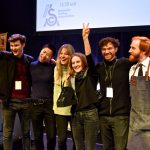

The Netherlands’ annual coffeepalooza filled factory-turned-funhouse Westergasfabriek back in March 2017. Part trade show and part barista tournament, the 2017 Amsterdam Coffee Festival had plenty of comeback stands, brands, and old hands. Yet this year also seemed to offer better gender balance among participants, even more international visitors, and an officialized partnership between coffee and cocktails via the debut Mixologists competition (look for more coverage soon!)
1) Brewers Cup Championship

The first Dutch coffee contest winner for 2017 was… a Swede. Daniella Nyström is best known in these parts as a spritely barista and expert fermenter at Amsterdam cafe Scandinavian Embassy. For the title of Dutch Brewers Cup Champion, she used a washed Ethiopian Kochere roasted by Coffee Collective in Denmark. Skål!
2) Cup Tasters Championship

The book of Esther is full of awards and distinctions—including that of four-time national latte art champion—though this time Esther Maasdam was crowned Dutch Cup Tasters Champion. She was one of 32 contenders, and the final round was a nail-biter, with the fire engine-red manicured victress beating Laurent L’Ortye by only one correct guess.
3) Jar Coffea

Glass terrariums are hardly conducive to flying off shelves, but Amsterdam design firm Pikaplant seemed to have no struggle selling its Jar Coffea. The hermetically sealed biotope contains a single specimen of coffee—it’s eye-catching and self-watering!
4) Back To Black

Just over a year since their roasting operation began, Back to Black has, contrary to the Winehouse lyrics, not found its odds are stacked. The Amsterdam cafe was showcasing co-owner and roaster Inge Bulthuis’ varied output, now prolific enough to necessitate a new second location. Meanwhile on the competition floor, barista Sybilla Jimmink won the 2017 Louis Claus Award for local coffee industry up-and-comer.
5) Dutch Hand Coffee Grinding Championship

Stooker Roasting Co was so stoked about the Orphan Espresso LIDO 3, they hosted a hand coffee grinding contest to award one to the fastest pulverizer of 30 grams of a Kenyan Kangocho peaberry. The winner came in at 25.14 seconds.
6) Barista Championship

With characteristic warmth and humility, quadruple Irish barista champ Colin Harmon conferred the 2017 Dutch Barista Champion trophy onto Merijn Gijsbers. The freelancer from Eindhoven, who works under the name het Koffiegenootschap, came in sixth in the same competition last year. He thanked his coaches Ben Morrow and Esther Maasdam for helping him make the jump and roasting the Panamanian La Berlina Geisha that did the job.
7) JADE cups

From afar, they could be cupping bowls. On closer look, the white porcelain JADE cups designed by Eindhoven-based product developer Maarten Baptist appeared in three sizes and showed striking details: a two-tone Twizzler-effect band, a single polka dot, or words parsed from a, let’s say, coffee koan.
8) Tea Jam

Kiona Malinka kept an audience rapt during her Tea Jam, a 30-minute riff on Chinese and Japanese tea cultures and how they contrast with today’s Dutch drinking practices. A remarkably attentive little boy delighted in the comparison of his jacket’s color with that of her matcha bowl. Malinka’s Crusio Tea is headquartered in Bergen op Zoom, but the brand’s classy cylinders can be spotted at specialty cafes around the country.
9) Latte Art Championship

Winning this year’s Dutch Latte Art Championship marked a trifecta for Nick Vink, who works at restaurant H32 in Oss. Like the Netherlands’ new number one barista, Vink hails from the province of North Brabant, also famously home to Kees van der Westen and the Bossche bol.
10) Holy Cannoli

It was impossible not to smile at the pink banner reading: “We understand—coffee first! But can we just say cannoli second?” The reference was to a Dutch-created video knocking American exceptionalism that went viral after the US presidential inauguration and spawned copycat clips across the Schengen Area. And turns out, the cream-filled tube-shaped pastries that Dutch company Cannoli sells B2B are tasty, too. Viva l’Olanda!
Karina Hof is a Sprudge staff writer based in Amsterdam. Read more Karina Hof on Sprudge.
The post 10 Memorable Moments From The Amsterdam Coffee Festival appeared first on Sprudge.
