Wednesday, October 4, 2017

Café de Origen: El café de Especialidad de Papua Nueva Guinea

Por muchos años, el café de Papua Nueva Guinea ha sido opacado por el de su vecino, Indonesia. Aun así, sus cultivos dulces con notas a frutas y sus condiciones ideales de cultivo están llamando la atención de tostadores y consumidores. Y con un incremento del 65% en la producción de café entre 2015 y 2016, es tiempo de poner un poco más de atención a este pequeño país de Oceanía.

Tuve la oportunidad de hablar con varios profesionales de café, quienes han liderado talleres de mejora de calidad con cooperativas de Papua Nueva Guinea con la colaboración de Fairtrade Australia New Zealand. Sigue leyendo para saber de sus pensamientos sobre la industria de café de este país, los retos que enfrenta y su futuro papel en el mercado de especialidad.

English Version: Coffee Origin Spotlight: Papua New Guinea’s Specialty Coffee

recolectando cerezas de cafe

Recolectando cerezas de café maduras. Crédito: Josh Griggs para Fairtrade Australia New Zealand

Café de Papua Nueva Guinea: Lo Esencial

De acuerdo con la Coffee Industry Corporation Ltd. (CIC), la cual regula la industria de café de Papua Nueva Guinea, hay 16 provincias productoras en el país. Sin embargo, más del 90% de la producción está en los terrenos montañosos orientales, occidentales, Jiwaka, Morobe y la provincia de Simbu.  La mayoría del café se exporta principalmente a Alemania, Los Estados Unidos y Australia.

Incluso hoy, después de que Papua Nueva Guinea haya visto un incremento del 65% en la producción, los cultivos del país son pequeños. De acuerdo con OIC, este produjo poco menos de 1.2 millones de sacos de 60 kilos en 2016 (en comparación con Indonesia que produjo poco menos 11.5 millones). Además, antes del 2016, la industria había estado en declive. Sin embargo, la industria del café afecta a muchas personas de Papua Nueva Guinea: la CIC estima que esta industria proporciona un ingreso a 400.000 hogares rurales.

José Pablo Juarez, Q grader oriundo de Costa Rica quien llevó capacitaciones de Fairtrade a Papua Nueva Guinea, subraya la importancia de entender la naturaleza tribal del país. Hay muchas culturas y más de 800 idiomas.

productores de cafe

Miembros de una cooperativa llegan a una capacitación. Crédito: Josh Griggs por Fairtrade Australia New Zealand

Producción & Procesamiento

José Pablo me dijo que “jardines de café”, no fincas, son la norma. Son pequeñas plantaciones manejadas por pequeños hogares, y  la CIC calcula que producen alrededor del 85% del café del país. Algunas de estas plantaciones, explicó José Pablo, son de hasta 30 años de antigüedad y pueden necesitar renovarse.

De acuerdo con Will Valevrde, Principal Oficial de Soporte al Productor en Fairtrade, la mayoría de los productores venden su pergamino húmedo o cerezas a los beneficios comunitarios o cooperativas.

Mis entrevistados me dijeron que las variedades comunes son Típica y Mundo Novo, junto con pequeñas cantidades de Robusta. Generalmente, Mundo Novo es asociado con Brasil, y es conocido por su perfil dulce con buen cuerpo y baja acidez.

José Pablo dijo que el proceso húmedo es común, pero no es el mismo que conocemos en Latinoamérica.  Después de que se despulpa el café, se deposita con el mucílago en cajas de madera seca, donde fermenta por 24 a 36 horas. Me dijo que esto le da al café sabores dulces y a frutas.

beneficio humedo

Un capacitador demuestra las mejores prácticas para el beneficio húmedo, en colaboración con Fairtrade. Crédito: Josh Griggs para Fairtrade Australia New Zealand.

Desafíos Logísticos y Ambientales

Hay muchos desafíos que enfrentan los locales de Papua Nueva Guinea, pero el más grande es el logístico. Scott Bennett, director de HAB Importers en Australia, trabajó en Papua Nueva Guinea en los noventa. Me dijo “no es un país fácil. Hay carreteras precarias entre las montañas, lo que hace que los envíos sean inestables”.

No obstante, el país ha tenido presencia en los mercados de Australia y Nueva Zelanda por más de 50 años. Debido a su cercanía, los envíos pueden demorarse como mínimo unas 2 semanas, reduciendo costos así como haciéndolo una región cafetera conveniente.

VER TAMBIEN: Cómo los Tostadores Pueden Construir Buenas Relaciones con los Productores

papua nueva guinea

Una de las mejores carreteras de Papua Nueva Guinea que va hacia las montañas. Crédito: Josh Griggs para Fairtrade Australia New Zealand.

Aunque, hoy la roya no es causa de preocupación en el país, hay amenazas ambientales. La broca es de actual preocupación; un escarabajo pequeño que hace su camino a través de las bayas, deposita sus huevecillos, y luego devora la cereza.  

La CIC está apelando al gobierno de Papua Nueva Guinea por un apoyo financiero para apoyar a combatir esta plaga. De igual forma, el Centro para la Agricultura y Biociencia Internacional está trabajando para prevenir y controlar su presencia, y Fairtrade Australia Nueva Zelanda están dando capacitaciones en el país a los grupos aplicantes de café certificados Fairtrade.  

Otro desafío que enfrentar los productores es asegurar la consistencia del cultivo para poder acceder al mercado de especialidad. Pero esto es un asunto ligeramente más fácil de enfrentar.

fairtrade nz

José Pablo y Will demuestran cómo hacer para atrapar a la broca en botellas de plástico, en los talleres de Fairtrade. Crédito: Josh Griggs para Fairtrade Australia New Zealand

Accediendo al Mercado de Especialidad

La industria de especialidad pareciera estar creciendo en Papua Nueva Guinea, y también hay un movimiento hacia cafés verificados y certificados, como Fairtrade Organic, Organic, UTZ y Rainforest Alliance. Las exportaciones de café certificado han aumentado un promedio de 22% en los últimos 5 años, esto de acuerdo con CIC.

Will me dijo que la consistencia es una de las claves para esto. Sin embargo, es difícil de lograr debido al tamaño pequeño de los jardines de café y la amplia distribución geográfica de las comunidades. Es común ver mezclar cerezas maduras y sin madurar o cafés mal secados.

Pero, los cafés de Papua Nueva Guinea tienen un fuerte potencial. Si se siguen buenas prácticas de  cultivo y procesamiento se podrán lograr grandes resultados.

secado de cafe

En los talleres con colaboración de Fairtrade se demuestran las buenas prácticas de secado del café. Crédito:  Josh Griggs para Fairtrade Australia New Zealand

Capacitación para Incrementar Calidad & Consistencia

Will dijo que Papua Nueva Guinea es muy diferente del resto de países productores en el sentido en que su cultura cafetera es relativamente nueva. Las prácticas de producción pueden requerir desarrollo y mejoras.

Junto con José Pablo, han estado liderando los talleres intensivos de Fairtrade de 10 días sobre el control de calidad y consistencia. Han cubierto todo desde cosecha, control de plagas y recolecta de cerezas para probar las prácticas de procesamiento, tueste y catación. Es parte de una misión ayudar a los productores a entender la demanda del mercado y crear un sistema orientado a la calidad.

El trabajo de campo se enfocó en la importancia de la consistencia e incluyó tratamientos de calidad del suelo, salud de plantas y manejo, calidad del agua, métodos de control de pestes y niveles óptimos de madurez de las cerezas. “Con mejores prácticas en el campo y la transferencia de conocimiento, podemos alcanzar estandarización en el producto”, dijo José Pablo.

despulpadores de cafe

Molock Terry, Gerente de Unen Choit Cooperative, toma notas sobre el uso de despulpadoras mecánicas. Crédito:Josh Griggs para Fairtrade Australia New Zealand

Se iniciaron cuatro proyectos de beneficios húmedos en las cooperativas (usando Beneficios Húmedos de Café Ecológicos de Penagos ) junto con camas de secado, habitaciones de almacenamiento y equipo para controlar y monitorear la humedad del grano. Como parte de los talleres, las cooperativas ensayaron 4 métodos diferentes de procesamiento:

  • Procesamiento tradicional de Papua Nueva Guinea: después del lavado, el café se fermenta en seco por 24 horas en cajas de madera y luego se seca.
  • Inmediatamente de lavar el café se envía a las camas de secado sin fermentar.
  •  Se deja cerezas reposar por 24 horas antes del procesamiento y secado.
  • Se deja en agua el café despulpado por 24 horas antes de secarlo.

Esto les permite a los productores empezar a analizar el impacto de diferentes métodos de procesamiento y entender la importancia de asegurar la calidad y la consistencia.

catacion de cafe

Productores catan café para probar las diferencias en el procesamiento. Crédito: Josh Griggs para Fairtrade Australia New Zealand

Luego, establecieron un laboratorio de control de calidad con pequeñas tostadoras de muestras y equipo de catación. Hubo ejercicios teórico-prácticos sobre el análisis de granos verdes, defectos del café, clasificaciones, mejora de la calidad, tueste, y cata de café. Will me dijo que la reacción de los aprendices fue asombrosa. Esto les demostró que todo los pasos en la cadena del café tienen un impacto directo en la taza final.

tostadora de cafe

Los aprendices tuestan muestras para la sesión de catación. Crédito: Josh Griggs para Fairtrade Australia New Zealand

Los Resultados Destacan el Potencial del Café

Las capacitaciones se diseñaron para abrir paso al potencial del café de Papua Nueva Guinea, y los resultados iniciales sugieren que es un éxito. Después de la capacitación, las muestras se cataron localmente y por importadores en Australia y Nueva Zelanda.

“Los resultados de hecho fueron positivos”, dijo José Pablo. “Nueve de las muestras tuvieron un puntaje de 80 o más”. Will agregó que encontró notas muy complejas en el momento de la catación: albaricoque, frambuesa, manzanas verdes, caramelo y ciruela, junto con una acidez floral y aroma dulce.

Como algo importante, Will y José Pablo destacaron lo preparados que quedaron los productores locales por esta capacitación para trabajar hacia las demandas del mercado de café de alta calidad. “Podría ser algo cultural, pero la gente aquí realmente quiere trabajar …” dijo José Pablo. “Hay un sentido de comunidad y el deseo de ser mejor”.

Scott Bennet de HAB Importers, Australia, me dijo que la formación y la educación son “una parte importante de la ecuación del café” para todos en la cadena de suministro. Los agricultores aprenden más, mejoran y eventualmente ganan más dinero. “Si invertimos nuestro dinero en países como Papúa Nueva Guinea, estamos ayudando a los agricultores y contribuyendo al desarrollo del país”.

carretera de papua nueva guinea

La carretera de tierra que conecta a Lae y la cooperativa Neknasi ofrece una vista de las tierras altas occidentales de Papua Nueva Guinea. Crédito: Josh Griggs para Fairtrade Australia New Zealand.

Los cafés de Papua Nueva Guinea mantienen una gran promesa: cultivos dulces y con notas a fruta trabajados por pequeñas comunidades. Hay muchos desafíos por enfrentar pero también grandes razones para ser optimista sobre el futuro de este café de origen. La conciencia creciente de la demanda del mercado entre los productores, la formación futura en calidad por Fairtrade y la inversión de la comunidad internacional del café deberían combinarse para actualizar los crecientes niveles de calidad.

Escrito por Gisselle Guerra

Ten en cuenta: Este artículo ha sido patrocinado por Fairtrade Australia New Zealand.. Si estás  interesado en saber más sobre su trabajo en Papua Nueva Guinea, o involucrarte, por favor envíales un correo electrónico.

¿Quieres Seguir Leyendo Artículos Como Este? ¡Suscríbete Aquí!

The post Café de Origen: El café de Especialidad de Papua Nueva Guinea appeared first on Perfect Daily Grind.


from RSSMix.com Mix ID 8200593 https://www.perfectdailygrind.com/2017/10/cafe-de-origen-el-cafe-de-especialidad-de-papua-nueva-guinea/


Tuesday, October 3, 2017

Chicago: Learn How To Pressure Profile On A Modbar This Thursday

The Modbar is more than just sleek minimalism, you know. It’s also got some pretty advanced pressure profiling technology hiding just below the surface. It’s basically Hemingway’s Iceberg Theory but for espresso. But much like an 18-foot marlin on the line of an aging fisherman, the pressure profiling on the Modbar is a beast not easily tamed. If you live in Chicago, though, help is on the way. This Thursday at Café Integral, Modbar’s own Will Frith will be giving a presentation on the undercounter espresso system’s pressure profiling.

Put together by New Gotham Coffee Community to celebrate five years of Café Integral inside the Freehand Hotel, the event centers around a presentation by Frith, detailing some of the different curves that can be programmed into the Modbar. But this is an anniversary party after all, so it can’t just be educational. Following the talk, a latte art throwdown will go down, on Café Integral’s Modbar of course.

The Pressure Profiling presentation begins promptly at 4pm and is free for all to attend. The throwdown starts around 6:30pm and costs $10 to enter, which can be done the day of. For more information, visit New Gotham’s official website and RSVP via the Facebook event page.

Zac Cadwalader is the news editor at Sprudge Media Network.

*top image via New Gotham Coffee

The post Chicago: Learn How To Pressure Profile On A Modbar This Thursday appeared first on Sprudge.


from RSSMix.com Mix ID 8200593 http://sprudge.com/chicago-learn-pressure-profile-modbar-thursday-126673.html

In Spain’s Basque Country, Bihotz Cafe Brings Specialty To Bilbao

If there’s just one Basque word you remember, let it be bihotz. That means “heart” in the language of an estimated million people living across northern Spain, a swath of southwest France, and even Boise, Idaho—and it is the name of the one cafe not to miss in Bilbao.

Craft-beverage-crazed couple Cristina Mairal and Pedro Sainz opened Bihotz in December 2014. The two Spaniards moved to the Basque Country’s capital to “start a new life” and because “we love the city,” says Mairal. Uncoincidentally, they met in the nation’s specialty coffee epicenter, Barcelona, where Sainz regularly patronized the first iteration of Satan’s Coffee Corner and eventually found himself taking barista lessons from owner Marcos Bartolomé.

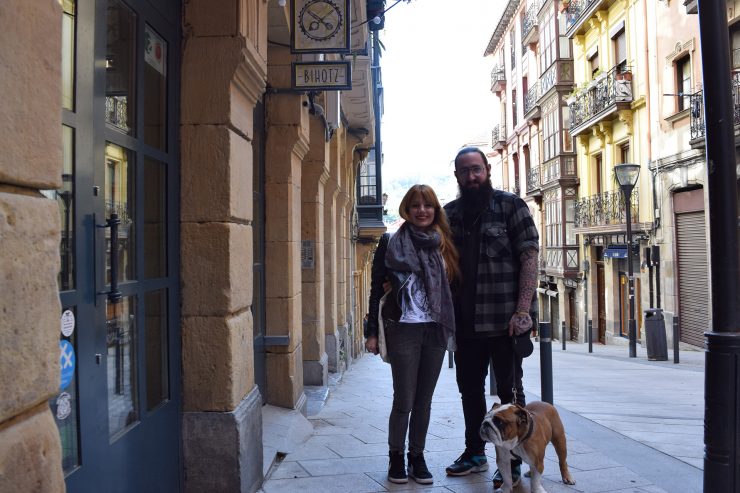
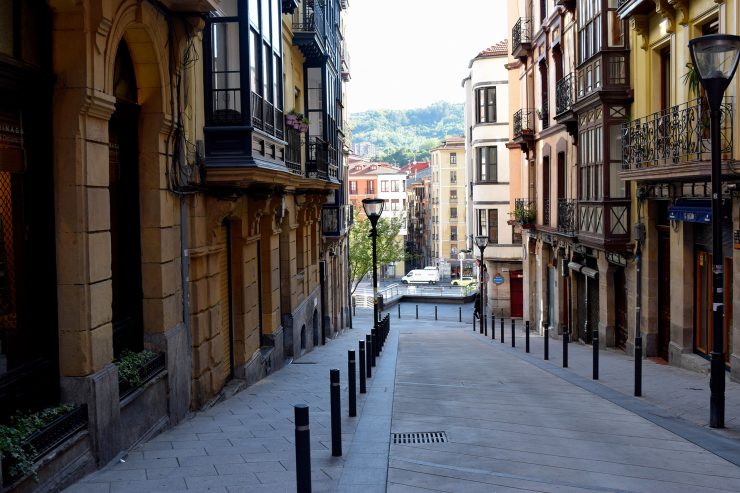
Bihotz’s façade blends in with the terracotta-toned buildings of hilly San Francisco. The gentrifying neighborhood is a 15-minute walk from Bilbao’s medieval quarter, over the Nervión river, though away from the glare of the Guggenheim Museum. A modest blade sign hangs above the shaded street to advertise the cafe, its logo a chainring encircling two crossbones-style portafilters.


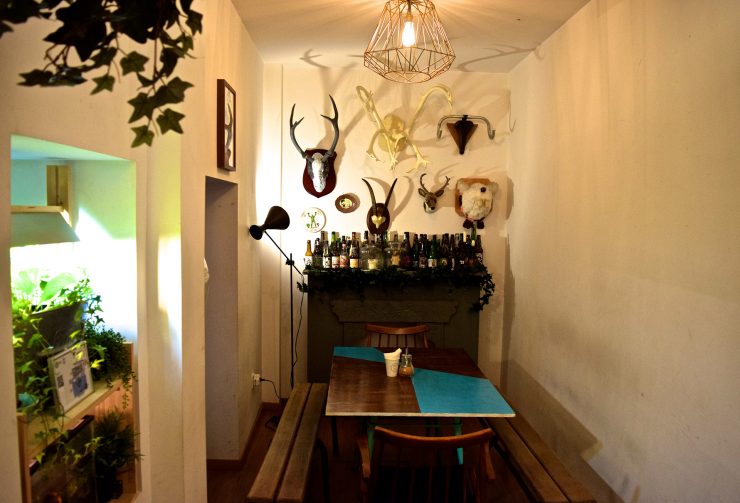
Inside, Bihotz is snug, though the vintage-schoolhouse tables and seats are comfortably mixed and matched. Sainz is an avid cyclist, and bike parts and tools are incorporated like readymades. A nook with a communal table and a mantle topped by faux trophy heads could be the set of a Michel Gondry dreamscape. Décor notwithstanding, Bihotz sometimes struggles to attract natives the way it does expats and blogged-in tourists.

“It’s hard for people in the area to [appreciate] what specialty coffee means at the moment. They like coffee and they know something different happens here, but not many people know exactly what they are having,” observes Mairal.

Acclaimed Spanish specialty roaster Right Side Coffee provides the two or three weekly changing single-origin espressos. Framed by the roaster, a featured profile description is proudly displayed atop a Nuova Simonelli Mythos One grinder. Beside it, off-bar, is a La Marzocco Linea PB, its two groups facing towards the customers.

“We’ve got it outside the bar so they can see how we work with it,” Mairal notes of the equipment’s placement. “Sometimes we speak to the people. When they ask for a coffee, we spend two, three minutes explaining.”

For filter, Bihotz relies on Sakona Coffee Roasters, established in 2016 by Spanish barista champion Javier Garcia in the Basque town of Irún. V60 is the preferred method, though such orders remain scarce.

“For Bilbao, doing five, six a week is quite gooood,” Mairal laughs. “We’re happy that we can make [filter coffee] at least once a day.”

Plus, Bilbaínos are inclined to have a quick morning coffee and pastry at their local bar, adventuring to other watering holes after work. This reality dictated Bihotz’s hours, opening 3 PM most weekdays and 11 AM on weekends (though closing at 10 or 11 PM). Moreover, it compelled the couple to begin purveying another long shared love: craft beer.

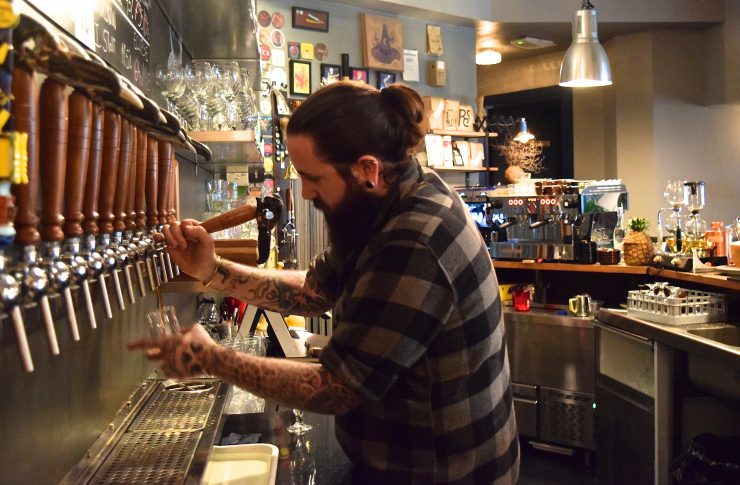
Turnover in drinks is currently 70% beer and 30% coffee, estimates Sainz. There are six taps, rotated every few days, and 50 different bottles imported from as far away as San Diego, USA (Pizza Port), and as nearby as Hernani, Spain (Basqueland Brewing Project).

But for those seeking still more craft beer, the fiercest competition may well be Mairal and Sainz’s second business, Penguin Bar. Opened in April 2016 in Indautxu—a couple neighborhoods west and levels of chichi up from Bihotz—Penguin has 16 taps, up to 80 bottles, and coffee.

The coffee program is guided by the same principles and suppliers as Bihotz, though each bar tries to offer distinct origins. Penguin is also larger and operates until 2 AM several days a week. Illustrations of penguins vivify the dark walls and 3D-printed penguin skulls cap the tap handles. The atmosphere is Audubon goth-punk, in a good way.

Asked about selecting beers versus coffees, Mairal explains: “The variety of beer styles is massive so it’s a bit harder work, but the concept is the same. We know it’s fantastic ingredients, it’s been worked with love, and [the producers] live for what they do.”

She adds: “It’s the concept we have for our business, and that’s what we want.”

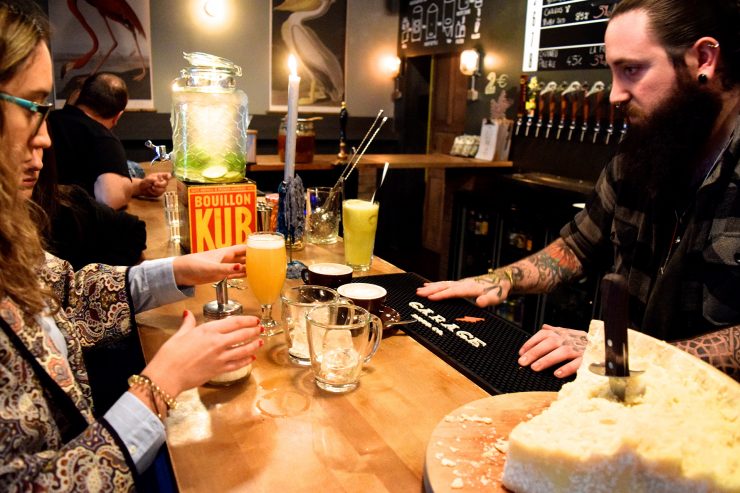
So yes, when in Bilbao, for your new-wave coffee fill, visit Bihotz. But then consider a chaser at Penguin. It’s a rare bird, this venue serving up seriously curated craft beers on the same surface to so heartfeltly handle a La Marzocco Linea PB, two Kyoto-style syphon brewers, and—this is Mediterranean Europe—a huge slab of Parmesan.

Bihotz Café is located at 6 Calle Arechaga, Bilbao. Follow them on Facebook and Instagram. Penguin Bar is located at Gregorio de la Revilla 8, Bilbao. Follow them on Facebook and Instagram.

Karina Hof is a Sprudge staff writer based in Amsterdam. Read more Karina Hof on Sprudge. 

The post In Spain’s Basque Country, Bihotz Cafe Brings Specialty To Bilbao appeared first on Sprudge.


from RSSMix.com Mix ID 8200593 http://sprudge.com/bilhotz-cafe-bilbao-121728.html

Colectivo Coffee Finds A Home In Chicago

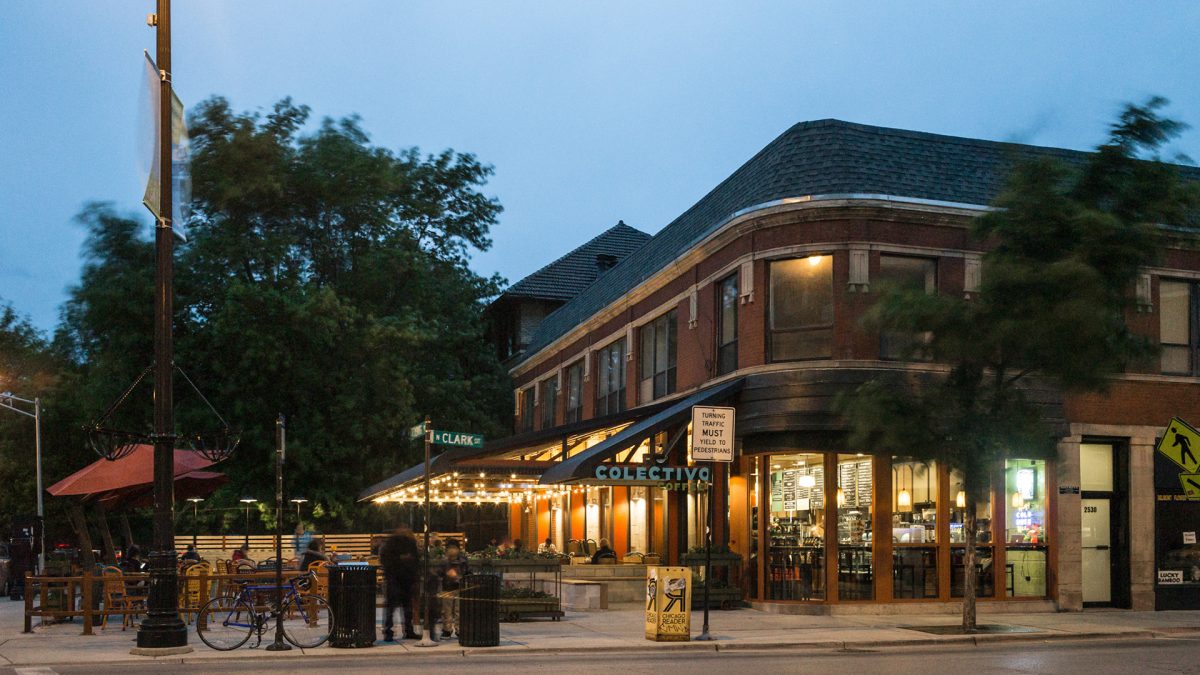
Creating a cafe that’s mostly outdoors in Chicago, a town that spends approximately half its year shivering, may seem counterintuitive to most people. But cold-weather veterans Lincoln Fowler and Scott Schwebel of Milwaukee-based Colectivo Coffee Co. are not most people. “We’ve never had an idea that we couldn’t complicate,” says Fowler, who founded the company, known then as Alterra Coffee, with partners Ward Fowler and Paul Miller in 1993. Their first cafe opening beyond the jokingly-disputed Wisconsin-Illinois border is a roomy Lincoln Park indoor-outdoor space meant to continue the vibes of coffee, community, and outdoor gathering the company’s made work so well in Milwaukee and Madison—despite the prevailing weather.

The location realizes years of neighborhood research, operations planning, and a well-adhered-to expansion plan. “We weren’t even looking into Lincoln Park,” says VP of Brand and Marketing Schwebel, who says it was the space itself that found them. “We stood at the corner and asked, ‘Can we feel it?’”Schwebel says. The answer was yes.

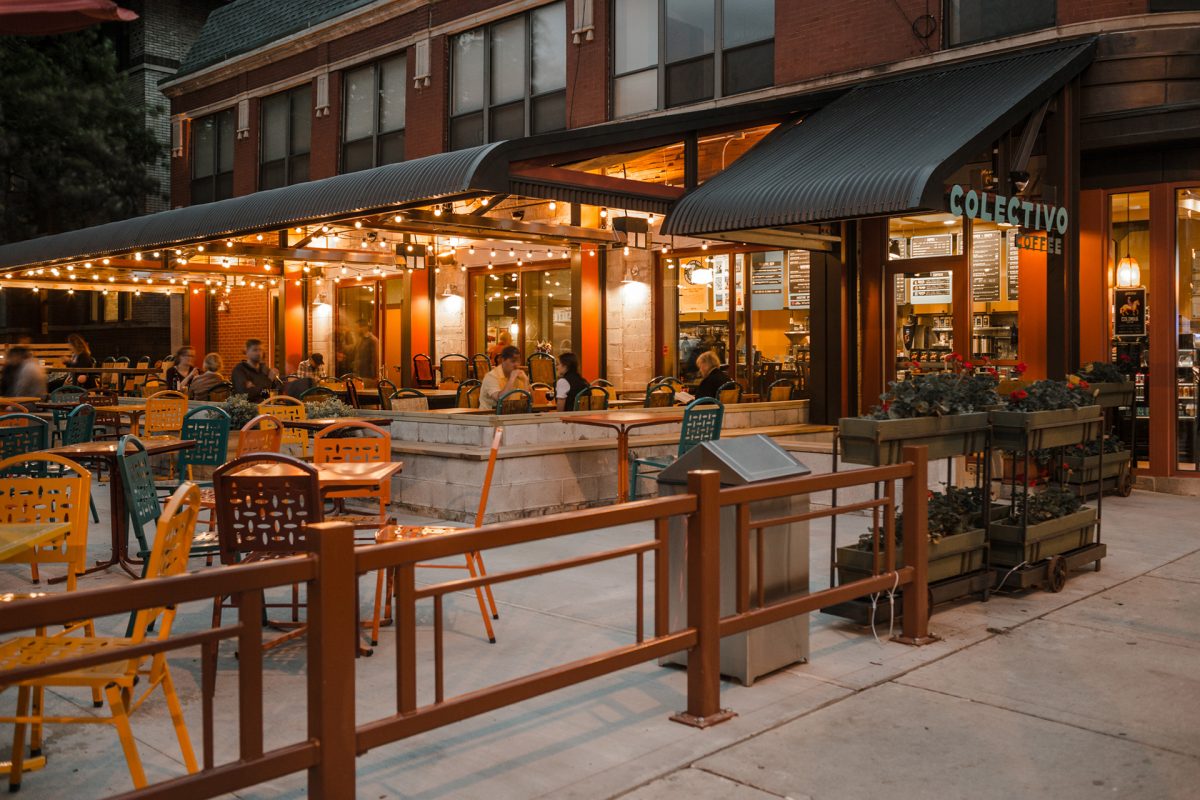
The location was a shuttered Einstein Bros Bagels and its accompanying parking lot. In it, the Colectivo team saw potential to create an oasis-like feel on the busy Clark Street corridor a mile or so south of Wrigley Field. Though retail shops, restaurants, and sports bars are legion here, good coffee is considerably less represented. But it seems the Colectivo touch—a knack for bright and colorful patio spaces where customers can gather around fireplaces between darting in and out for continued refreshment—works here. Permanent red umbrellas cover an array of orange tables and red chairs—the funky and fun designs feel alive and intriguing. The fireplace, with an open flame and bench seating, is supremely cozy. Three-season heated awnings accompanied by wood partitions provide shelter from the sun and rain. Housed inside the awnings are huge overhead heat lamps to ward off the cold, a tactic not uncommon in Milwaukee. Though newly opened, the handmade, rustic design of the space delivers the feeling of a weathered and cherished locale.

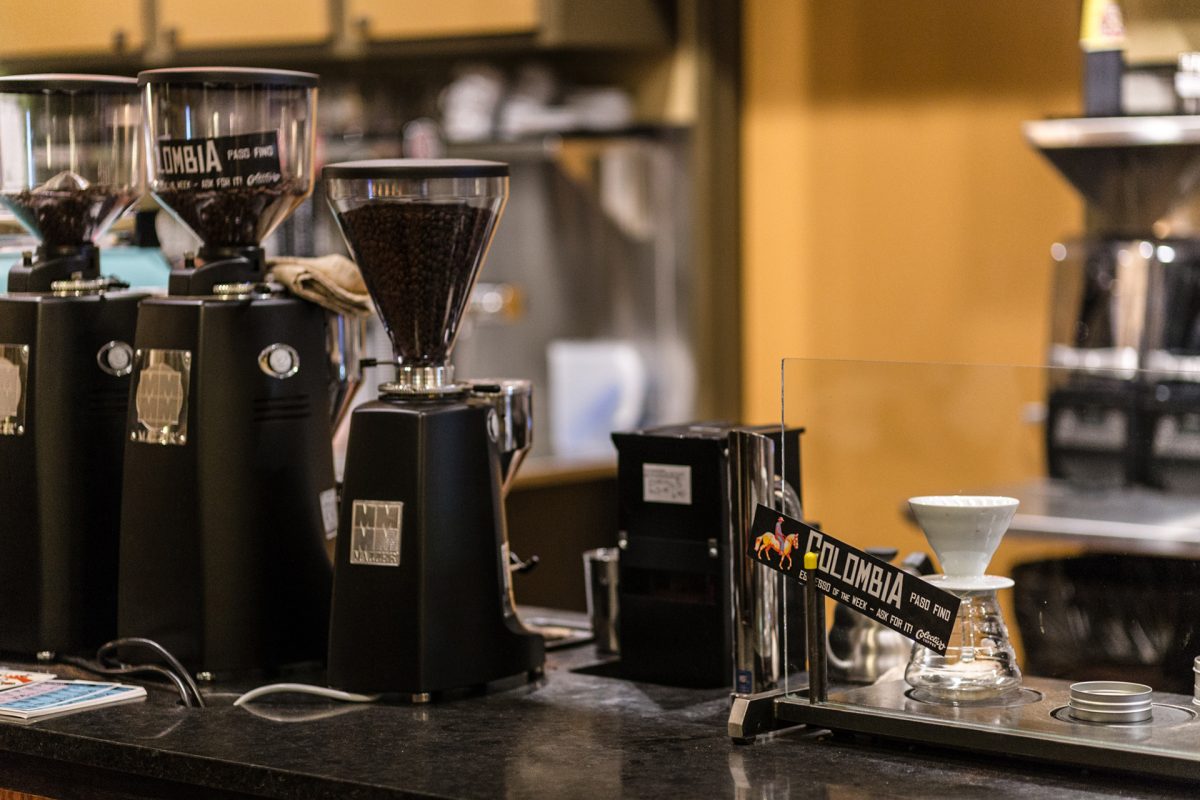
And then there’s the inside. Once you pass through the burnt-orange front door, the warming aroma of Colectivo’s Milwaukee-roasted coffees permeate the shop, in a range from pleasing blends to feature-farm single origins. Saunter up to the bar and be greeted by a multi-Hario pour-over station, suite of Mazzer grinders, and a powder-blue La Marzocco espresso machine. Ready-to-go coffee is served up in FETCO XTS brewers.

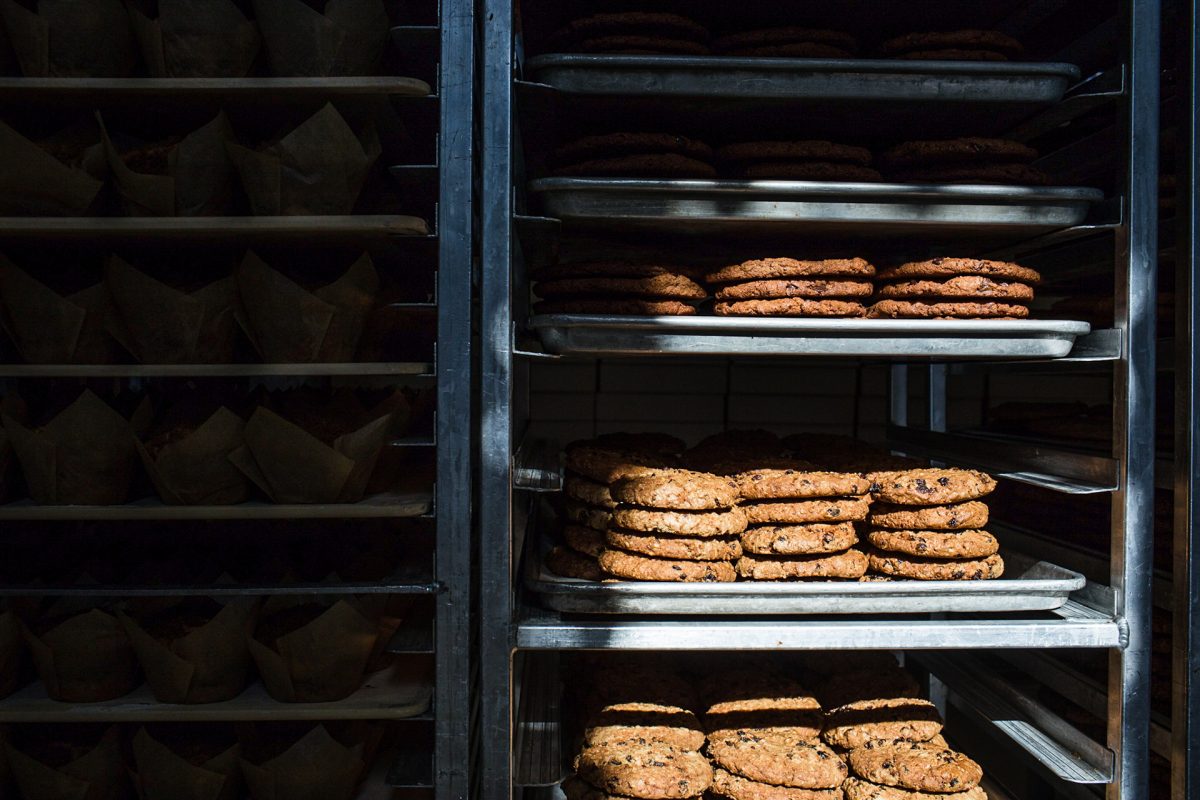
Those paying close attention may recognize Troubadour pastries from shops like The Goddess and The Baker, among others, across Chicagoland. Scones, bread, and ready-made ingredients are transported from Bay View, Wisconsin, prepared with the same attention to detail and craft that one expects from the quality pours happening at the bar. Alongside sparkling and regular water on tap, Colectivo’s popular breakfast burritos with citrus-twisted salsas are available in pesto or chorizo, and everything from protein bars to gluten-free options to blueberry muffins is delivered fresh from the Colectivo commissary kitchen on the daily. Choosing regional purveyors, for items like Door County cherries and Wisconsin-German sausages and cheeses help ease the heavy logistics of keeping this food delivered on-time and fresh.

The cafe, whose name is inspired by the colorful buses that pick up and transport workers in South America, finally opened its doors this spring—roughly six months after the company anticipated. Its dimensionality in look, feel, and storytelling will be trialed in the Windy City through future shops to come—Fowler says two more shops are already in the works, including one in the Logan Square neighborhood. And while the City of Chicago can be a notoriously difficult place to open up shop—delays are frequent, special requests often collide with antiquated regulations—Colectivo’s mission-first coffee mentality, ambitious design, and passion for community have seen them through this opening with flying colors. Those—and maybe a little no-nonsense, weather-hardy Wisconsin determination.

Colectivo Coffee is located at 2530 North Clark Street, Chicago. Visit their official website and follow them on Facebook, Twitter, and Instagram.

Adam Arcus (@aarcusphoto) is a journalist and photographer based in Chicago. Read more Adam Arcus on Sprudge.

The post Colectivo Coffee Finds A Home In Chicago appeared first on Sprudge.


from RSSMix.com Mix ID 8200593 http://sprudge.com/colectivo-coffee-chicago-120594.html

Monday, October 2, 2017

Starting Out Of State With Denver’s Penrose Coffee

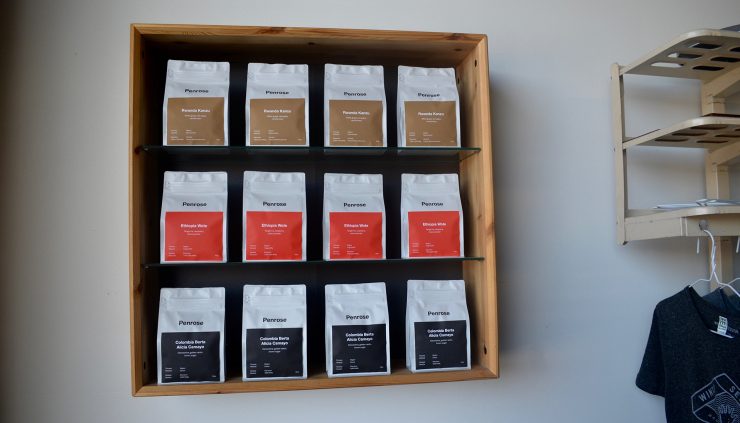
Penrose Coffee’s approach is a little unorthodox: rather than attempting to compete in Denver’s saturated coffee market, its owners, Dustin and Samantha Fuchtman, fancy the business a roaster for out-of-state cafes.

“I am the coffee guy and [Samantha] is a little bit more behind the scenes,” Dustin Fuchtman says. “She has a background in tech web stuff, so she built out our website and did all our design. We both have an eye for design, but she’s the one who knows how to implement that.”

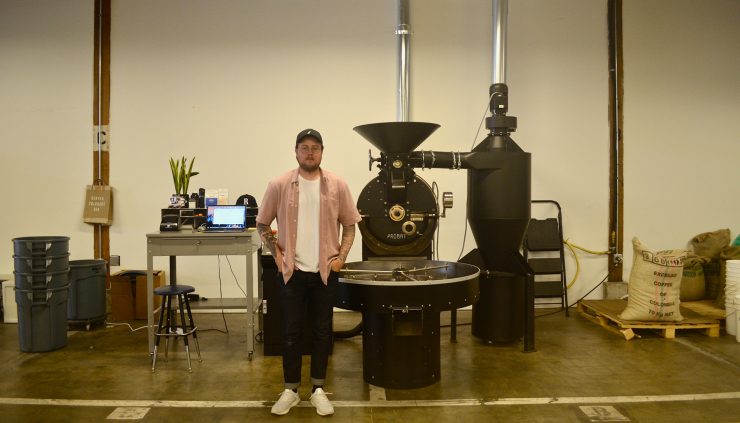
Dustin Fuchtman

Located on the northeast side of Denver, Penrose officially opened at the beginning of 2017. The Fuchtmans is a business partnership that plays perfectly to their coffee and design strengths.

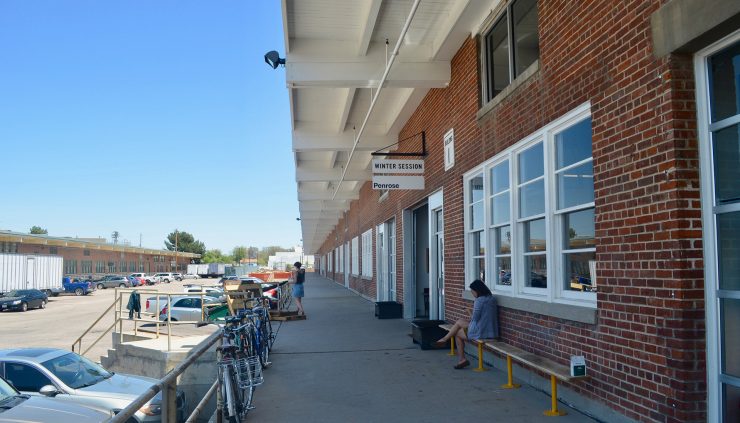
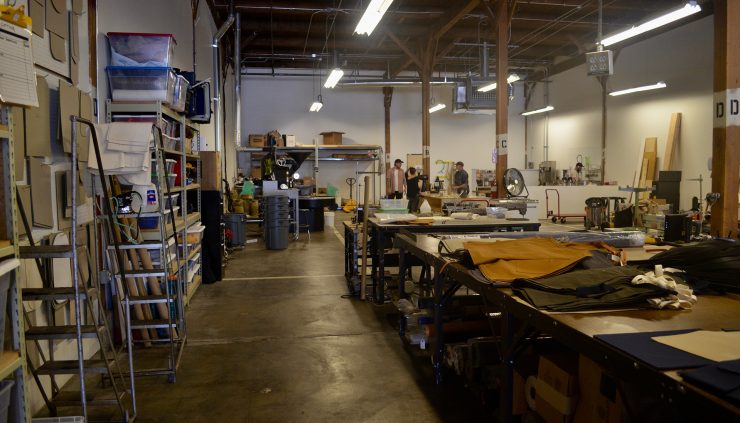
The roasting warehouse is shared by Penrose and Winter Session, a hand-stitched denim and leather goods company—canvas aprons destined to be worn by baristas and bartenders sit on a large worktable, which is flanked by green coffee buckets that line the floor just a few feet away.

Penrose’s roasting setup is barebones and reflective of the company’s youth. There’s a 15-kilo Probat roaster, a corner with a La Marzocco GS3 espresso machine and various brewers for quality control, bags of green coffee sitting on shelves, a Mahlkönig EK43 grinder, and some cupping and bagging equipment. It’s a comfortable space, with high ceilings and concrete floors, friendly roommates, and room for growth.

Dustin worked at Novo Coffee, Happy Coffee, and Middlestate—including in the company’s men’s apparel shop and coffee bar, Steadbrook—before deciding to take the plunge into roasting himself. But the goal for Penrose is focused on offering their coffees to out-of-state cafes, rather than those exclusively in Denver—at least, that is, before they have an opportunity to open a cafe of their own. 

“That’s the goal: do wholesale for now and work into providing coffee for my own cafes,” Fuchtman says. “But right now, if you look at the model of a multi-roaster cafe, it’s usually one or two local roasters offered and then they cycle through out-of-state coffee, and I’m just trying to be that for Denver for other states.”

With a number of already-established roasteries operating out of Denver, it may be a challenge. But Penrose, driven by an emphasis on beautiful design, knows the lane it wants to be in. Where they’ll go is unknown, but maybe for a young roastery that’s enough. 

Ben Wiese is a freelance journalist based in Denver. Read more Ben Wiese on Sprudge.

The post Starting Out Of State With Denver’s Penrose Coffee appeared first on Sprudge.


from RSSMix.com Mix ID 8200593 http://sprudge.com/penrose-coffee-denver-121811.html

“More Than Just A Milk Girl”—Esther Maasdam Of Manhattan Coffee Roasters

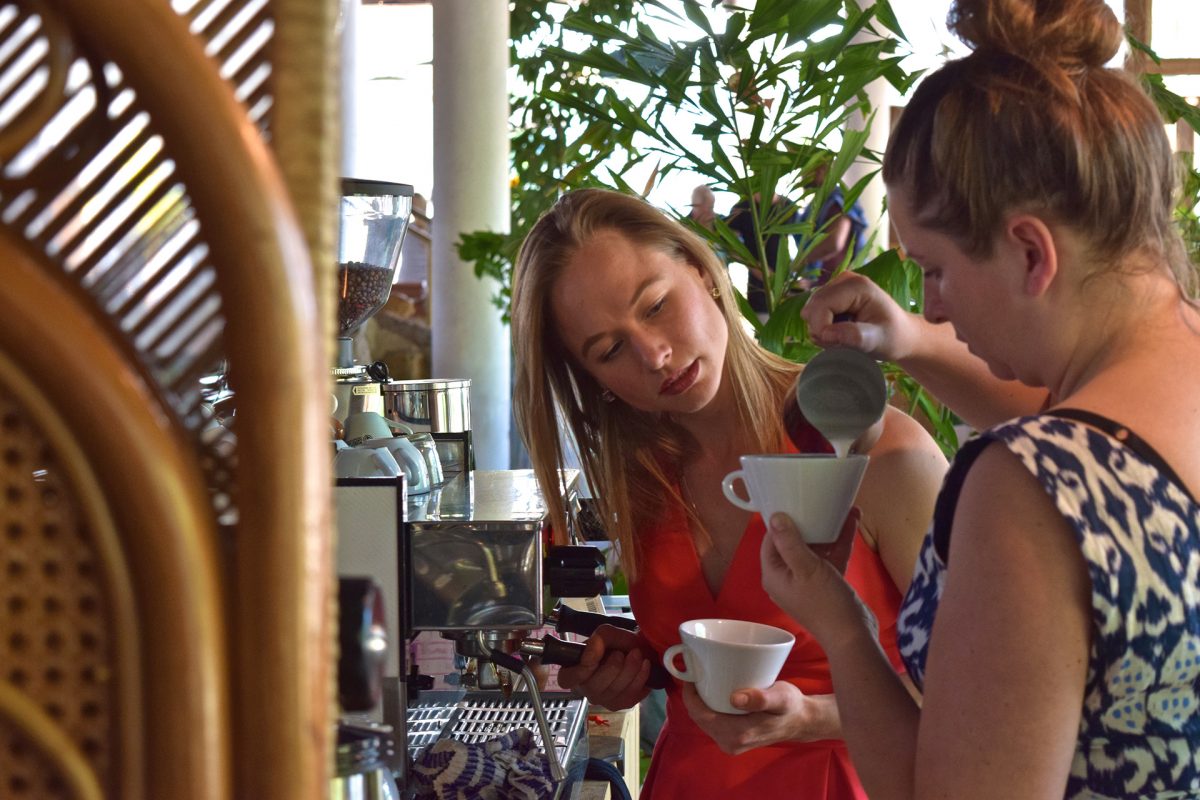
2017 has been a stellar year for Esther Maasdam. In March, the multi-title-holding barista champion, international consultant, and all-round coffee events stuntwoman was crowned Dutch Cup Tasters Champion. This was a new match to master for Maasdam, whose name is so often conjured with her ranking as Dutch Latte Art Champion (from 2011 through 2014, placing fifth in the world in 2013) and her current title as Global Latte Artist for Le Méridien.

But of the tasters competition, says Maasdam, “I loved winning it mainly because people were like, ‘Oh, so you’re more than just a milk girl.’”

With 13 years of professional experience in the coffee industry, including as an authorized SCA trainer, the 31-year-old is definitively fluent in languages other than lactose. And although she didn’t reach the finals at the World Cup Tasters Championship in Budapest this past June, her participation in the category was a harbinger for the exciting new territory she is charting.

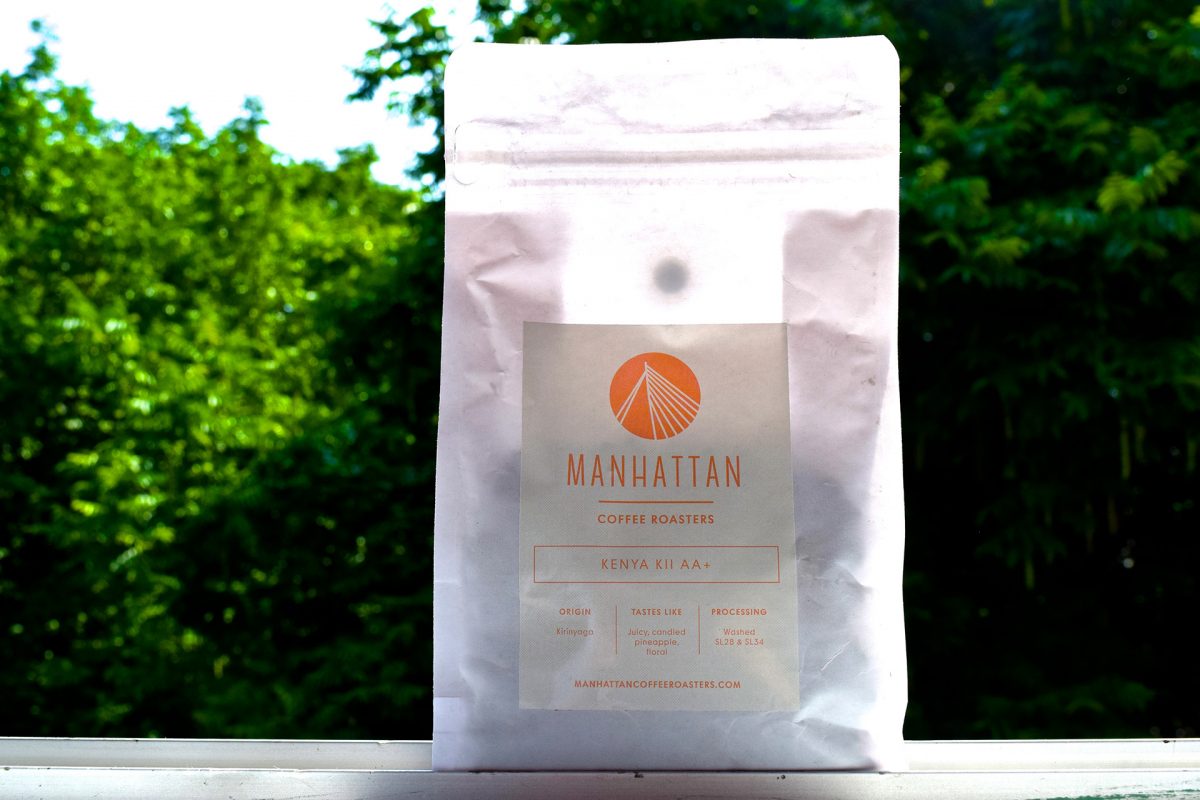
These days, Maasdam is cupping coffee with revived zeal—and consequence. In January, she and Australian import Ben Morrow, her partner in life and now business, launched Manhattan Coffee Roasters. Do not be misled by the name: the roastery is located in the Netherlands’ modern port city of Rotterdam.

“The nickname of Rotterdam is ‘Manhattan on the Maas,’” explains Maasdam, referencing the large river that empties into the North Sea. “So it’s a nod to that but saying at the same time that we want to be international; we don’t want to be Rotterdam-only focused.”

Plus, she notes, “It’s gotta be a name that Ben can pronounce, being his own business.”

Maasdam and Morrow

Broadmindedness and empathy are traits Maasdam possesses in quantity, so it is unsurprising that she considers her foreign-born boyfriend’s cultural comfiness. Long known as the “latte art cowboy” and, more recently, the two-time winner of Coffee Masters, Morrow was a barista at St. Ali in Melbourne for five years. The 28-year-old moved to Europe in August 2016, ready for an off-bar coffee job and a more in-person relationship (and in the meantime seems to have gotten the hang of Dutch phonology).

The two became acquainted at a side smackdown event during the 2014 World Latte Art Championship in Melbourne.

“We basically started smack-talking, and he was like, ‘I’ll kick your ass,’ and I was like, ‘No, I’ll kick your ass,’” laughs Maasdam. For more than two years, the Rotterdammer and the Port Hedland native maintained a long-distance relationship. They rendezvoused as frequently as possible at barista contests around the globe. Maasdam says she has “always been competitive,” a jock ever since her days of competing in the 400-meter hurdles at the national level.

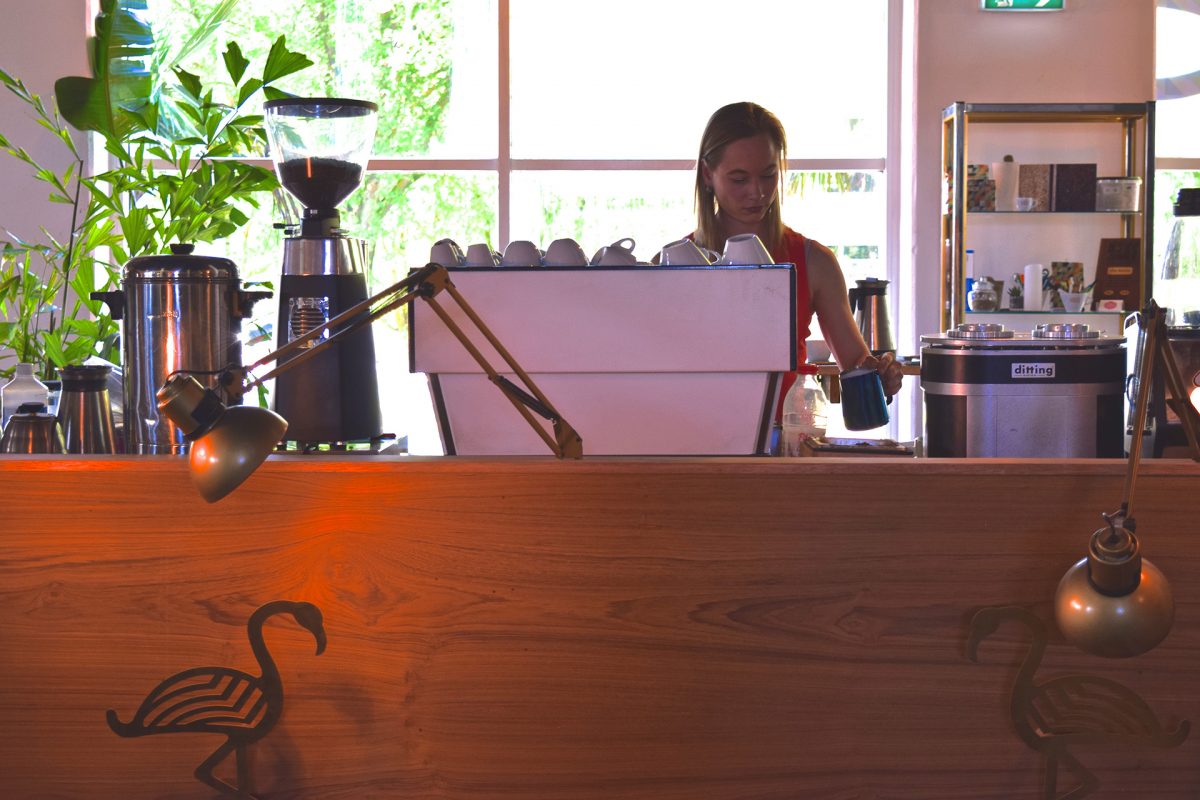
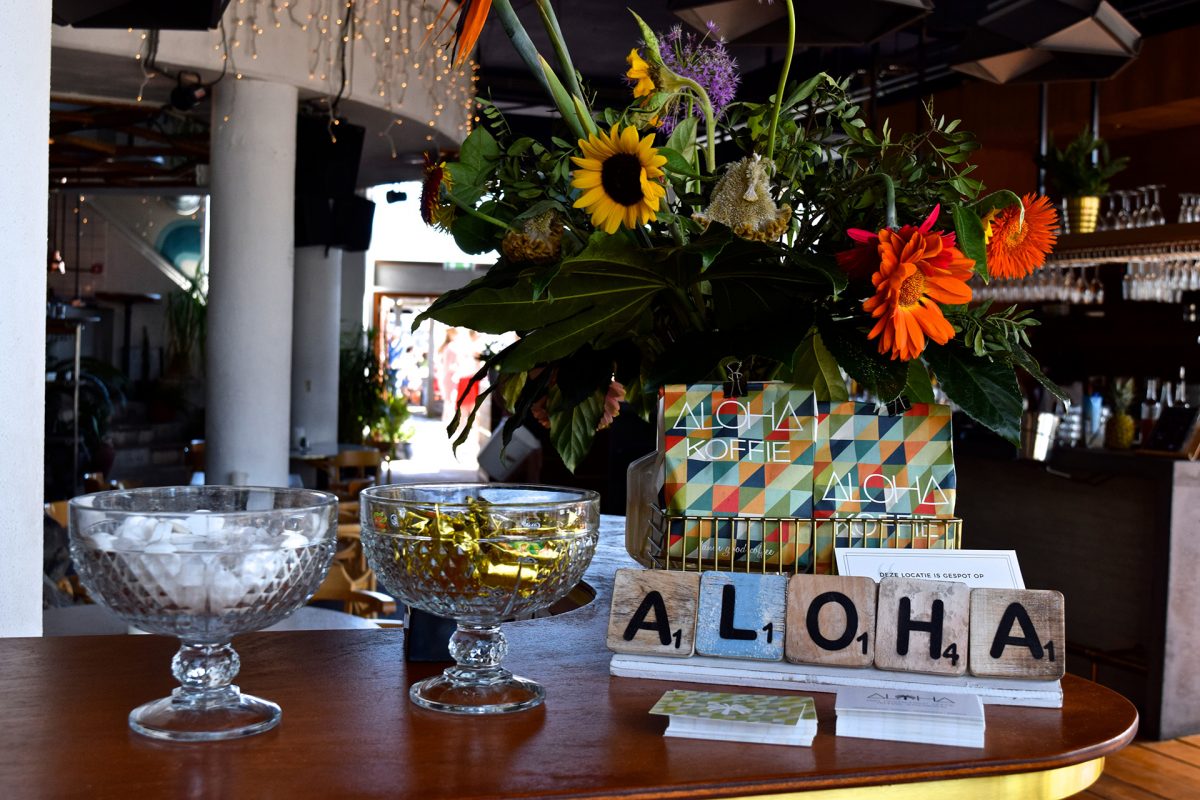
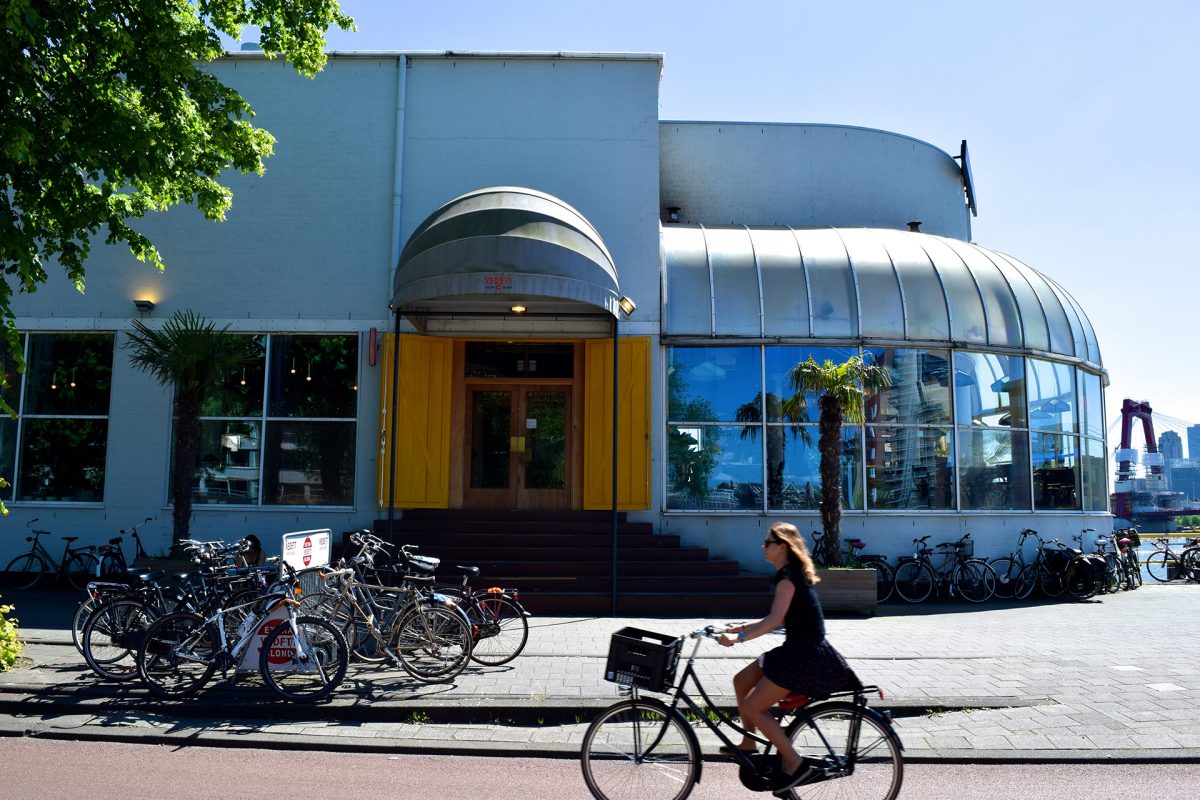
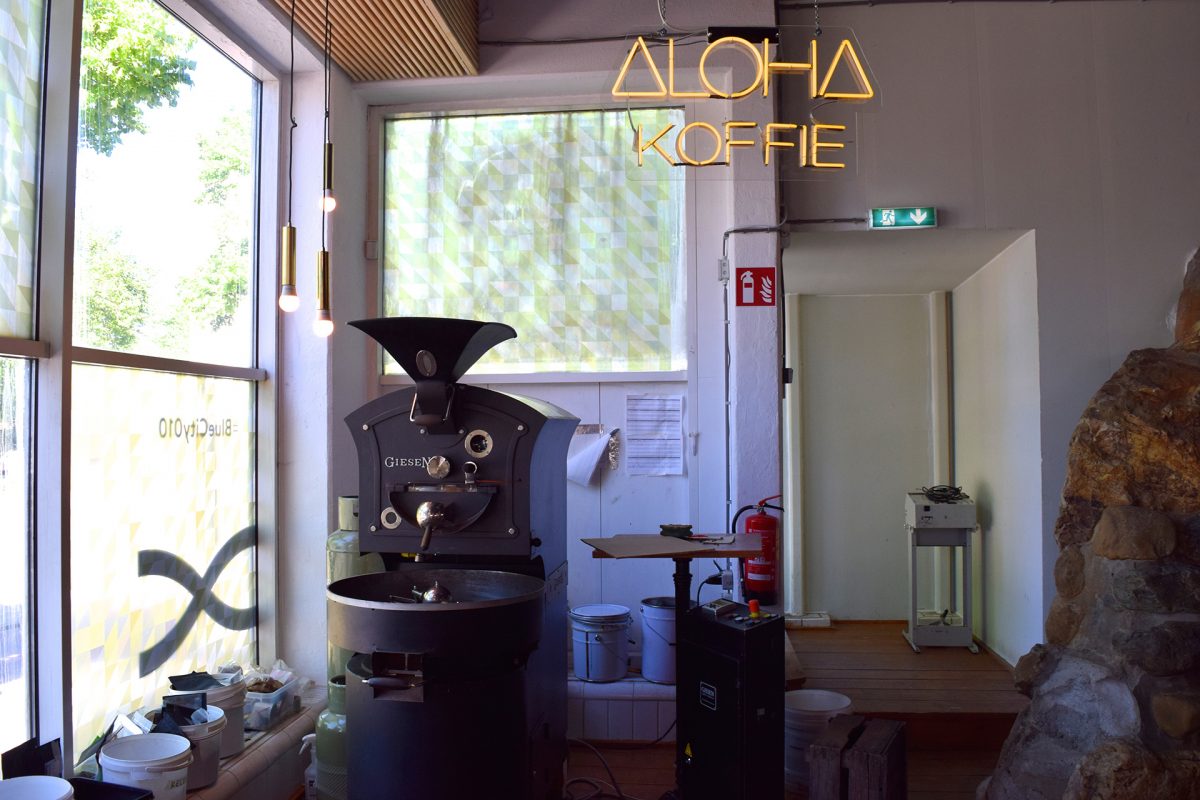
Today, the transnational duo’s supranational enterprise has a surprisingly tropical headquarters, in the front of the house at Aloha restaurant. The lively space is part of Blue City, a hub for circular economy startups and urban farming projects—most famously, growing oyster mushrooms from coffee grounds. Formerly the beloved Tropicana waterpark, the venue has a wrap-around back terrace overlooking the Maas River and its iconic bridges. Inside, the furnishings are offset by ornamental stone walls and serpentine water run-offs, long dry. A seal statue still balances a beach ball on its nose, right behind Manhattan Coffee Roasters’ equipment. Aloha received a local award for Best Coffee Concept in 2016 and had been roasting its own beans under the direction of Jamie Jongkind. After he left to work for Nordic Approach, Maasdam and Morrow moved in, agreeing to roast all the coffee Aloha serves and sells in return for use of the Giesen W6 and space for their own roasting, cupping, and training sessions.

Since their founding, Manhattan Coffee Roasters has seen a flurry of activity. The brand-new company was enlisted to roast for Daniella Nyström, a barista at Amsterdam’s Scandinavian Embassy who represented the Netherlands at the World Brewers Cup, as well as for Merijn Gijsbers, the Dutch barista champion. Besides providing Gijsbers with the Panamanian La Berlina Geisha that let him cinch the national title, Maasdam and Morrow served as his coaches and will be doing the same as he prepares for November’s WBC in Seoul.

As for the spread of their brand, the couple is more concerned with quality than ubiquity.

“I don’t think we’re gonna see ourselves in every cafe [in the Netherlands] probably, but to be able to get in some great cafes all over Europe, that would be fantastic,” says Maasdam. “We mainly wanna focus on high-end coffees. There’s a fair amount of specialty roasters in the Netherlands that are doing really great, but everybody is really sticking to those base-level coffees.”

Recipients of Barista Hustle’s Superlatives subscription got an early taste of Manhattan Coffee Roasters in June. That month at the World of Coffee, Morrow was handing out very fresh, juicy calling cards in the form of their Kirinyaga Kii, a washed SL28 & SL34 varietal supplied by 32Cup.

Maasdam and Morrow have been happy to find they are as calibrated professionally as they seem to be personally. “We went through this period of time where we were discovering where our palates were and if we were in agreement. And we didn’t know at the start if we were going to be, if that was gonna work out,” says Maasdam. “But every time we’ve had a [cupping] table, we’ve been in super agreement on which coffees we like. We’re at the point where we trust each other. If either one of us says, ‘This is great; we have to buy it,’ the other one’s like, ‘OK.’”

At home, the couple lives with an adopted cat, Geisha. She was named by her previous owner not after the coffee, but rather the variety of Japanese entertainer. Maasdam and Morrow take turns making the morning coffee, mostly using Kalita or V60 preparation methods; the individual who does not get out of bed to brew gets to select the beans. On an average day, they ride their bikes together to Aloha.

Although Maasdam happens to have studied graphic design, she asked her friend Jessica de Ligt of Goddog to create the Manhattan Coffee Roasters logo. In clean white lines over a salmon-colored circle, it depicts Rotterdam’s Erasmus Bridge. Nicknamed The Swan, the part cable-stayed, part drawbridge is a flexible, elegant manner to cross the Maas.

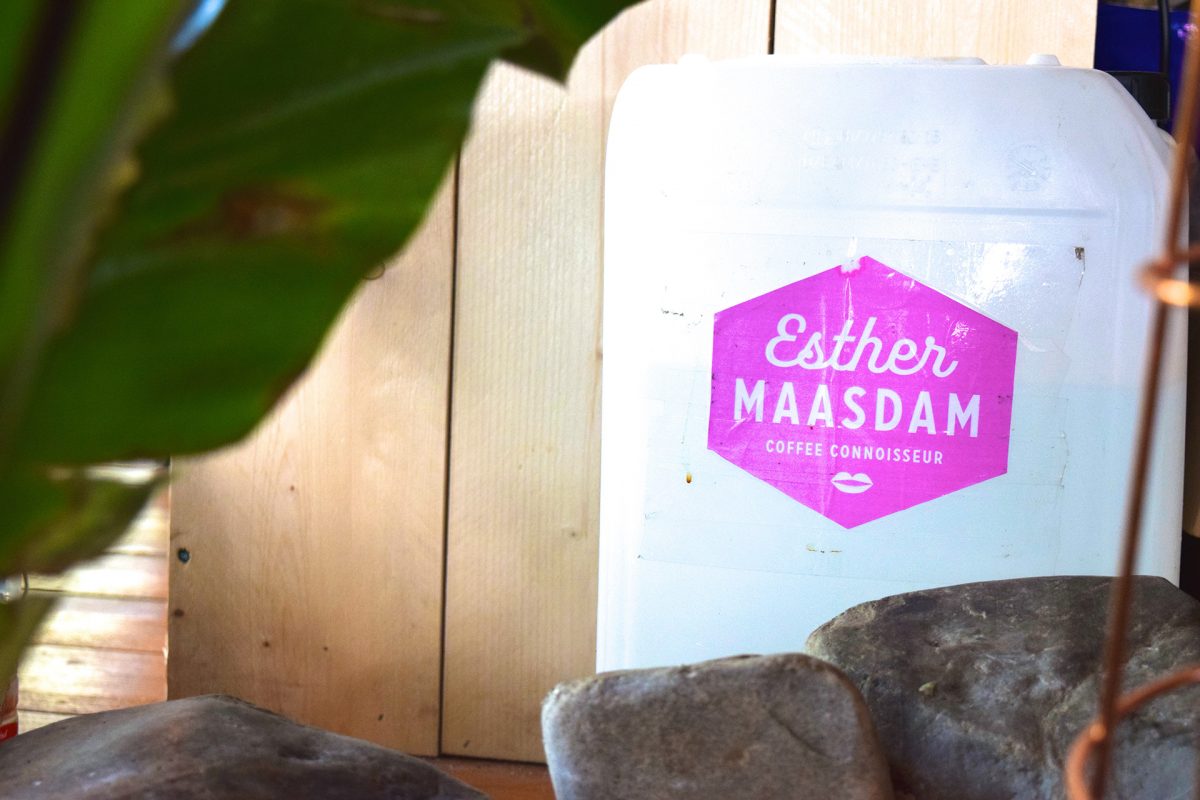
Speaking of that body of water, Maasdam confirms that she, like their cat, has an uncannily appropriate name. “Yeah, it’s ‘the dam at the Maas,’” she gives as the literal translation of her Dutch surname. “So I’ve not gone far from my roots. This river is my roots.”

Manhattan Coffee Roasters is located in Aloha at Maasboulevard, 100 Rotterdam. Visit their official website and follow them on Instagram.

Karina Hof is a Sprudge staff writer based in Amsterdam. Read more Karina Hof on Sprudge. 

The post “More Than Just A Milk Girl”—Esther Maasdam Of Manhattan Coffee Roasters appeared first on Sprudge.


from RSSMix.com Mix ID 8200593 http://sprudge.com/esther-maasdam-of-manhattan-coffee-roasters-124075.html

Sunday, October 1, 2017

The Marketing Magic of Online Reviews & How Cafés Should Respond

Many café owners have a love/hate relationship with online reviews. But regardless of your feelings towards them, they matter. According to the BrightLocal 2016 Local Consumer Review Survey, 84% of people trust online reviews as much as a personal recommendation.

The good news is that you can use these online reviews to improve your coffee shop marketing, attracting new customers and building stronger relationships with existing ones.

Let’s take a look at why reviews really matter. And after that, we’ll go over what you can do about them, with tips on how to get more reviews, deal with bad ones, and get more from good ones.

SEE ALSO: Café Life: 5 Ways to Get Your Customers to Return

coffee shopMany people work from coffee shops. Credit: Ana Valencia

Why Online Reviews Matter

Not only do your online reviews have an influence on the opinions of potential customers, but they also have an important impact on how many people find out about your coffee shop in the first place. For example, the number and quality of reviews on Google is an important factor contributing to a cafe’s ranking position for nearby searches (things along the lines of “coffee shop near me”). Since most people go for one of the top three or so results, you want to rank well.

Another behemoth in the world of online reviews is TripAdvisor. Again, love it or hate it, people who are new to the area or just looking to find somewhere different will often search online or in the app. And again, where your place appears in the search results will be influenced by reviews.

So, there are two key benefits to having lots of good reviews:

  • More people find you because your café ranks higher in Google and review results
  • People who find your café are more likely to visit after seeing positive reviews

coffee shopReviews affect your position in search listings. Credit: Luke Milbourn

Where Should I Be Checking My Reviews?

The top places to watch out for the latest good (and bad) reviews about your business include Google, TripAdvisor, and Facebook. Don’t forget, people can also publicly post and send messages reviewing you on Twitter, Instagram and in local directories. Keep on top of the buzz about your venue by Googling your café’s name or subscribing to review monitoring software that will email your latest reviews to you.

reviewA review monitoring service can save you time. Credit: Luke Milbourn via alloymarketing.co.uk.

How to Get More Reviews

While just sitting around waiting for reviews to pile up may work, you can also be proactive about it.

  1. Ask. Online, on social media, on flyers in the café, on a notice board, or in person.
  2. Use your WiFi to your advantage. Ask for a review on your landing page or via an email addresses capture form.
  3. Make it easy. Create a link that goes straight to a review site. Use short URLs that people can type into their phone whilst sitting in the café.

coffee shopDon’t be afraid of what your clients think about you.  Credit: Patrick Tomasso

Why You Should Reply to Reviews

The other part of dealing with online reviews is responding to them once they’ve been left. Especially any bad reviews.

No one likes a bad review, especially café owners who have invested their blood, sweat, and tears into a café. An unfair review can be truly heartbreaking. However, by responding to a bad review you are showing other potential customers that you care about their experience and hopefully showing that the bad experience was in some way exceptional.

It’s also worth taking the time to reply to good or mediocre reviews too. Showing your appreciation is a great way to encourage further visits and feedback.

Just remember: you can’t please all the people all the time!

coffee shopAlways reply to reviews. Credit: Hanny Naibaho

How to Respond to Bad Reviews

Unfortunately, customers are more likely to leave a review after a bad experience than a good one, so chances are you’ll experience a negative review at some point. However, if a 1-star review and plausible-sounding complaint goes unanswered, it won’t send a good message to other people using the website.

There’s a good way and a bad way to respond to negative reviews. Keep these guidelines in mind to leave the best possible impression on other potential customers.

  • Keep It Professional

It’s so easy to be defensive or even aggressive when criticised. It’s a natural human response. And a bad review can really hurt. However, it’s important to stay professional.

Start off by replying publicly and promptly. (Perhaps not straight away if you’re feeling emotional, but within 24 hours!) Use your judgement to explain what happened as reasonably as possible. You’re educating and informing potential customers by doing this. If needed, take the conversation private by providing contact details or letting them know that you’ll be sending a direct message.

  • Focus on The Facts

Separate what happened from how the reviewer feels about what happened. While you are likely to be responsible for what actually took place, it’s much harder to control how people feel.

coffee shopRespond to bad reviews in a professional way. Credit: Chiara Pinna

  • Think About The Reviewer’s Expectations

If the facts of what happened were acceptable in your opinion, but the reviewer’s response was very negative, the issue probably comes down to their expectations. This doesn’t necessarily mean they are a bad person! This can be a common problem in specialty coffee, especially if people are used to paying very little for a huge bucket of beverage. Or perhaps they’re used to super hot drinks, or expect to be served food in 10 seconds flat.

Were the reviewer’s expectations appropriate for your business? If not, is there anything you can do to let more people know what is in store from them at your café? A note in the menu or on your price board, or a comment from the cashier about waiting times, can go a long way towards managing expectations and increasing customer patience.

  • Admit Mistakes That Were Made

They do happen. Maybe someone had to wait a bit too long, or the drink simply wasn’t up to scratch. It’s painful to admit, and it’s not the case that the customer is always right, but sometimes mistakes do happen. And if you’re new, then teething problems are almost inevitable.

If mistakes did happen, explain why you think they happened, why that customer’s experience was unusual and what you’re going to do to ensure they have a better experience next time. What’s more, if you start spotting a pattern in bad reviews, make sure you do something about it! Is it the repeated mistake of a particular individual, or can you avoid the same mistake by changing your workflow?

coffee shopTake bad reviews, analise them and turn them into something good. Credit: Nafinia Putra

  • Educate

This is a great way to deal with people who have different expectations. Explain why it takes longer to make a drink or why you serve it in a smaller cup. There are plenty of people out there who think Starbucks is the pinnacle of coffee excellence. However, when customers realise that you have put a huge amount of thought, effort, and money into your products, they should feel less like they were ripped-off – even if they’re never going to be a fan of a well-made flat white!

  • Ask for Forgiveness

This can cut a lot of ice with someone who has left a bad review. If you can persuade someone that they will probably have a better experience next time, they may well come back. A refund or discount on the next visit may be worth offering.

That said, try to remember that throwing money at a bad reviewer isn’t the answer. In many cases, people simply want to be listened to. Whether their expectations were reasonable or not, hearing them out can go a long way.

coffee shopBarista pouring latte art. Credit: Jakub Kapusnak

How to Respond to Good Reviews

Okay, this one is much nicer to talk about! It’s great to get an appreciative review from someone and it’s also great to share it. Good reviews can act as conversion tools, helping to convert uncertain potential customers into enthusiastic visitors who will happily go out of their way to try your offerings.

  • Respond Quickly & Publicly

Simply liking a nice review on Facebook shows you care. A quick message with a “thank you, see you again soon” is even better. It takes a couple of seconds and could turn a one-off visitor into a lifelong customer.

In some cases, you can amplify a positive review. For example, you could share the post on Facebook or regram a cool picture on Instagram. Obviously, it’s a bit self-centred to do this all the time, but if someone has pointed out something specific or left a particularly amazing review, display this to your followers.

  • Make Suggestions

If someone liked the food or a particular drink, point out other things on your menu that you think they may enjoy. Just like dangling a carrot for your customers, you give them something new and highly recommended to try next time they visit.

coffee shopA potential Instagram post of your café. Credit: Luke Milbourn

The most important thing to remember is to be proactive. By quickly and publicly dealing with online reviews, you can dramatically improve the reputation of your café. It can help nip problems in the bud before they escalate and attract new customers too. Make responding to reviews part of your regular routine and you can help encourage sustained growth for your business.

Written by Luke Milbourn of Alloy Marketing Ltd.

Perfect Daily Grind

Want to read more articles like this? Sign up to our newsletter!

The post The Marketing Magic of Online Reviews & How Cafés Should Respond appeared first on Perfect Daily Grind.


from RSSMix.com Mix ID 8200593 https://www.perfectdailygrind.com/2017/10/marketing-magic-online-reviews-cafes-respond/