Thursday, November 2, 2017

A World AeroPress Champion’s Guide to Winning The Championship

My name’s Filip Kucharczyk and I’m soon to become the previous World Aeropress Champion. And as I give up my place as the reigning Champ, I’ve decided to leave you all with some tips – whether you’re competing in Seoul next week, regionals and nationals, or even just a local competition. Take them or leave them: these are the things that helped me win.

SEE ALSO: AeroPress Coffee Guide: How to Brew for Different Flavor Profiles

aeropressThe 2016 Polish AeroPress trophies. Credit: Bartek Buzak

The Right Recipe

I see the AeroPress Championship as a place to experiment. Unlike some competitions, you’re not getting points and the judging is very spontaneous.

But don’t count on luck alone, because the judges tasting your coffee are well-calibrated coffee experts.

When creating the recipe, you need to be adventurous. Your coffee has to stand out on the table – it needs to be more than just delicious and perfectly extraction. There’s no other way to look at it because you have to assume that only extremely tasty and well-brewed coffees are in this competition.

Take my recipe: it was creative. I took loads of coarsely ground coffee, only a little water, stirred for some time, and then plunged to create a concentrate that I then diluted. It was simple but also original.

(Article continues below video.)

What gave me the edge in both the Polish and World AeroPress Championship was the uniqueness of the method and brew. It stood out, and for all the right reasons.

So make the judges pick your coffee. Don’t let them hesitate.

aeropressPreparing to brew. Credit: Filip Kucharczyk

Keep It Simple

My recipe could not have been simpler – and this helped me to win.

You have about eight minutes on stage per round, during which time you need to make the best possible brew.  Don’t decide on a recipe so precise and complex that you struggle to remember how many stirs are needed at any given time. Instead, come up with a method that you could repeat two or even three times in your slot.

And the same holds true for equipment. My recipe works perfectly well without scales, a thermometer, or a timer.

Are you sure you need to carry an assistant, your own water, an EK 43, five different scales, and two sets of refractometers all the way from Portugal or Guatemala? You probably don’t even need to bring your own AeroPress – it’s all there already, brought for you by the sponsors and organisers. You’d be better off keeping your luggage free for all the trophies you’re planning to bring back to your homeland.

aeropressFilip judges in the 2017 Polish Aeropress Championship. Credit: Janek Szurek

Time to Serve

Use your practice time wisely: I recommend spending it making friends. You’ve no doubt rehearsed your brew method enough times already.

But when it’s time to serve, pay attention to the small details. Make sure you don’t serve your coffee too hot and that all your tools, cups, servers are free from other odours. I was honoured to judge some of the national championships this year and I’m sure some cups lost for these two reasons alone.

Oh, and for your own karma – clean up after you’re done.

aeropressSelecting the best coffee at the 2017 Polish Aeropress Championship. Credit: Bartek Buzuk

So there you have it: everything that helped me win World AeroPress Championship.

But before you go, let me share one last piece of advice. In this competition, there is so much to win and nothing to lose. And so ask yourself, what will give you that edge you need?

Written by Filip Kucharczyk, 2016 World Aeropress Champion.

Perfect Daily Grind

Want to read more articles like this? Sign up to our newsletter!

The post A World AeroPress Champion’s Guide to Winning The Championship appeared first on Perfect Daily Grind.


from RSSMix.com Mix ID 8200593 https://www.perfectdailygrind.com/2017/11/world-aeropress-champions-guide-winning-championship/

Wednesday, November 1, 2017

Coffeeography: The Coffee Producers Is A New Book By Stephen Leighton

Stephen Leighton is a man of many endeavors. The founder of the UK’s Hasbean Coffee, co-owner of both 3FE and Drop Coffee, and co-creator of coffee podcast and event series Tamper Tantrum, Leighton is perhaps most recognizable for his sartorial decisions while emceeing the World Barista Championship (think bright red suit with matching wingtip shoes). But for his most recent undertaking, Leighton—one of coffee’s biggest personalities—is moving behind the scenes and into the role of author with his new book, Coffeeography: The Coffee Producers.

As the name suggests, the book is a collection of photographs and stories Leighton accrued over his extensive travels to origin. According to the press release, the book “offers a comprehensive look into the histories and stories of 40 coffee producers across 11 countries by using an approach that brings their own words and experiences to the fore.”

“Each profile began with a list of 20 questions, anything from ‘do you prefer espresso or filter?’ or ‘if you could farm anywhere else, where would you?’”, says Leighton. “From there, it was using their answers to those questions, the stories they chose to share, and my own understanding of our relationship to put together a multifaceted glimpse into the complex people behind the future of specialty coffee.”

Leighton goes on to note that this book gave him the perfect chance to go through the near 32,000 origin photos he has collected throughout his years of travel.

Coffeeography: The Coffee Producers will officially be released on Sunday, November 5th at the Manchester Coffee Festival and will be followed up with a five-country book tour throughout the month. This will of course include a stop in Seoul, South Korea for Cafe Show Seoul, the host of the 2017 World Barista Championship.

The book retails for £20.00/€25.00/$30.00 and will be made available through local distributors 3FE (Ireland), Drop Coffee (Sweden), Eight Ounce Coffee (Canada), Cafe Demitasse (USA), and Toby’s Estate (Australia). Or, it can be purchased directly via the official Coffeeography website.

For more information on the book, the tour dates, or to purchase a copy, visit Coffeeography: The Coffee Producers’ official website.

Zac Cadwalader is the news editor at Sprudge Media Network and a staff writer based in Dallas. Read more Zac Cadwalader on Sprudge.

*top image via Coffeeography

The post Coffeeography: The Coffee Producers Is A New Book By Stephen Leighton appeared first on Sprudge.


from RSSMix.com Mix ID 8200593 http://sprudge.com/coffeeography-the-coffee-producers-is-a-new-book-by-stephen-leighton-127744.html

Nemesis Coffee Is Vancouver’s Newest World Class Multiroaster Cafe

nemesis coffee vancouver british columbia

nemesis coffee vancouver british columbia

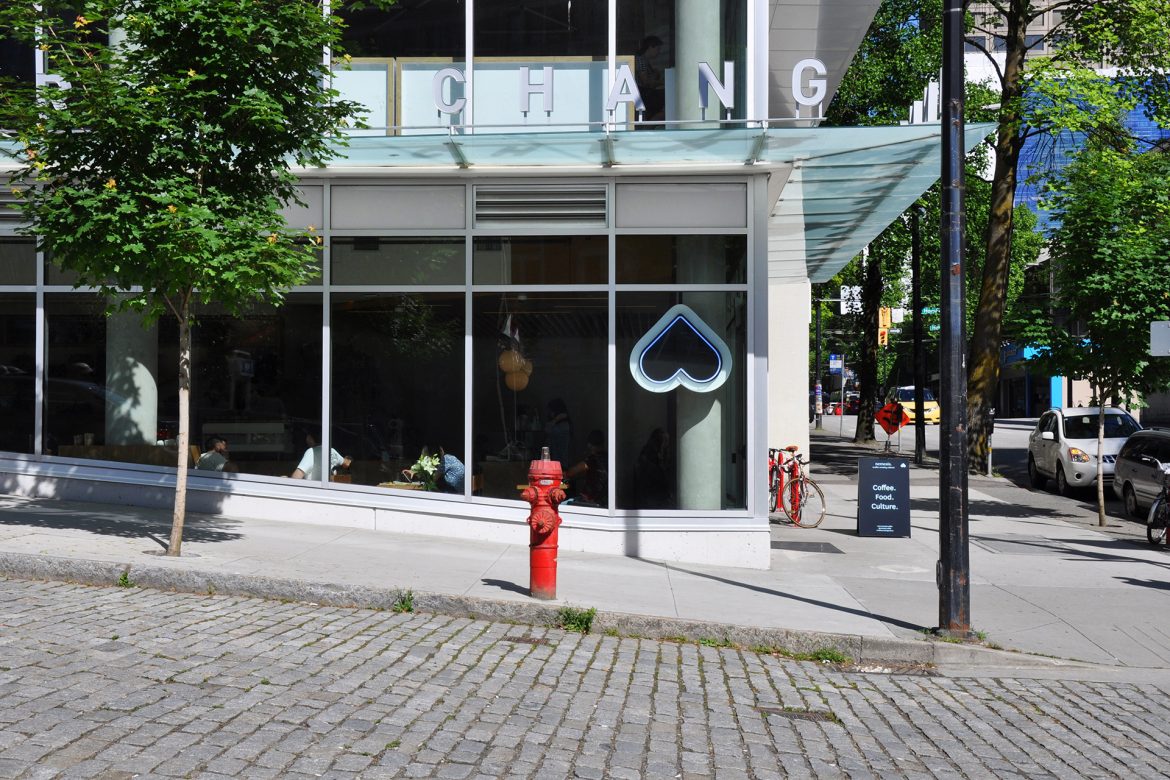
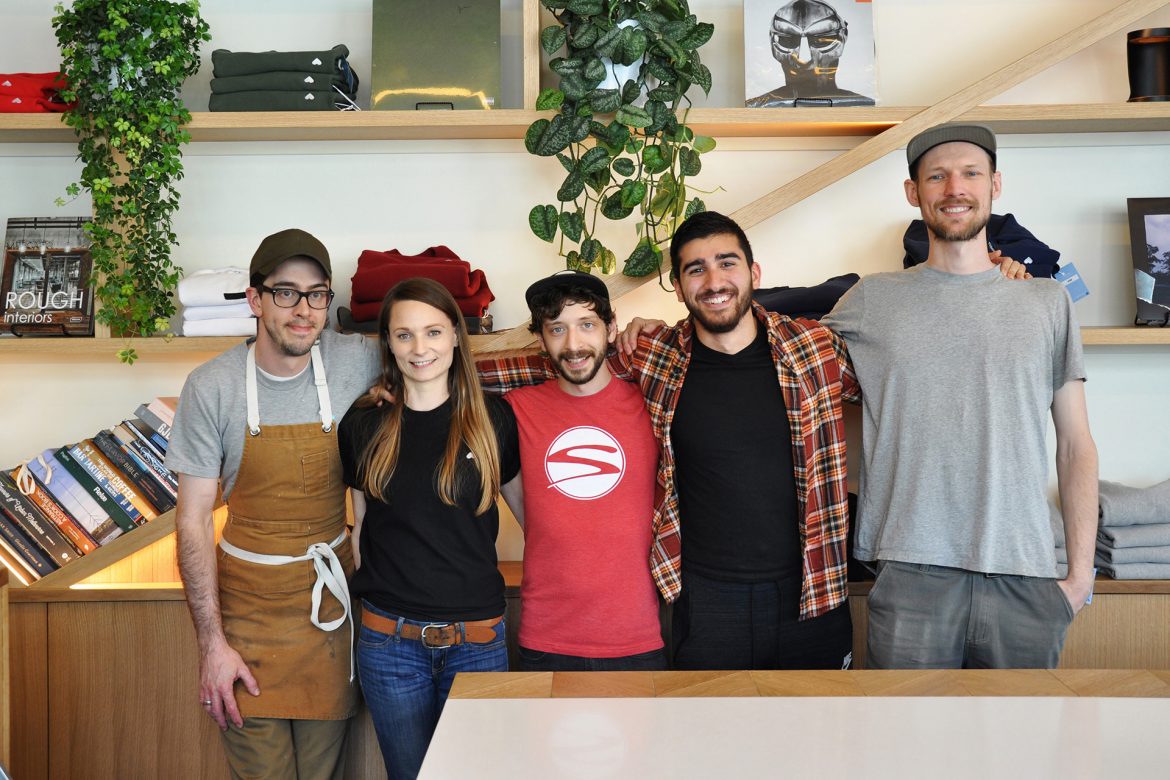
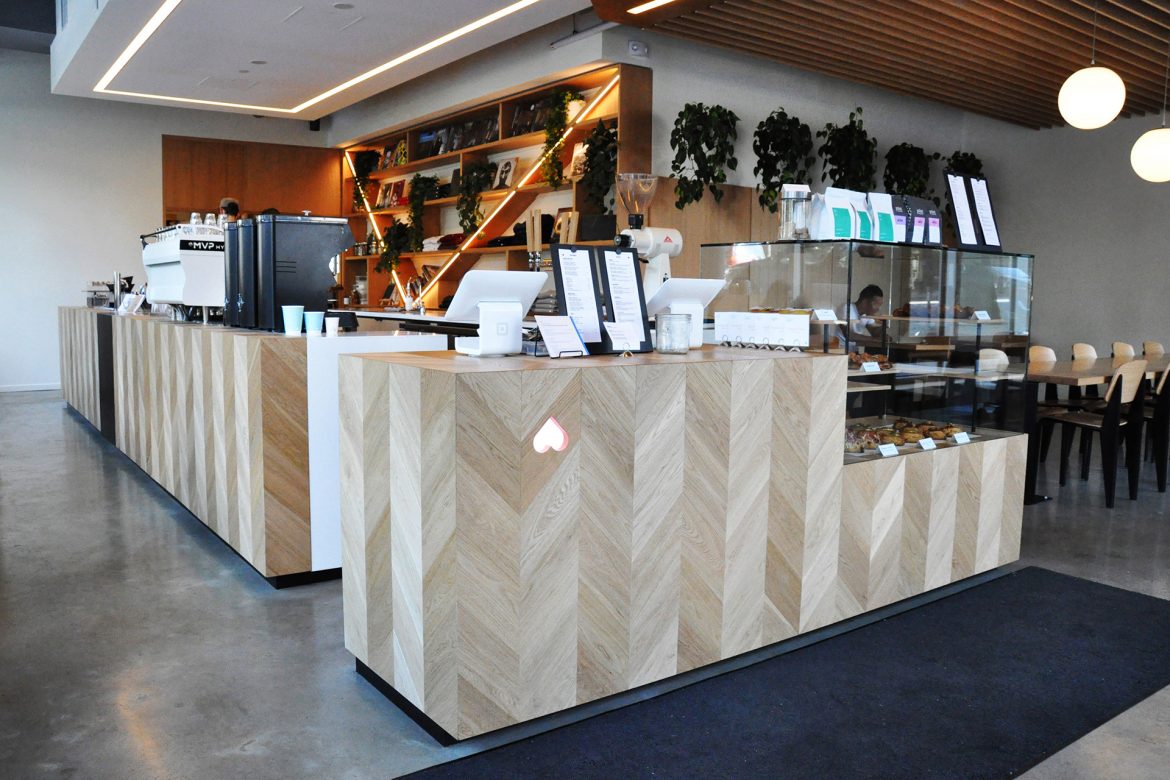
Opening on Valentine’s Day 2017 with a logo featuring an upside-down heart may seem a bit cheeky to some, but Nemesis’s primary owner, Jess Reno (pictured below in plaid), swears it was simply a funny coincidence. “The timing just worked out that way,” he says. “And besides, we have nothing but love for our community. But it’s love flipped on its axis—not the cheesy kind.”

One of Vancouver’s newest multiroasters, Nemesis focuses on bringing in some of the best coffee the world has to offer, such as Five Elephant, Talor & Jørgen, Pilot Coffee Roasters, Colonna, and April. By creating strategic partnerships with international roasters, Nemesis is figuring out new ways to make its coffee better every day. This simple quest is already leading the staff down exciting avenues, such as sharing water samples between the roastery and shop floor, all in an effort to innovate and provide the very best cup possible to their customers.

nemesis coffee vancouver british columbia

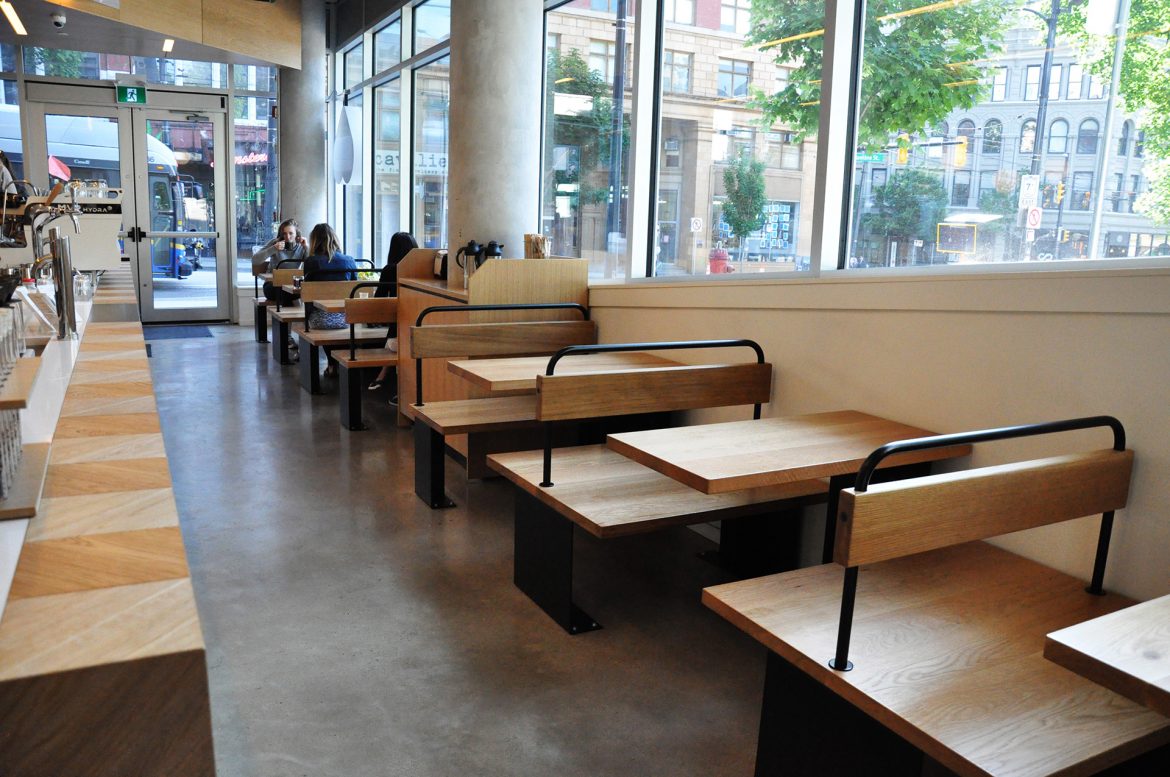
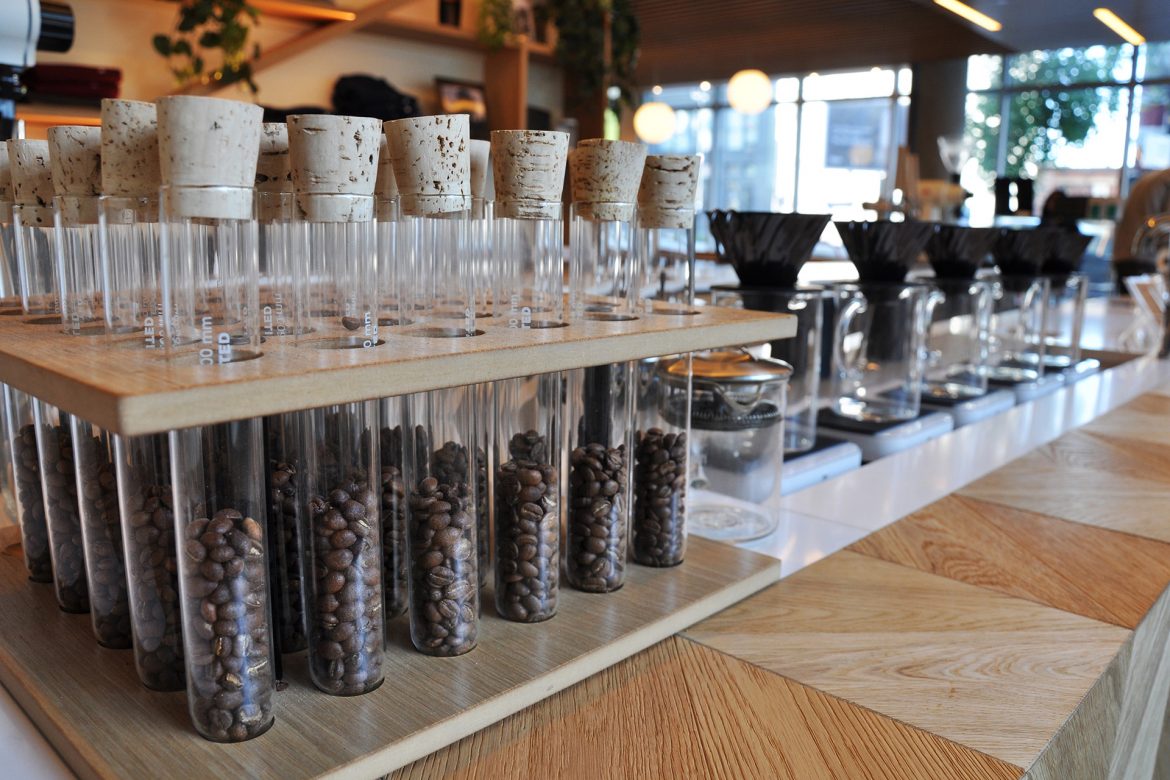
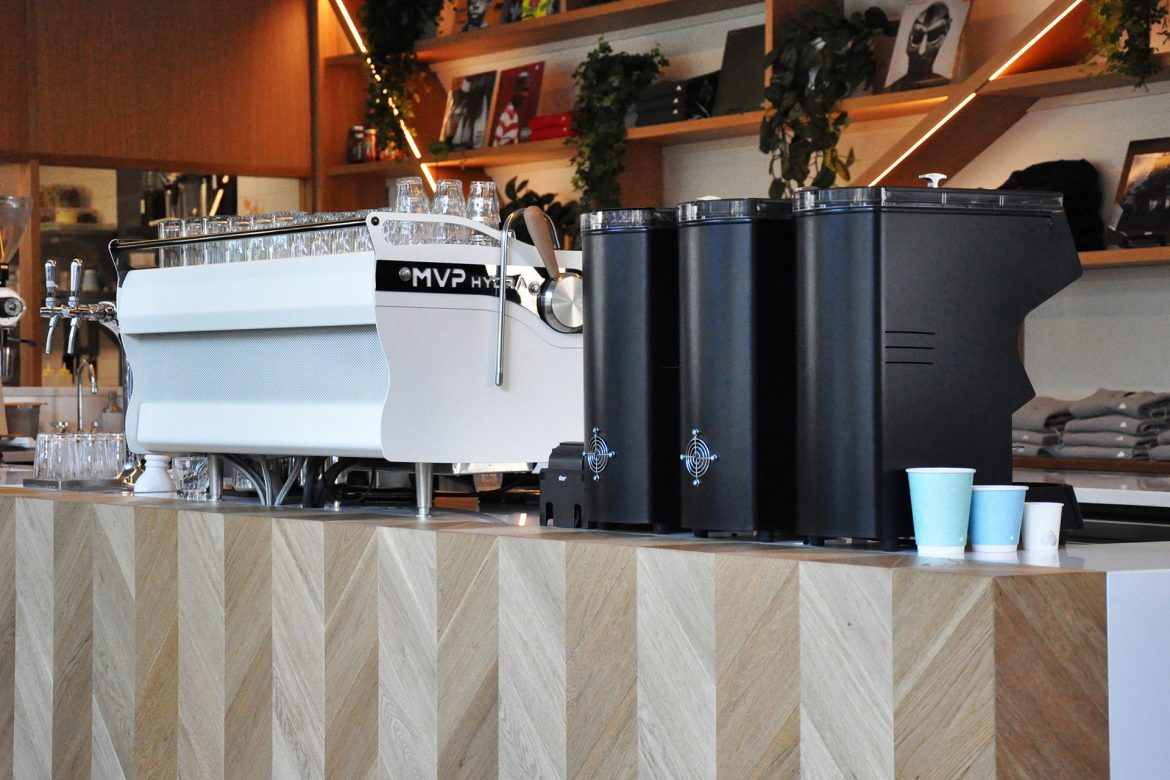
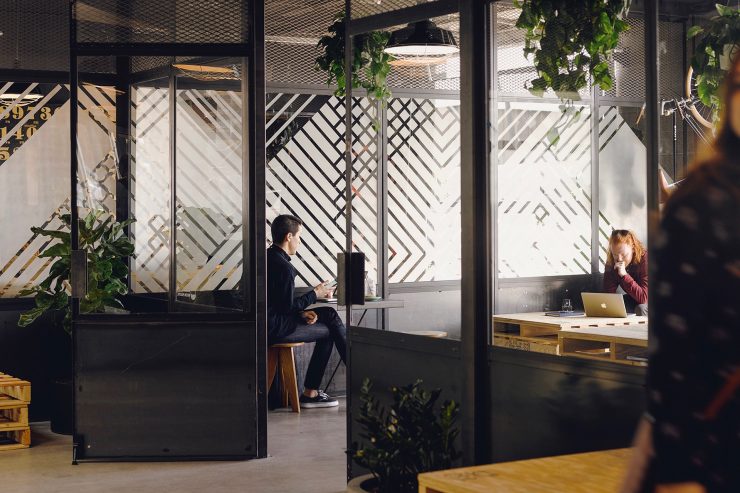
Walking through the space, Nemesis is everything that is right about Vancouver coffee. It is a beautiful cross between Pacific Northwest and Scandinavian styling, with plant life and linear light fixtures accenting the sharp wooden features. The rectangular bar is immaculate except for its custom Synesso MVP Hydra, three Nuova Simonelli Mythos grinders, and two Mahlkönig EK/EKK 43s sitting alongside a V60 brew bar with Marco Über Boilers. The knowledgeable and well-trained baristas offer a friendly yet methodical service here, providing a welcoming atmosphere to those new to and familiar with specialty coffee.

It would be easy to imagine your average coffee drinker being intimidated by such an atmosphere, but this is simply not the case. Since Nemesis doesn’t offer a batch brew option, choosing instead a by-the-cup strategy, any confusion about pour-over and other brew methods is expunged by helpful brew cards providing basic instructions for how to properly use the equipment. Reno is passionate about educating whenever possible and preventing anyone from feeling intimidated in the shop.

nemesis coffee vancouver british columbia

Following in the footsteps of local favorites The Birds & The Beets and Bows and Arrows, Nemesis has a food program that doesn’t miss a bit alongside their coffee. With a constantly evolving menu from chef Jacob Deacon-Evans, formerly of Vancouver’s Wildebeest, food is given just as much attention and detail. Local, seasonal, and sustainably conscious food inspire the menu—you may even catch staff foraging for ingredients whenever possible. Since quality is the most important requirement, the group considers whether any new potential menu items can be made completely in-house. An affogato may sound like a great idea, but Reno is quick to check with his kitchen to find out how hard it would be to make their own ice cream.

nemesis coffee vancouver british columbia

As Nemesis slowly evolved into being, the team formed along with it. In addition to Reno, other owners including James Salmon, Michele Zuber, Cole Trepanier, Albert Tang, Josh Shevlin, and Deacon-Evans were added to the team as the notion of opening their doors became a reality. What began as a few friends kicking around a concept has led to a unique group coming from both competitive and international backgrounds. This diversity of experience creates a wonderful atmosphere of shared ideas and ensures that the highest quality product is being delivered. Nemesis has gone a step further in their learning by training all staff on both the food and coffee programs, regardless of title. This creates transparency between the pillars of their shop and it is evident in the way the staff speaks about every item on the menu.

nemesis coffee vancouver british columbia

When looking to the future, Reno has a view that goes beyond specialty coffee. Nemesis itself actually began as an idea for a lifestyle magazine that would allow Reno and his friends to share everything that is great about Vancouver with the rest of the world. Without knowing their exact route forward, the prospect of starting as a coffee shop slowly took shape. Having now checked that box, the idea of a magazine is still real with a goal to eventually expand beyond coffee and even Vancouver. “We want to push community boundaries through coffee,” says Reno. Anchored by Nemesis and specialty coffee, the team hopes to put a fresh perspective on how to engage the community, both local and abroad.

nemesis coffee vancouver british columbia

It is clear that Reno and his group have some lofty ambitions, but it is nice to know that for now, they will be discussing them with their customers over some great food and an outstanding cup of coffee.

Nemesis Coffee is located at 302 W Hastings St, Vancouver. Follow them on Facebook and Instagram.

Peter de Vooght is a freelance journalist and photographer based in Vancouver, British Columbia. Read more Peter de Vooght on Sprudge.

The post Nemesis Coffee Is Vancouver’s Newest World Class Multiroaster Cafe appeared first on Sprudge.


from RSSMix.com Mix ID 8200593 http://sprudge.com/nemesis-represents-all-that-is-great-about-vancouver-coffee-126641.html

Australian Import Common Room Roasters Here To Conquer Orange County

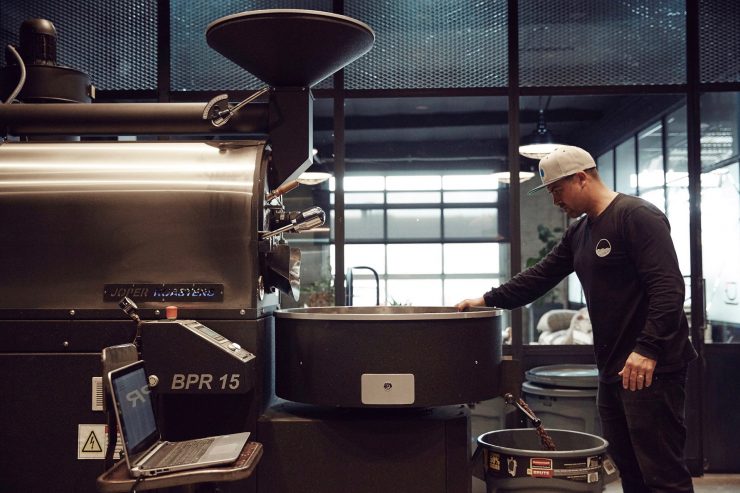
Ed Moffatt is an import. An Aussie, from Melbourne, living in Orange County, California. He owns Common Room Roasters in Newport Beach, which sits about 600 meters inland from the ocean. He and Common Room’s co-owner Jeremy Creighton met in South Yarra, while Creighton’s ad agency, Passport, was on the same street as Moffatt’s first cafe. Now, a hemisphere away, Passport’s second office is in the same building as Common Room.

Creighton moved to America first, while Moffatt was still in Melbourne, working as Locale’s head roaster while owning and running Long Island Brew Bar. At Locale, Moffatt worked under Christiano Portis but had been a part of the Melbourne coffee community since the early aughts. He was established, settled with a wife and kid and house. And then Creighton called.

Apparently, there was no coffee in America. Or at least, there wasn’t any coffee good enough and close enough by, by Melbourne standards, for Passport’s Aussie-majority staff to get any work done.

“So over Skype,” Moffatt says, “I’m like, buy this machine, buy this grinder, buy these Acme cups. I didn’t say get a Strada,” Moffatt admits. “I said get a [La Marzocco] Linea.”

The setup would become The Common Room, a rolling cart for Passport’s in-house use that, every Friday, Creighton would wheel out for the public. Between 9am and 11am, Passport’s neighbors—it’s located in an industrial zone whose occupants include businesses like Salt, RVCA, Hurley, and Vans—could come by for free flat whites and shots of espresso. It didn’t take long for them to start knocking on Creighton’s window every morning, asking if The Common Room was open today?

“So now Jeremy’s like, ‘move to America,’” Moffatt says. “And I’m like, ‘Okay.’” It only takes 12 weeks, and in early 2016, Moffatt makes landfall—waiting for him is Creighton, a warehouse, and a Joper roaster. The Common Room closes, and Common Room Roasters is born.

Ed Moffatt

“We basically didn’t have any wholesale customers,” Moffatt says of the first few months. “We were just roasting for ourselves, getting our green supply figured out, and taking time to settle the roaster.”

Patch Coffee bought from Common Room in the early days, but it was difficult to attract attention. The cafe—charming as it was—had become a distraction from the company’s wholesaling goals. 

So, early in its life, Common Room went through a redesign. “Because we had to stop and start, we got the chance to redefine our goals,” Moffatt says. “Before, we were another coffee shop full of computers. And we were like, ‘hang on, we’re from Melbourne, we’re a roastery.’ We want this to be an interactive, useful space for people who are into coffee. Now, we’re an operating plant where you can buy coffee.”

Moffatt explains that as soon as the switch was flipped, people took notice. Both in Southern California and around the country, cafe owners and restaurateurs, including recent cool kids Gjelina and Gjusta, started ringing him up—the Melbournian roaster living in America.

“All the Aussies around here—there are a lot because of the surf industry—come in and it’s awesome because I get to transport them all back home, one by one with a flat white and an accent,” Moffatt says.

The bigger picture for Common Room is not to simply act as a place to buy Melbourne coffee, though, but to help America usher in a specialty coffee wave the size and strength of which hit Melbourne 15 years ago. Of course, America already has specialty coffee shops—as Sprudge readers know, a lot of specialty coffee shops—but what Moffatt imagines is a movement wherein specialty completely displaces chain coffee, much in the same way it forced Starbucks to shutter the majority of its stores in Australia over the past decade.

“We’re all of us together against the big boys,” Moffatt says of chain coffee. “In Australia, our coffee is so good, why would we want that rubbish? We want to be better for our consumers. We want people to think that our level is the norm.”

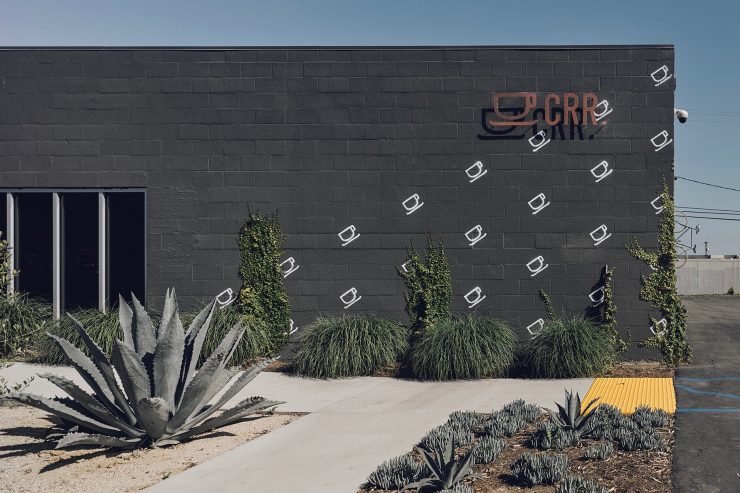
Common Room Roasters is located at 882 Production Pl, Newport Beach, CA. Visit their official website and follow them on Facebook and Instagram.

Michael Light (@MichaelPLight) is a features editor at Sprudge Media Network. Read more Michael Light on Sprudge.

Photos by Scottie Cameron.

The post Australian Import Common Room Roasters Here To Conquer Orange County appeared first on Sprudge.


from RSSMix.com Mix ID 8200593 http://sprudge.com/common-room-roasters-121775.html

Reclutando Baristas: Cuáles son los Buenos Rasgos de Personalidad.

Las habilidades técnicas de un barista, desde calibrar un molino hasta la manipulación de recetas, son fundamentales, pero todos sabemos que ser barista va más allá de simplemente hacer un gran café. Ni siquiera un Campeón Mundial de Barismo tendrá éxito en una tienda de café si odia hablar con la gente.

Aprender a identificar a aquellas personas con la personalidad y el comportamiento adecuado para trabajar en un café es clave para formar un buen equipo. Y esto es especialmente cierto cuando se trata de aprendices en lugar de personal experimentado.

Como alguien que alguna vez trabajó en psicometría para RR.HH. (es decir, evaluaciones de personalidad para reclutamiento y promoción), permíteme hablarte de los signos que tiene una persona adecuada para desempeñar el rol de barista, y cómo puedes detectar estos en la entrevista de trabajo.

English Version: Café Recruitment: The Personality Traits of a Good Barista

cafeteria

Braristas en el trabajo. Crédito: Marshall Steeves para Upper Left Roasters

¿Qué tan Importante es la Personalidad? ¿Puede el Barista Cambiarla?

La personalidad no dictamina el rendimiento laboral de una persona. Un barista tímido puede proporcionar un gran servicio al cliente y una persona naturalmente independiente puede ser un gran compañero de equipo.

Sin embargo, esto indica el tipo de comportamiento con el que una persona se siente más cómoda. Si el trabajo de una persona va en contra de su personalidad, será más difícil y agotador para ellos. En situaciones estresantes, o al final de turnos largos, les será más difícil continuar con ese comportamiento positivo que se espera de ellos.

Al mismo tiempo, no existe un candidato perfecto y los rasgos de personalidad se encuentran en una escala. Una persona ligeramente desorganizada lidiará mejor con las reglas de la cocina que una persona extremadamente desorganizada. Además, una persona que sabe que es desorganizada y trabaja activamente para estar más organizada, de hecho, puede seguir esas reglas mejor que una persona “medianamente organizada”.

Querrás a alguien cuyos rasgos de personalidad, habilidades técnicas y hábitos de trabajo se adapten mejor a tus requerimientos. En lugar de simplemente decir “esta persona no es meticulosa, así que no puedo contratarla”, debes crear una imagen general de tus candidatos y luego seleccionar a la persona que sea la mejor opción para tu café.

Por supuesto, también debes recordar que un buen desempeño es más que solo habilidades y actitudes. También se trata de una buen manejo, trabajo en equipo y más, pero si contratas al personal adecuado, lo entrenas bien, y lo motivas, lo inspiras, terminarás con un equipo excepcional.

Así que empecemos por analizar algunos de los rasgos de personalidad, las motivaciones y las actitudes que son útiles para los baristas, junto con las posibles preguntas de entrevistas que puedes utilizar.

la marzocco

Barista detrás de la barra. Crédito: Ana Valencia

Sociabilidad y Simpatía

Mantenerse amable y conversador todo el día, todos los días, lleva cierto tipo de personalidad. Un buen barista prosperará en las interacciones sociales, sabrá cómo tranquilizar a los clientes y hará que la tienda de café se sienta como un hogar lejos de casa, incluso al final de un turno de doce horas. Y créanme, como un introvertida que tuvo que hacer esto mientras trabajaba en cafés, podemos fingir ser extrovertidos, pero es agotador. Entonces, si tu nuevo barista potencial parece preferir su tiempo a solas, querrás investigar más.

Cómo Detectar Esto:

Esto es lo que debes decir cuando estás contratando: “Todos los baristas han tenido clientes pesados y clientes favoritos. ¿Puede decirme algo acerca de los tuyos?” (Si el aplicante nunca ha trabajado como barista anteriormente, es posible que debas modificar la pregunta a otros tipos de clientes, miembros del equipo o incluso compañeros de clase o vecinos).

Si el cliente favorito de un candidato siempre suele compartir historias de sus nietos, probablemente estés viendo a alguien con excelentes habilidades interpersonales, pero si su cliente favorito siempre sabe exactamente lo que quiere pedir, nunca causó una fila, y nunca pidió café super caliente, este candidato probablemente valora la eficiencia sobre las relaciones.

espresso

Un barista prepara un espresso

Flexibilidad

Una tienda de café puede ser un lugar caótico. Las filas crecen sin previo aviso, atrasarse con los platos sucios hace casi imposible ponerse al día, y un barista enfermo convierte el organizar el itinerario en una pesadilla. Necesitas un personal que sea flexible, ya sea para cubrir el turno de otra persona, trabajar hasta tarde o pasar de la máquina de espresso al lavaplatos.

Cómo Detectar Esto:

La buena noticia es que, aunque todos saben que la flexibilidad es un buen rasgo, la mayoría de los reclutas también saben que esta pregunta tiene consecuencias serias. Para que lo entendamos mejor, concéntrate menos en su experiencia laboral anterior o en su personalidad, y más en sus expectativas para este trabajo.

Por ejemplo, podrías preguntar: “Si un compañero de trabajo está enfermo, ¿cuánto tiempo de notificación necesitarías para cubrir su turno?” “¿Hay algún momento en particular en que no pueda cubrir los turnos?” “Si tuviera que trabajar muchas horas extras, ¿preferiría pagos por horas extras o tiempo libre? “

barista preparando kalita wave

Un barista prepara café con dos Kalita Waves a la vez. Crédito:toolboxplus

Meticulosidad

Las tiendas de especialidad ofrecen a los clientes una cosa muy importante: la calidad. Y eso requiere meticulosidad en todas las etapas, desde pesar los granos hasta usar la configuración de molienda correcta.

No olvides que una tienda de café también debe cumplir con los requisitos de salud y seguridad, desde la limpieza de las superficies hasta las fechas de grabación. Solo un descuido podría causar serios problemas si un inspector de salud ambiental llegase a ir. Por esta razón, la meticulosidad es clave.

Cómo Detectar esto:

Todo entrevistado afirmará este rasgo si lo preguntas directamente. Para comprobar si tienen esta característica, comienza con los signos obvios: ¿su CV está escrita meticulosamente? ¿Hay errores tipográficos o errores? ¿Siguieron las instrucciones en la publicación de reclutamiento a la perfección?

Luego, en la entrevista, describe algunas situaciones en las que el candidato debe elegir entre meticulosidad y un atributo positivo diferente, por ejemplo, eficiencia o servicio al cliente. La que  seleccionen consistentemente revelará sus verdaderos valores. (Recomiendo hacer más de una para una mayor precisión).

Por ejemplo: “Hay una fila larga. ¿omitirias pesar cada “shot” para ahorrar tiempo y brindar un mejor servicio al cliente?

barista preparando cafe

Un barista prepara café para los clientes. Crédito: Thibaut para Le Peloton Cafe Paris

Seguir las Reglas

Las estrictas normas de salud y seguridad establecen las operaciones de un café, así que  necesitas saber que los baristas las seguirán al pie de la letra. Este punto no necesita más explicaciones: como gerente o propietario de una tienda de café, sabes la importancia de  esto.

Cómo Detectar esto:

Una vez más, cada solicitante asegurará seguir las reglas, por lo que deberás tener cuidado cómo vas hacer la pregunta. En primer lugar, intenta equilibrarla con otras características deseables, como romper una regla para proporcionar un “mejor” servicio al cliente. ¿Qué haría tu aplicante?

También puedes tener una idea de las actitudes de una persona al pedirle que comparta las reglas de los lugares anteriores de trabajo que no le gustaban. Pídeles que compartan primero la regla, para que sepas que están hablando de una regla que realmente fue un problema para ellos. Luego, pregunta cómo respondieron a esta. Si no rompieron la regla, o si expresaron incomodidad al romperla, sabrás que en general son seguidores de reglas.

latte art

Un barista hace arte latte. Crédito: Dapper & Wise Coffee Roasters

VER TAMBIÉN: Cómo Hacer Para que Tus Baristas no Renuncien

Trabajo en Equipo

El trabajo en equipo es clave para un barista. Al dividir las responsabilidades y apoyarse entre ellos, tu personal puede asegurarse de producir cafés de alta calidad de forma consistente y prepararlos rápidamente para los clientes. Pero pon un ego detrás de la barra de café, alguien que arrastrará los pies si se le pide que limpie las mesas o quien no invertirá tiempo en apoyar a los aprendices, y descubrirás que todo comienza a caerse: la moral del equipo, la calidad, la productividad … y finalmente las ganancias.

Cómo Detectar esto:

Este punto es similar a la sociabilidad: en lugar de preguntarle a alguien si es bueno en el trabajo en equipo, pregúntale cuál sería un equipo de en sueño y uno de pesadilla.

Si el equipo de pesadilla está lleno de personas incompetentes que trabajan despacio y cometen errores, sabrás que el aplicante valora la eficiencia y la competencia, y este no es un mal rasgo en sí. Sin embargo, si la peor experiencia que el entrevistado tuvo con un equipo presenta personas que no apoyan a otros, sabrás que la unión del equipo es una de sus prioridades.

Por supuesto, tu aplicante ideal valorará la unión, la eficiencia y la competencia del equipo. No debes descartar a un candidato solo porque no le gustaba trabajar con miembros del equipo que sean descuidados. Sin embargo, puedes investigar más. Pregúntale qué hicieron para resolver la situación, cómo afectó esto sus relaciones con sus compañeros de trabajo y más.

Si te dice que, durante un momento de tranquilidad, que le enseñó  a sus compañeros de trabajo cómo operar mejor las máquinas, sabrás que esta persona se esforzará para mejorar el equipo. Sin embargo, si solo apretó los dientes, se disculpaba con los clientes e intentaban trabajar más rápido, esta persona es buena trabajadora pero no es excelente para crear un espíritu de equipo. Debes decidir qué tan importantes son estos rasgos en tu tienda de café.

equipo de baristas

Espíritu de equipo: baristas en tienda de café La Marzocco en Seattle, Washington. Crédito: La Marzocco Café

Inteligencia Emocional

Ser un barista es estresante. Los turnos son un trabajo duro, los clientes son regularmente ingratos y el ambiente a menudo es caluroso, ruidoso y agitado. La clave para manejar esto es la inteligencia emocional: la capacidad de una persona para reconocer cómo se siente, entender por qué se siente así y no dejar que afecte sus acciones o actitudes.

Cómo Detectar esto:

La inteligencia emocional no se trata de no sentirse frustrado o sensible en el trabajo, se trata de manejar esas emociones. Así que la solución aquí es simple: pregúntales a los aplicantes sobre los momentos en que estuvieron estresados, enojados o molestos en el trabajo, ya sea por algo que un cliente dijo o por un miembro del equipo. Pregúntales por qué se sintieron de esa manera y cómo manejaron la situación. ¿Creen que hicieron lo correcto? ¿Cómo lo manejaría ahora?

servicio amigable de barismo

Servicio con una sonrisa: una barista prepara café para un cliente. Crédito: Monk & Mongoose

Otras habilidades que podrías querer

Si bien hemos enumerado los rasgos y comportamientos clave que un barista necesita, cada tienda de café es diferente y también lo es el rol de cada barista.

Si estás buscando un gerente o un asistente de gerencia, puedes buscar por iniciativa. Por otro lado, para un barista regular, es posible que prefieras a alguien que sea bueno para aumentar las ventas (seguro, aprecia los objetivos, le gustan los desafío) o manejar las quejas de los clientes (paciente, empático y discreto).

Si sabes que algunos de los miembros de tu equipo son apasionados por el café pero más desorganizados de lo que quisieras, podrías buscar a alguien altamente organizado para ayudar a crear más orden. Por otro lado, si sabes que ciertos miembros del equipo tienen buenas habilidades técnicas pero carecen de confianza en sí mismos, una persona amable y accesible con tendencia a enseñar podría ser una buena opción para contratar.

Y si tienes roces de personalidad en tu equipo, alguien con fuertes habilidades para escuchar, empatía y capacidad de persuasión o negociación podría ayudar a calmar este escenario.

Para elegir realmente al mejor aplicante, no solo debes confiar en una lista de rasgos generales de un barista. Siéntate y descubre qué habilidades adicionales necesitas que posean tus baristas antes de comenzar a crear la lista de vacantes.

No hay barista perfecto. Sin embargo, hay un barista que es una buena opción para tu café, tu equipo y tus expectativas. Y es tu trabajo encontrarlo.

Escrito por Tanya Newton, con aportes de Gisselle Guerra.

Traducido por Alejandra M Hernández

¿Quieres Seguir Leyendo Artículos Como Este? ¡Suscríbete Aquí!

The post Reclutando Baristas: Cuáles son los Buenos Rasgos de Personalidad. appeared first on Perfect Daily Grind.


from RSSMix.com Mix ID 8200593 https://www.perfectdailygrind.com/2017/11/reclutando-baristas-cuales-son-los-buenos-rasgos-de-personalidad/

Puerto Rico’s Coffee Industry: 6 Weeks On

It is now six weeks since Hurricane Maria hit Puerto Rico, and even though the newspapers headlines have mostly moved on, the island will continue struggling for much longer.

Coffee farms, roasters, shops, and more have been hard hit by the disaster, with still only a tiny portion of the island able to access power. We reached out to Puerto Ricans across the coffee industry to ask about the challenges facing them – and what the specialty coffee industry can do to help.

SEE ALSO: Support Puerto Rico by Donating Roasted Coffee

Hurricane Maria: The Facts

Maria was a category 5 hurricane, the worst possible, with peak sustained winds of 280 km/h (175 mph). Puerto Rico had avoided a direct hit from Hurricane Irma, which devastated the Caribbean just two weeks earlier with even higher wind speeds (although at least three people died in Puerto Rico despite this). Maria, however, hit Puerto Rico directly, destroying infrastructure, agriculture, and people’s lives.

Maria’s official death toll stands at 51, yet The Independent reports that over 900 people have died in the short time since the hurricane. Many of these are likely due to a lack of resources

Puerto Rico was not the only country to suffer from hurricanes this season, nor was it the only coffee-producing one. Cuba experienced neck-high floods. An estimated 95% of Bermuda’s buildings were damaged or destroyed. Over two-thirds of Dominica’s population was displaced.

Yet in Puerto Rico, over 40 days on, only 30% of the country has electricity. This doesn’t just make it the biggest blackout in US history, according to Vox; it also means that hospitals lack the ability to treat people and sanitary facilities are unable to function. And as of the 29th of October, 23% of the population still don’t have potable water.

Kali Jean Solack, Owner of Café Regina in San Juan, says, “Since September 19th, the night before Maria, we have been displaced from our home due to a total lack of water and electricity in our building. The afternoon after the storm had passed felt post-apocalyptic.

“We started walking everywhere because no one knew when gas would be readily available again. Headlamps became the new fashion statement and the distance between my last espresso shot kept getting longer. Basic everyday simplicities became rarities but as electronics died and resources were limited and shared, community and friendships became stronger. It took a solid week or two for most people to hear from their families, and for the trees to be cleared so roads could be accessible.”

coffee in Puerto RicoHavienda Pomorrosa, where Maria destroyed 90% of the coffee trees. Credit: Hacienda Pomorrosa

Farms Left Bare as Coffee Trees Uprooted

From producers to consumers, Maria has hit the entire coffee industry.

Coffee farms had already been struggling with record low harvests in recent years; now, many have lost some or all of their crops. Gabriel Beauchamp is the roaster at Baraka Coffee Co. in San Juan. He tells us, “This year was the first time that farmers and producers were optimistic about their harvest. Some of them were counting on this season to make up for the losses of previous ones, and right before they could pick any coffee, the storm destroyed their farms, and in some cases their beneficiados and houses.”

Sebastian Legner owns the eight-acre Hacienda Pomarrosa with his father and mother, Kurt Legner and Eva Lisa Santiago. They’ve been hit by hurricanes before: in 1998 Hurricane George destroyed 75% of their trees.

But this year, it was even worse. “I have to say that the passing of hurricane Maria was very destructive to the agricultural sector of the island,” Sebastian tells us, “especially for the coffee growers. We at Hacienda Pomarrosa lost our entire coffee harvest and about 90% of our coffee trees and the only thing that was left standing was the houses. The workers lost everything, communications are down, and there’s no electricity. I had no news of my father for a week. The silence was horrible.”

They’ve started a GoFundMe and have begun rebuilding as best as they can, but they know the situation is bleak. “We have very little coffee stored in the warehouse from last year’s crop,” Sebastian says. “We harvested a very small quantity before the hurricane.”

And it’s hard to rebuild without resources. Kali Jean Solack and the Department of Brewology are currently working to create an initiative to support farms in the mountain regions of Lares and Jayuya. Kali Jean tells us, “We want to deliver food and water filters to coffee pickers and their families. If we can help get these communities back on their feet, I hope we will see a quicker response in rebuilding coffee farms.”

This will help, but the problem extends far beyond this year’s harvest. “Our biggest challenge right now is that we’re not going to have coffee for the next three to four years,” Sebastian says. “We have no income coming to the farm. We depend very much on tourism because we’re a agro-tourism destination.”

SEE ALSO: Puerto Rican Coffee: The Bittersweet History & Rise of Specialty

coffee in Puerto Rico The damage on Hacicenda Pomorrosa. Credit: Hacienda Pomorrosa

Roasteries Face Coffee Shortages

Gabriel says that the hurricane has hit him hard at Baraka Coffee Co., but that he was also fortunate. “The lack of power has kept us from opening our store for weeks but at least we were lucky that our equipment did not suffer any damage. This made it possible for us to move to a temporary location thanks to the generosity of friends who let us set up a pop up café at their property. This saved our small company from going under.”

He’s using initiative to continue roasting – “we are using a small generator to run the roaster, a scale and a fan,” he explains – but isn’t sure how long the company can continue doing this. Without beans coming down from the coffee farms, they will have nothing to roast and nothing to sell.

And protectionist regulations only make it harder for him and other roasteries.

“Such regulations make it difficult and costly for roasters to import green coffee from other countries. Such a thing would seem favorable for the us at first glance but the problem is that, contrary to our distant past, we barely produce one-third of the coffee that we consume today.

“To make matters worse, the great majority of the coffee produced locally is of commercial quality , and higher grade coffees are not only expensive but pretty hard to find . We have been roasting coffee for 3+ years now, and sourcing has proved to be harder every season.”

Even though Puerto Rico has had to import coffee for many years now, there are still severe tariffs: US $3/lb of roasted coffee, which can be negotiated down to a minimum of US $2.50/lb. As for green coffee, while you can apply to import it, it’s rare to get permission; most Puerto Ricans will warn you to expect a notice that all permits have already been allocated for the year.

coffee in Puerto RicoCafé Comunion’s entrance was damaged, delaying their opening.  to Credit: Café Comunión

Coffee Shops Are Forced to Close

Kali Jean is still unable to run Café Regina as usual. Most weeks, she cannot open at all, due to power shortages – and when she is able to open, business is still limited.

“The biggest challenges right now are electricity, logistics, staff retention and finances,” she says.

Espressos are off the menu. “The machinery requires such a high wattage and the generators that can provide this electricity are expensive and the maintenance and gasoline or diesel even more so,” she explains.

She’s tried focusing on other products but supplies are a problem.

“When I had enough generator power to run my refrigerator for a few hours,” she says, “I opened to sell cold beverages, which became a luxury. But once the soft drinks flew off the shelves and could no longer be located due to a lack of supply, Café Regina had to close its doors.”

Bottles of water and soft drinks are hard to procure. Milk has to be collected in person and carried to the shop. “We have had to move product from refrigerator to refrigerator following the schedule of when generators will be turned on,” she tells us. “Lifting and carrying gallons of milk became my new workout plan.”

But it’s not just her who’s affected. Her baristas are also suffering from lost wages at the very time when they need money the most. “One of the most emotional parts for me was not being able to give my team any work,” Kali Jean says. “Operations were halted and the future became unknown.

“Due to the lack of work and resources, a lot of baristas and friends who I thought would never leave Puerto Rico have already left.”

coffee in Puerto RicoCafé Comunion was due to open a week after Maria; the damage made that impossible. Credit: Café Comunión

The Need for Long-Term Solutions

Kali Jean is travelling to the US to raise money via pop-ups, but she knows that a long-term solution is needed. And while donations are helpful, everyone we spoke to pointed out that the biggest issue is the coffee shortage.

“Some coffee roasters only have enough coffee to last them through the holiday season so the future of the Puerto Rican coffee industry is in jeopardy right now,” Kali Jean tells us.

Despite being a producer, Sebastian wants to see import laws being opened up. “For the next three to four years, we won’t have any coffee from the farm,” he says. “We need to be able… to import green beans from another country so we can roast it and sell it so we can survive and for that we need the help of the international coffee community.”

Gabriel agrees, calling on the government to lift taxes and regulations. “As much as we would love to only buy and serve Puerto Rican coffee, it is simply unrealistic at the moment.”

Yet more is needed, especially to support producers. Gabriel tells us, “Things are going to get worse as far as local production is concerned, and we fear that many farmers will abandon coffee for other more lucrative and less risky crops. For those willing to continue, the next meaningful harvest could be three to five years away.”

He believes public and private sectors need to collaborate to support the coffee industry. “A longer term solution will require an industry wide focus on quality that involves educating both producers and consumers on the value and benefit of specialty coffee.

“But even if manage to do that, we would still have to figure out a way to solve other critical problems, such as the lack of available labor, applicable federal laws which make it very difficult for us to compete due to higher than average costs of production, and the always present danger of a hurricane setting us back a couple of years.”

It would take time for coffee farms & mills to recoverIt will take time for coffee farms & mills to recover. Credit: Café Aromas del Campo

What Can You Do to Support Puerto Rico?

Kali Jean tells me there are three things she would like to see the international coffee community do: “Spread awareness of the government’s treatment of Puerto Ricans. Shed light on the crisis the local coffee industry is facing. Directly help the communities in the mountains of Lares and Jayuya, specifically the people whose lives are dependent on these farms.”

The SCA has also called for volunteers and provided a list of organisations needing donations.

Several coffee professionals, including Karla Ly Quiñones García (Editor of PDG Español),  Metric Coffee Co, and Máquina Coffee Roasters, have set up a scheme for donating roasted coffee to small specialty shops in Puerto Rico. You can sign up to donate here or email any questions here.

SEE ALSO: Support Puerto Rico by Donating Roasted Coffee

Puerto Rico needs the international coffee community’s support to recover from Maria.

Sebastian says, “We will replant and we will be stronger than before as long as everyone works united. I know it will take some time but the Puerto Rican specialty industry will recuperate from this.”

Written by Tanya Newton and Karla Ly Quiñones García.

Perfect Daily Grind

Want to read more articles like this? Sign up to our newsletter!

The post Puerto Rico’s Coffee Industry: 6 Weeks On appeared first on Perfect Daily Grind.


from RSSMix.com Mix ID 8200593 https://www.perfectdailygrind.com/2017/11/puerto-ricos-coffee-industry-6-weeks/

Support Puerto Rico by Donating Roasted Coffee

Six weeks on from Hurricane Maria, and only 30% of Puerto Rico has electricity. 23% of us still lack drinking water. And over 900 people have died on the island.

Coffee farms were stripped bare, their trees torn away by 280 km/h winds. Many cafés and roasteries remain closed. Many baristas do not have work.

But with the help of you, the international coffee community, we can rebuild. That’s why I and several local businesses have come together to set up Beans for Puerto Rico.

SEE ALSO: Puerto Rico’s Coffee Industry: 6 Weeks On

Hurricane MariaUtuado, a coffee-producing town, lost one of its bridges preventing the communities from recieving appropriate aid. Credit: Alejandro Granadillo

Why Do We Need Coffee Beans?

Among Puerto Rico’s coffee industry, the biggest issue we’re currently facing is quite simply a lack of coffee. While power shortages, staffing issues, and logistics are also causing difficulties, the destroyed harvests threaten the continuance of our coffee shops and farms.

We lost 84% of our agriculture, with coffee, bananas, and plantains the hardest-hit crops. Replanting will take at least three to five years. And currently, even importing coffee – green or roasted – is difficult.

Some coffee shops have already permanently closed down. Others are struggling to remain open, but it is hard.

coffeeFor a week, Metric Coffee Co. donated US $2 dollars from each retail bag sale to benefit the victims of Maria. Credit: Metric Coffee Co.

What Is Beans for Puerto Rico?

I teamed up with Metric Coffee Co, Máquina Coffee Roasters, Bar La Penúltima, Café Comunión and Café Regina to create a scheme whereby you can donate roasted whole bean coffee. We will then distribute this coffee among small cafés in Puerto Rico, helping them to remain open.

Roasted coffee supplies will be a great relief to coffee shops, even if it’s only enough for one week. It’s one week longer to rebuild, one week longer where baristas have jobs and customers can drink coffee.

What’s more, when purchasing roasted coffee, we have to pay between US $2.50/lb and US $3/lb in taxes – something that many of us cannot afford as we try to rebuild.

coffeeMáquina Coffee Roasters donated a percentage of their sales from October to relief aid. Credit: Máquina Coffee Roasters

How to Donate Beans

By donating beans, you’re helping Puerto Rico’s coffee community to survive. You’re giving baristas a job and café owners an income. You’re providing coffee to an island short on basic resources.

I encourage you to donate anything that you feel able to. You can sign up to do so here or email any questions here.

Written by Karla Ly Quiñones García.

Perfect Daily Grind

Want to read more articles like this? Sign up to our newsletter!

The post Support Puerto Rico by Donating Roasted Coffee appeared first on Perfect Daily Grind.


from RSSMix.com Mix ID 8200593 https://www.perfectdailygrind.com/2017/11/support-puerto-rico-donating-roasted-coffee/