Wednesday, September 28, 2016

Coffee Excellence: What Makes a Great Barista?

As baristas, we should aim to stand out. I’m not talking about being the centre of attention, but something else – something about the way you make that perfect cup of coffee that makes you cooler than cool. Something that makes the customer’s day, that helps them to love coffee even more, and that inspires other baristas.

But since it’s not as simple as being the centre of attention – how do we do it? I’m going to be honest, I can’t give you one single, simple answer. But here are five traits that all great baristas have. Adopt these for barista excellence.

SEE ALSO: How to Grow a Generation of BariSTARS: 6 Steps

girl_making_espresso

What makes this woman a great barista? Credit: Petteri Sulonen

1. Pride

As baristas, we have the ability to create coffee that both tastes delightful and looks beautiful. I’m proud of what I can do, I know I can make my customers’ day, and I take absolute pleasure in doing so. I want to share my skills with  every person that walks through the door of my shop, and that both fulfils and motivates me.

So when you make a coffee for someone, don’t just make them a coffee. Make them a masterpiece. Make them something you’re proud of. And watch as their eyes light up.

latte art

Take pride in every element of your coffee. Credit: Ryan Pang via Andy Anderson

2. Passion

Passion: that irresistible feeling that you need to do this thing and you need to do it right now. My passion for being a barista, and a barista trainer, is what gets me out of bed every single morning (well, in addition to my three screaming daughters, that is). It’s what gives me the drive to share my skills and knowledge.

You need to find something about coffee that excites you – that makes you want to improve, to learn more, and to perform at 100% every single day. And maybe, for you, the act of making great coffee and pouring beautiful latte art is enough. Great! But maybe you need something more – like discussing roasting with a local barista club, or discovering great coffees as part of a cupping group. It doesn’t matter what it is, you need to find that passion and fuel it. That’s what will set you apart as a barista.

chemex coffee

Be driven by your passion. Credit: Art House Coffee Co via Andy Anderson

3. Meticulousness

As a judge for regional and national barista championships, I have the privilege of watching aspiring baristas share their love and passion for coffee. They get onto the stage and pour out all their skills and knowledge in an attempt to convince us that they’re the best. But according to the scoresheet, it’s not only skills and knowledge that we’re looking for – it’s meticulousness.

This is the easiest, simplest way to go above and beyond what people expect. In fact, without this, you can’t go above and beyond it. Make sure you’re using the best brew ratio for your coffee, make sure you’re preheating those coffee cups on a chilly winter’s day so your customer’s drink stays warmer for a little longer. Make sure that everything you do is done to the highest standard.

And always do it. Because we should always give our best.

filter brew

Are you paying attention to the small details? Credit: Suryawandi via Andy Anderson

4. Consistency

Meticulousness is important, but without consistency it’s just flash in the pan brilliance. That doesn’t mean we can’t be creative – we can get original with every single latte piece of latte art, experiment with brew ratios for new coffees, and be imaginative when designing drinks. But when we serve our customers, we must provide consistency.

Operate your equipment with the respect it deserves: maintain it consistently and clean it diligently. Adhere to quality protocols and efficiency every single time. Don’t let yourself slide into bad habits. Remember your training and remember the basics. And in this way, you’ll find you provide meticulous, high-quality coffee you can be proud of every single time.

manmakecoffee

Consistency in every single coffee. Credit: Arno Quinton via Andy Anderson

5. Knowledge

The industry is constantly evolving, and a great barista stays at the forefront – not at the back. Make a habit out of researching. Stay aware of the latest coffee trends and the newest brew methods. Let what you discover inspire you and motivate you.

You’ll probably find this links in to finding your passion. I love coffee pairing and palate development. The flavour wheel excites me, and discovering coffees that have a variety of weird and wonderful flavours – whether because of their varietal, farm environment, or processing – keeps me constantly researching and discovering.

manmakecoffee brew

Keep learning about coffee. Credit: Dhipta Adi Pungkas via Andy Anderson

So, the question is, what makes you a barista that stands out from the rest? If you can’t answer that, then you have a long and exciting journey of discovery before you. Take more pride, get passionate, be meticulous, stay consistent, and learn, learn, and learn!

Written by S. Aupiais.  Feature photo credit: Arlene Ibarra via Andy Anderson.

Perfect Daily Grind

The post Coffee Excellence: What Makes a Great Barista? appeared first on Perfect Daily Grind.


from RSSMix.com Mix ID 8200593 http://www.perfectdailygrind.com/2016/09/coffee-excellence-makes-great-barista/

Is Starbucks Basic?

starbucks-logo-hd
When Business Insider calls you basic, you may have an image problem.

With over 24,000 stores worldwide, it’s safe to say that Starbucks is just about everywhere. But with this ubiquity comes the problem of seeming pedestrian. The brand that “made it OK to charge more than $2 for a cup of coffee” has lost some of its upscale luster and “is now competing with chains like Dunkin’ Donuts and McDonald’s.” Or as millennial alt-culture webzine Business Insider puts it, “[Starbucks] has gotten, in a sense, too basic.”

Being described as “basic” is probably a good indication that your brand isn’t on trend, but being described as such by an article that has to define the term for it’s presumably older demographic? That’s damning. To be fair, the author uses the term “coffee snob” a lot and cites an article from a blog called “Fashionista”, so maybe the audience isn’t the uncool part of this equation.

Either way, with the rise in popularity of specialty coffee around the world, Starbucks is taking steps to reinvent themselves as a high-end coffee experience. Most of the initiatives involve moving away from the mega-store’s original modeling after a traditional Italian espresso bar and into more third wave cafe territory. Things like pour-overs, flat whites, and nitro cold brew have all been introduced into select stores in an attempt to provide the super premium experience Starbucks is hoping to achieve.

Other steps are a bit more unique, though, like the creation of Upstanders, Starbucks’ first go at creating original content. And of course there is the Roastery in Seattle, the brand’s decadent behemoth of a coffee showroom. With Roasteries in New York and Shanghai already in the works, Starbucks is hoping the super-premium cafes will have a trickle down effect for all their locations, as seen in the infographic below.

via Starbucks

The efficacy of these initiatives remains to be seen. It’s hard to imagine a person that frequents a specialty shop opting to go to Starbucks now just because they have pour-over and nitro cold brew, two things they could most likely get at their regular coffee stop. But maybe it will win them back some folks that converted to Dunkin’ Donuts. At the very least, it is familiarizing the general public with things like pour-over (and the associated price hike that comes with handmade single-serve coffee), reducing the slope of the specialty coffee learning curve for the oft-intimidated newbie. And that is undoubtedly a good thing for the industry as a whole.

Zac Cadwalader is the news editor at Sprudge Media Network.

*all images via Starbucks

The post Is Starbucks Basic? appeared first on Sprudge.


from RSSMix.com Mix ID 8200593 http://sprudge.com/is-starbucks-basic-109000.html?utm_source=rss&utm_medium=rss

Cold Brew Stays Hot In Montreal At Paquebot

paquebot cafe montreal quebec canada nirto cold brew draft latte pilot coffee sprudge
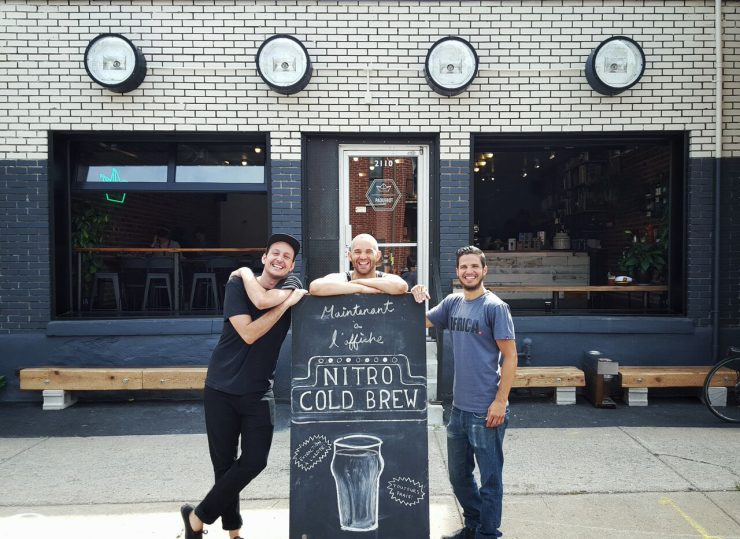
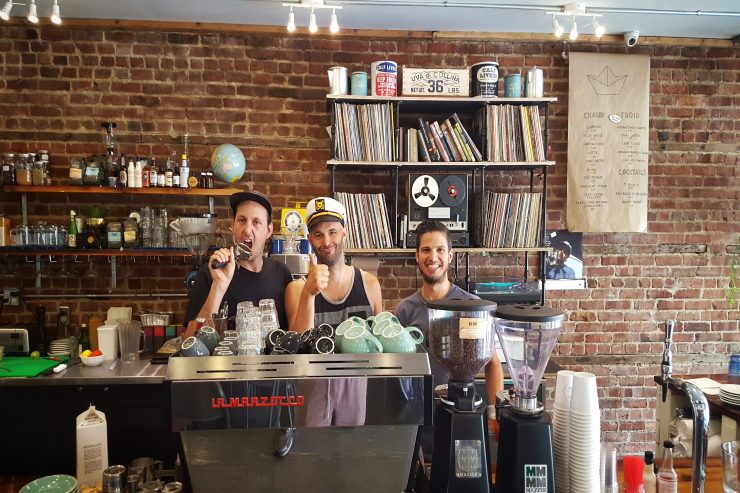
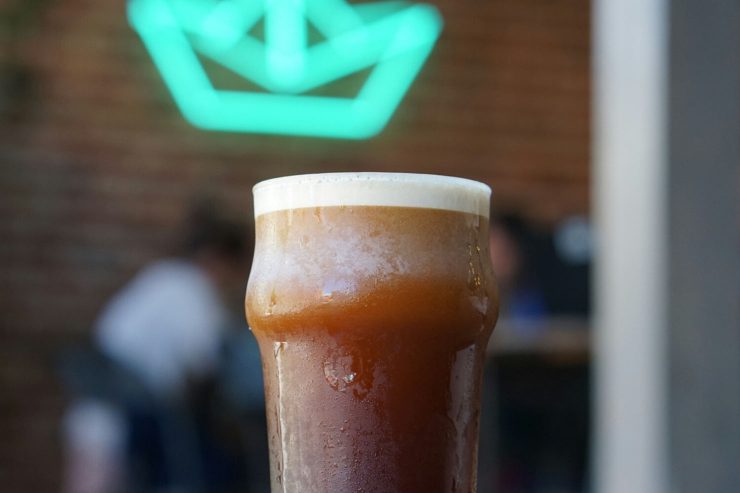
Paquebot Cafe burst rather suddenly onto Montreal’s coffee scene in July 2015, notable at the time for being the first in the city to offer nitro cold brew. Since then, the Paquebot team, led by owners Samuel Perreault, Simon-Louis Brosseau, and Jimmy Ledoux, has steadily built up a repertoire of the fizzy, chilled, and caffeinated.

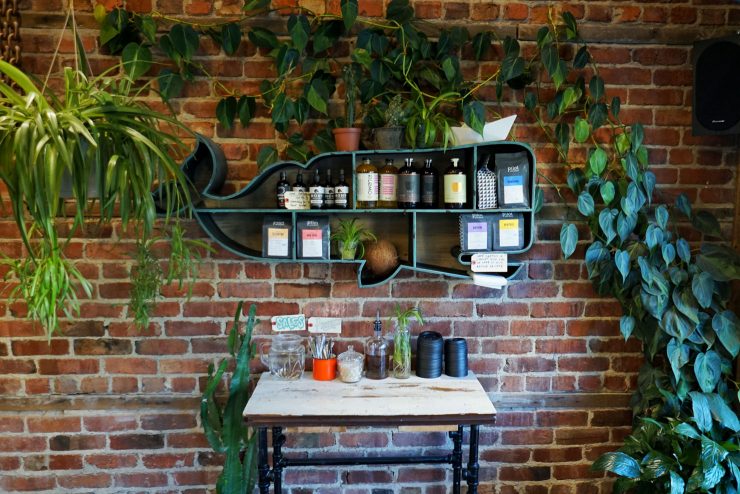
The commitment to cold resonates well with Paquebot’s nautical, deserted-island vibe. The name itself translates to “ocean liner” in English and the cafe space is replete with subtle flourishes like captain’s hats, coconuts, and a vintage record player that’s spinning some vintage luau music as I walk in. Meanwhile, the menu lists items like Thug Boat (combined order of an espresso shot and a latte) and Titonic (cold brew with tonic water).

paquebot cafe montreal quebec canada nirto cold brew draft latte pilot coffee sprudge

paquebot cafe montreal quebec canada nirto cold brew draft latte pilot coffee sprudge

Relative newcomers to the coffee scene, but claiming decades of combined experience in the restaurant industry, Perreault, Brosseau, and Ledoux first began thinking of opening a cafe in 2014.

“We always loved coffee,” says Perreault, “but never worked in it. Even Simon, who is our head of coffee, he’d worked with lots of coffee over time but never as a job.”

Perreault and Ledoux—already co-owners of Les Folies restaurant—used the need for a new production kitchen as an opportunity to find a space that could accommodate a cafe. The hunt for the new location landed them a spot on Belanger Street, in the city’s Rosemont borough.

Once they’d completed the six-months work of overhauling the space themselves, they started developing their coffee program in earnest. A trip to Stumptown Coffee Roasters in New York got them thinking about nitro cold brew, but it was after swapping ideas with Toronto’s Pilot Coffee Roasters that they really decided to pursue the concept.

paquebot cafe montreal quebec canada nirto cold brew draft latte pilot coffee sprudge

paquebot cafe montreal quebec canada nirto cold brew draft latte pilot coffee sprudge

“[Pilot] were starting to try to do their own nitro cold brew, but it looked really complicated to do,” says Perreault. “We looked at their setup, they explained it a bit to me. We came back here on Monday and by Wednesday, it was good to go.”

By the end of the week, Perreault was sending photos of his creamy-headed cold brew to Pilot.

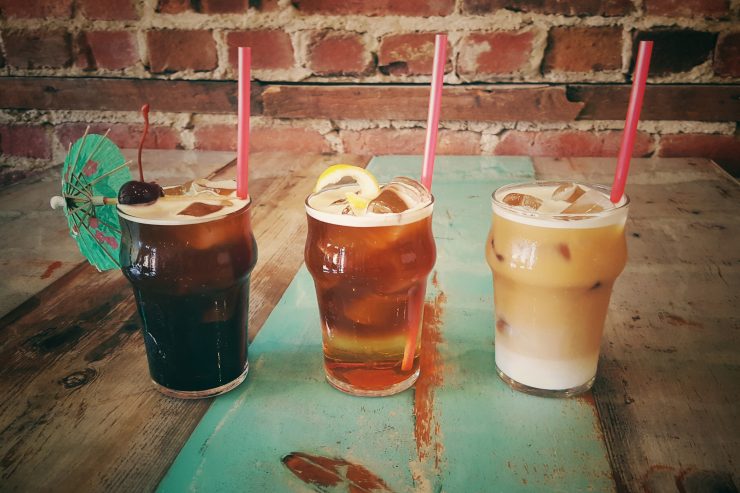
A freshly poured, icy glass lands in front of me, this batch made from Pilot’s Ethiopia Ana Sora. It’s thick and creamy all right and sparkles with a bright, almost strawberry tanginess. Through rounds and rounds of tests, using a range of varieties and origins, they’ve found washed Ethiopian coffees best hit that refreshing note they want.

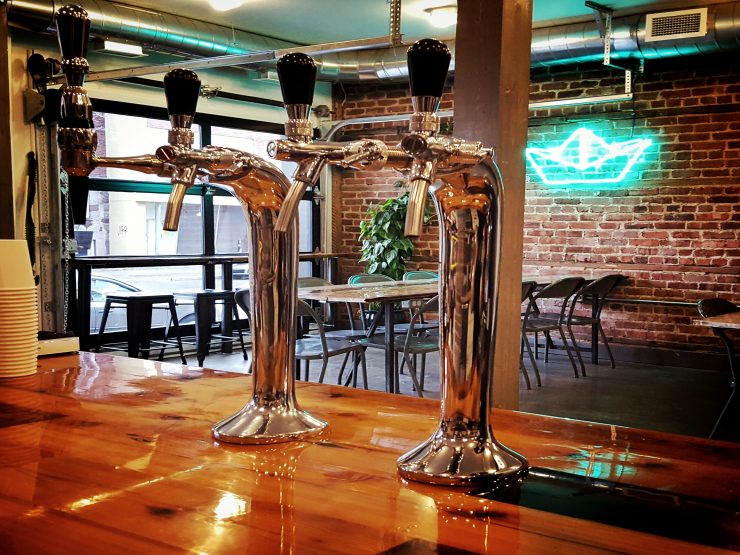
But Perreault and Brosseau weren’t satisfied to stop there—one tap last summer has grown to four now, featuring other drinks like carbon-injected Coffee Lemonade and a Green Tea Fizz alongside their second most successful creation, the draft latte—which they believe lays claim to being the first of its kind in Canada.

paquebot cafe montreal quebec canada nirto cold brew draft latte pilot coffee sprudge

Though they’d seen La Colombe Torrefaction’s canned draft lattes, their own version emerged from a cold-brew cocktail called The Empress of Belanger. Using Pilot’s Heritage blend as a cold-brew base, they add only simple syrup, Quebec milk, and a dash of chocolate bitters to keep it as natural as possible.

The au naturel approach seems to pay off—cold brew may be all the rage in the coffee world, but at Paquebot, it’s the draft latte that’s flying through the lines. “We’re seeing now that it’s more popular than the cold brew, we sell two times as much of that now,” says Perreault.

paquebot cafe montreal quebec canada nirto cold brew draft latte pilot coffee sprudge

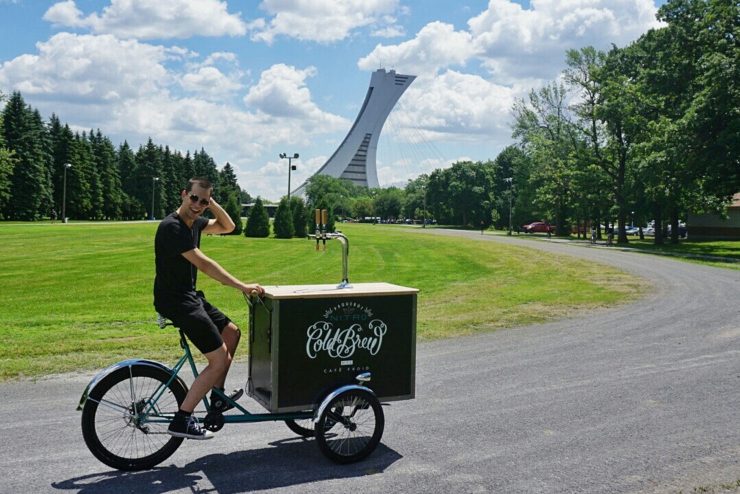
Earlier in the heat of Montreal summer, Paquebot took to the streets, striking out aboard a newly christened cold-brew bike. Fitted with two taps and enough space for two kegs, the bike cruises Rosemont or casts anchor at private events, dishing out nitro cold brew and draft lattes. It seems like a lot of activity for a cafe fresh off its first anniversary, but there’s a list as long as my arm of still-to-come concoctions.

“We’re always experimenting,” says Perreault with a smile. “If not, I get bored.”

Paquebot is located at 2110 Rue Belanger, Montreal. Visit their official website and follow them on Facebook, Twitter, and Instagram.

Brendan Adams is a freelance journalist writing for Vice Canada, Metatron, Hazlitt and more. This is Brendan Adams’ first feature on Sprudge. 

The post Cold Brew Stays Hot In Montreal At Paquebot appeared first on Sprudge.


from RSSMix.com Mix ID 8200593 http://sprudge.com/cold-brew-stays-hot-montreal-paquebot-106869.html?utm_source=rss&utm_medium=rss

A VIDEO Guide to Cupping Coffee

Cupping: an essential skill for anyone who wants to buy coffee, sell coffee, roast coffee, or just develop their palate for coffee.

But the process is both a little more complex, and a little simpler, than you might imagine.

Why Learn to Cup?

Cupping will help you to analyse the taste of your coffee and its roast profile. You’ll be able to determine its flavour and aroma profile, if there are any defects, and more.

How Do You Cup Coffee?

Cupping coffee is a series of simple, but important, steps. This video from Roasty Coffee explains each stage, from the grind setting to the amount of time you should wait.

SEE ALSO: Coffee Cupping: 5 Key Steps to Cupping Mastery

SEE ALSO: Coffee Science: What’s Acidity?

And that’s all you need to know in order to cup coffee. Your next step is to practise – because practice makes your palate perfect.

Just don’t forget those cupping spoons!

Feature photo credit: Roasty Coffee

Please note: Perfect Daily Grind does not own the rights to these videos and cannot be held accountable for their content.

The post A VIDEO Guide to Cupping Coffee appeared first on Perfect Daily Grind.


from RSSMix.com Mix ID 8200593 http://www.perfectdailygrind.com/2016/09/video-guide-cupping-coffee/

10 Steamy Looks From The 2016 New York Coffee Festival

pasted-image-at-2016_09_27-11_59-am

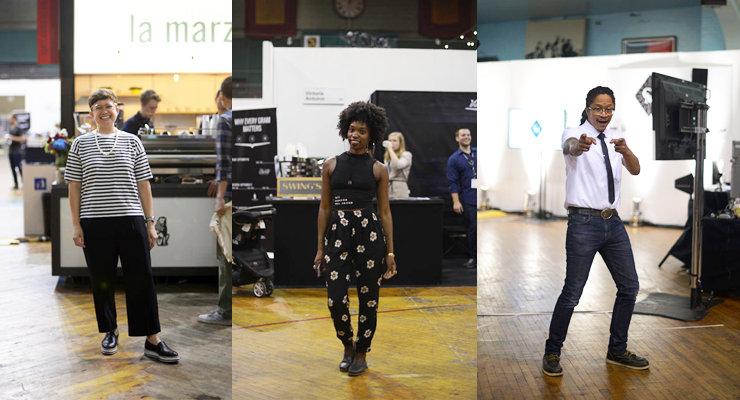
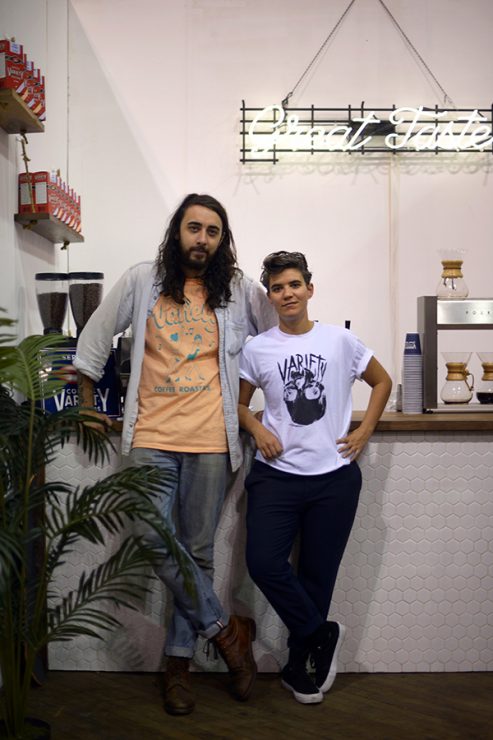
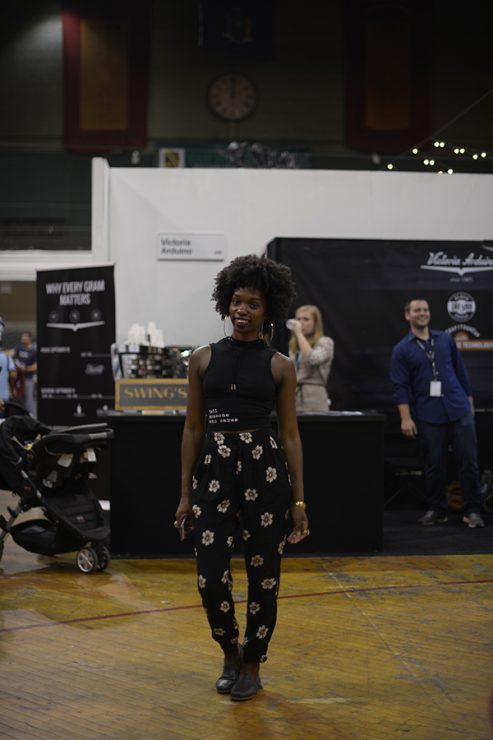
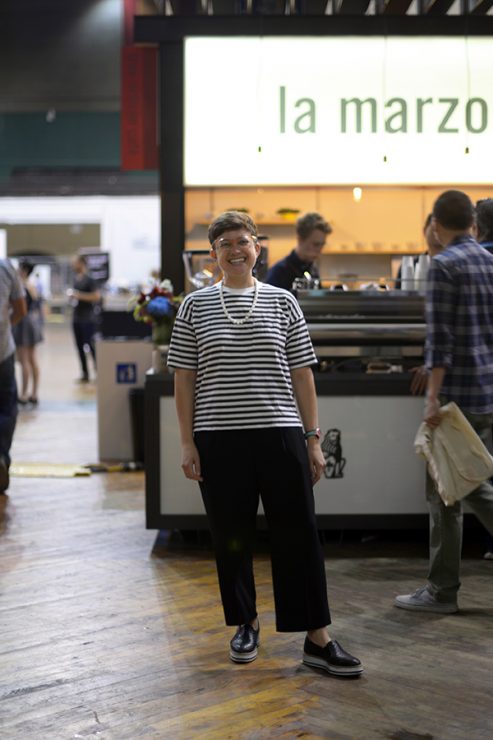
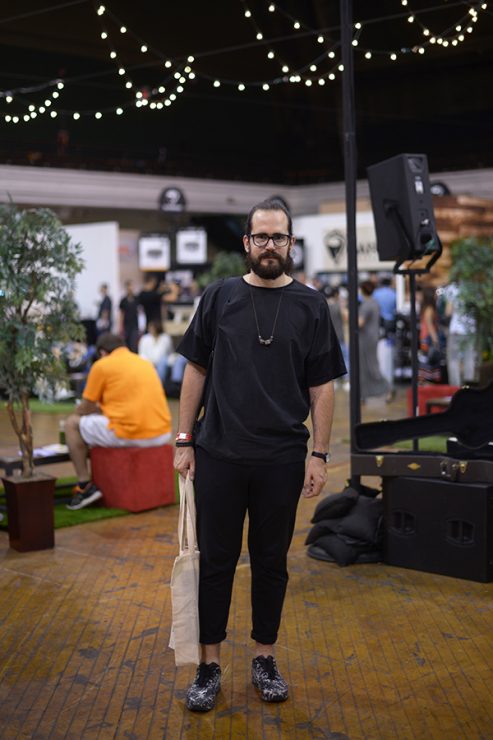
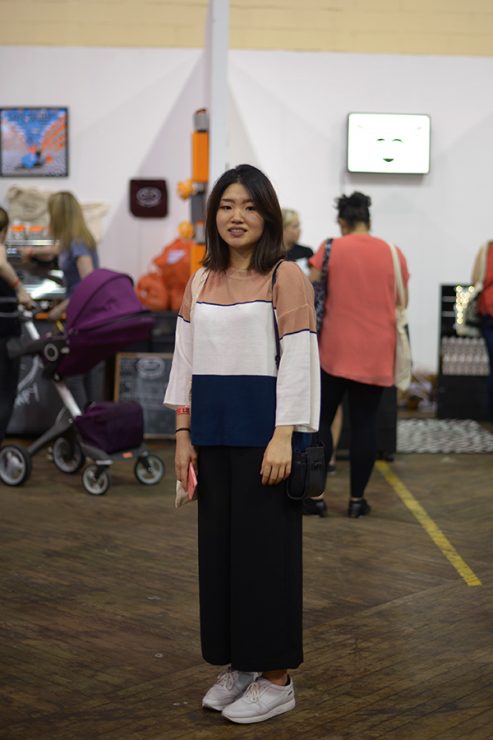
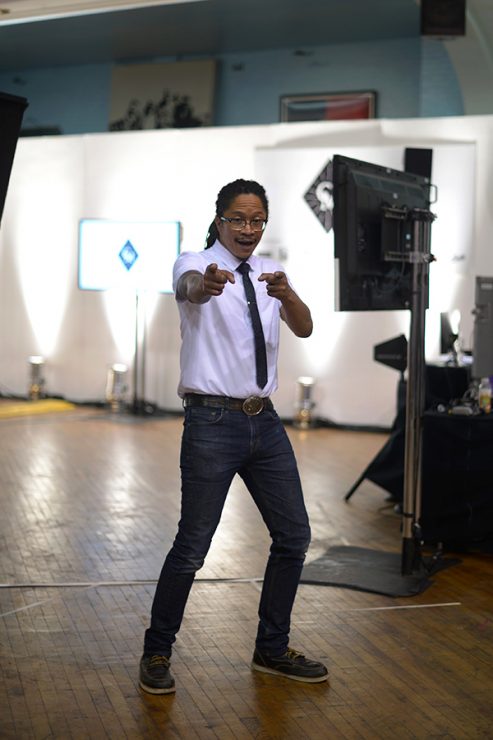
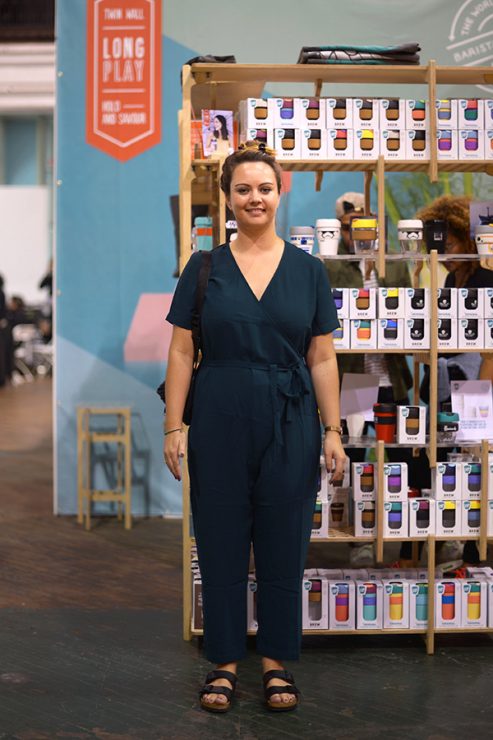
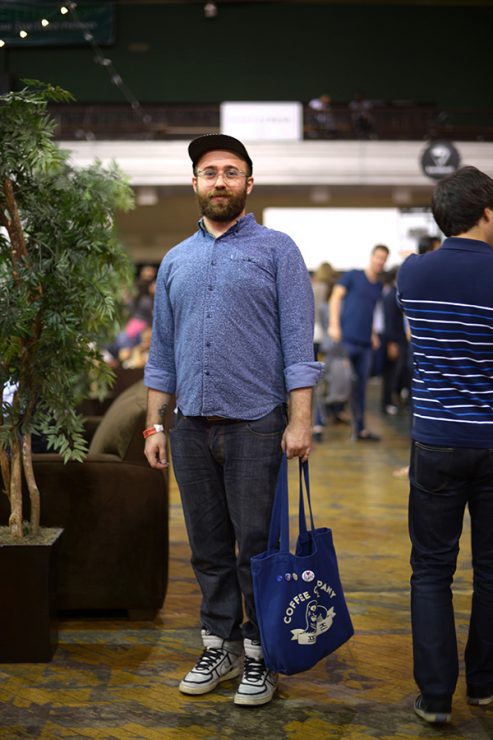
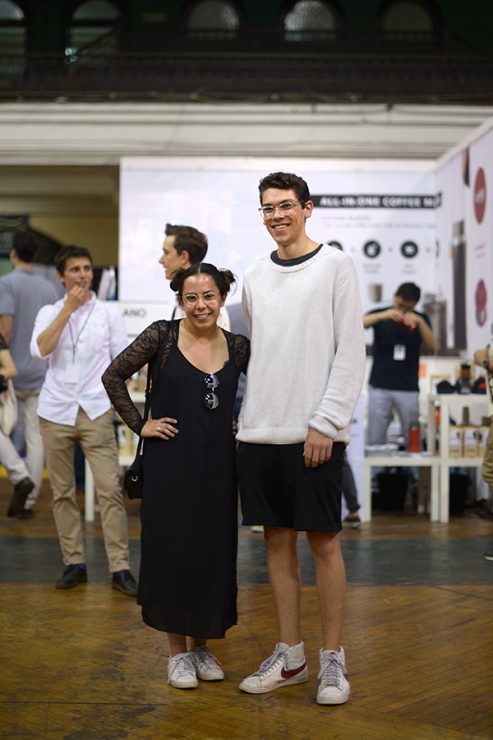
Fashion. Coffee. The two worlds collided at the 2016 New York Coffee Festival in Manhattan. I explored the grounds of the 69th Regiment Armory on the lookout for stylish festival-goers, and it didn’t take long to spot cute coffee drinkers sporting everything from t-shirts to ties and jumpers to jumpsuits. After chatting with a diverse array of attendees, I was surprised and pleased to discover how diverse the crowd really was; roaming amongst the expected baristas, trainers, and account reps were a sea of curious coffee drinkers who had no reason at all to be at the event except for their appreciation for the drink. Truly this was a festival for the common man, but by no means were their outfits basic.

Here are ten of my very favorite looks from the floor of the 2016 New York Coffee Festival.

new york coffee festival style top looks sprudge

1. Ky Katrensky, Director of Operations and Amanda Ventresca, Barista, Variety Coffee Roasters

new york coffee festival style top looks sprudge

2. Patricia Germain, Lead Educator, Procreate Coffee NYC

new york coffee festival style top looks sprudge

3. Emily Rosenberg, Manager of Education and Account Development, Stumptown Coffee Roasters

new york coffee festival style top looks sprudge

4. Jamie Berezin and John Louth, Editors, Oxford University Press

new york coffee festival style top looks sprudge

5. Jonas Van Eetvelt, Barista, Or Coffee Roasters

new york coffee festival style top looks sprudge

6. Joo Lee, coffee drinker and Assistant Designer, Global Brands Group

new york coffee festival style top looks sprudge

7. Lemuel Butler, 2016 US Barista Champion and Wholesale Customer Support, Counter Culture Coffee

new york coffee festival style top looks sprudge

8. Laura Marriott, Account Manager, KeepCup

new york coffee festival style top looks sprudge

9. Alex Bernson, Marketing Manager, World Coffee Events

new york coffee festival style top looks sprudge

10. Helen Magodan and Sam Schrag, coffee enthusiasts

Joanna Han is a Sprudge contributor based in New York City. Read more Joanna Han on Sprudge. 

The post 10 Steamy Looks From The 2016 New York Coffee Festival appeared first on Sprudge.


from RSSMix.com Mix ID 8200593 http://sprudge.com/10-steamy-looks-2016-new-york-coffee-festival-108421.html?utm_source=rss&utm_medium=rss

Tuesday, September 27, 2016

Commercial to Specialty: China as a Growing Coffee Origin

It’s impossible to ignore China’s growing levels of coffee consumption. Yet it’s still surprisingly easy to forget about its coffee production.

You see, China is a country of contradictions. It’s the the world’s most populous country, with booming cities: Beijing, Shanghai, Guangzhou… But what I’ve come to know and love of it is the hidden beauty of its rural south. It boasts a people rich in history, culture, and identity; a breathtaking landscape; and, most importantly, the country’s coffee farms.

I’m here to tell you about China’s coffee production, its history, and the appearance of specialty. I’m sure you’ll understand why it’s become so special to me.

SEE ALSO: Barista Champion J. Zhang: Reinventing Specialty Coffee in China

coffee farm china

NaNu rakes coffee on Fuyan Farm in Pu’er.

Coffee’s New Roots in China

Coffee has a relatively young history in this country. French missionaries first planted it back in the late nineteenth century, but production didn’t take off for nearly 100 years – despite a government initiative in the ‘60s. It was in 1988, as part of another government-led project assisted by the United Nations Development Program and the World Bank, that coffee began to be commercially developed on a large scale.

And when we say large, what we really mean is precocious.

According to the ICO, coffee production increased by 21% between 1994 and 2004, and another 21% between 2004 and 2014. In fact, the crop year 2013/14 saw the production of 114,000 metric tons of coffee – placing the country just above Costa Rica as the 14th-largest producer in the world.

In the near future, we can expect production levels to continue rising, and China to continue making its way up the list of origins.

farm-worker

Mr. Li, NaNu’s husband, processes coffee on Fuyan Farm in Pu’er.

Growing Regions & Coffee Varietals

We’re only just starting to pay attention to China as a producing country, but just like other origins there are variations within the different regions and sub-regions.

The main growing regions in China are Yunnan, Fujian, and Hainan Island. Fujian and Hainan Island are known for growing Robusta, and only account for about 5% of the country’s total production.

Arabica-growing Yunnan, however, makes up the other 95%. This province shares a border with Vietnam, Laos, and Myanmar, adding to its diversity. And according to the ICO, it also has an average altitude of 2,000 m.a.s.l. Catimor (a Timor-Caturra hybrid) is the varietal of choice for most of the farmers here, thanks to its resistance to leaf rust, high yield, and hardiness.

In the last five years, significant attempts have been made to diversify with new cultivars, such as Typica and Bourbon. However, in 2013 Lily Kubota of the SCAA reported that rust has, quite literally, plagued some of the farmers attempting this.

Within Yunnan, there are several different growing regions; however, they are all mainly located south of the city Mojiang, which is transected in two by the the Tropic of Cancer. All attempts that I have seen or heard of to grow coffee north of this have proved futile, due to frost.

The extremely mountainous Pu’er Province – known globally for its fermented teas – is quickly blooming into the coffee-producing capital of China. This region, which is larger than the country of Ecuador, produces nearly half of the country’s total production according to Kubota.

coffee-plants

Catimor growing on Banka Farm in Pu’er.

Who Drinks Chinese Coffee?

Even from the very beginning, the growth of Chinese coffee production has been driven by large corporations like Nestlé. They purchase beans in large amounts, and then use them to make instant coffee. Recently, other globally recognized names have been added to this list, including Louis-Dreyfus, Volcafe, and Starbucks.

An increasing amount of the coffee goes to the domestic market, reflecting the rapid growth of consumption (which, according to the ICO, is in double digits). In these cases, it tends to be used either as instant coffee or commercial-grade roasted coffee.

As for the exports, Germany is the main recipient followed by the USA and Belgium. Malaysia and France are also significant destinations.

wet-processing

NaNu pushes coffee through the density channels on Fuyan Farm in Pu’er.

Does Chinese Specialty Exist?

The vast majority of coffee produced here is commercial grade – meaning prices over the last ten years have been affected by market volatility as well as frost and other environmental factors.

However, about four to five years ago, producers and agricultural bureaus began to discuss specialty coffee. Rumours of the ability to obtain hundreds of dollars per kilogram made specialty attractive – but no less elusive. There were few who could advise on how to grow, or evaluate, high-cupping crops.

With the help of organizations like CQI and SCAA/SCAE-certified schools throughout the country, this has slowly begun to change. Best practices at a farm level, and better wet/dry mill processing, is enabling better quality coffee.

And in fact, in the 2015 Best of Yunnan (hosted by CQI and the Yunnan Coffee Exchange) 25 international judges cupped the region’s best-scoring coffee at 84+.

Chinese coffee may be relatively new. It may be predominantly commercial grade. And it may be in a region susceptible to leaf rust. Yet it’s clear that it has the potential to produce excellent coffee.

And as production and consumption levels increase, I’m confident that we’ll only see more specialty Chinese coffees.

Written by T. Heinze of Hani Coffee Co. and Yunnan Coffee Traders. All photos by Bryon Lippincott. 

Perfect Daily Grind

The post Commercial to Specialty: China as a Growing Coffee Origin appeared first on Perfect Daily Grind.


from RSSMix.com Mix ID 8200593 http://www.perfectdailygrind.com/2016/09/nestle-specialty-china-growing-coffee-origin/

Bloom Is Coming To Chicago In October

bloom-website-homepage-1
After a successful inaugural event earlier this spring, the Barista Guild of America is hosting the second edition of their three-day coffee conference. Taking place October 26-28th, Bloom Chicago will feature speakers from both inside and outside the coffee industry to provide insight on an array of topics, looking to create “a unique opportunity for deeper discussion and engagement for attendees.”

According to the website:

Bloom will feature thought-leaders, all of whom will present topics that specifically address the craft coffee community. An interactive discussion between speaker and attendees will follow each talk, creating the opportunity for meaningful dialogue. The outcomes of these discussions – ideas, challenges, and solutions will be reviewed, recorded and distributed for takeaway at the end. We believe Bloom to be a forum by which the coffee community can progress together in real-time.

This year’s speakers include Chicago restaurateur and 2015 James Beard Award winner Donnie Madia, Four Letter Word Coffee and Whiner Beer Co. co-founder Ria Neri, and Intelligentsia’s Vice President of Retail and emcee extraordinaire Marcus Boni. Topics of discussion will include being present, the value of perspective, and carving a career in coffee.

And if you are unable to make it out to Chicago, Bloom will be hosting satellite events across the country, where the talks will be streamed a few hours after they occur.

Tickets for Bloom are $120 for both BGA members and non-members and can be purchased here. A full list of details can be found on the Bloom website.

Zac Cadwalader is the news editor at Sprudge Media Network.

*top image via Bloom

The post Bloom Is Coming To Chicago In October appeared first on Sprudge.


from RSSMix.com Mix ID 8200593 http://sprudge.com/bloom-coming-chicago-october-108736.html?utm_source=rss&utm_medium=rss