Wednesday, March 29, 2017

Kickstarter: Perk Brings The Percolator To The Modern Age

One of the cool things about this current wave of coffee is how older ideas get reexamined, tweaked, and brought into the 21st century. The Chemex wasn’t always the staple brewing device it now is (though admittedly little to nothing has changed about it in the past 60 years). Automation gave ground to manual brewing, but single-serve brewers like Curtis’ Gold Cup and Seraphim and temperature appropriate home machines have all since caused a spike in automation adoration. And now, the percolator is getting a makeover thanks to the PERK.

Launching today on Kickstarter, the PERK (whose video was filmed at Iconik Coffee in Santa Fe, featured here on Sprudge) relies upon the fundamental mechanics of a percolator—heated water that gets circulated over a bed of coffee grounds—but with a modernized approach to controllability. Normal percolators rely on near boiling (if not boiling) water to circulate over the coffee, which can lead to over-extraction. The PERK uses a pump to move the water over the grounds, affording the brewer the ability to regulate and control the temperature. And the PERK also has a programmable timer that shuts off the pump at the designated time, ending the extraction. It is a pretty vast improvement on a regular percolator that requires you to pull the device off/shut off the heating element, which will still brew until the water temperature has naturally decreased.

The PERK is looking to raise $100,000 through Kickstarter and has already raised nearly $18,000 in its few short hours of existence, so it’s likely to get fully funded. Scheduled to retail at $299, there are still a handful of Kickstarter perks that bring the cost down to $149 (or $174 if you’re not quick enough to get the SUPER-Duper Early Bird Special).

Oh and tea. It does tea, too.

For more information on the PERK, its functionality, or to back the campaign, visit their Kickstarter page here.

Zac Cadwalader is the news editor at Sprudge Media Network.

*all media via PERK

The post Kickstarter: Perk Brings The Percolator To The Modern Age appeared first on Sprudge.


from RSSMix.com Mix ID 8200593 http://sprudge.com/kickstarter-perk-brings-percolator-modern-age-117964.html

La Marzocco Launches in China, Latest Coffee Brand Targeting It

Last year, Starbucks CEO Howard Schultz told CNBC, “I wouldn’t be surprised if, one day, we have more stores in China than we do in the US.”

For many big brands, China is the country that’s going to revolutionise coffee. Big brands have begun flocking to the East Asian country, whose coffee consumption is growing fast – nearly tripling in just four years, according to the BBC. And now La Marzocco has also taken the plunge.

SEE ALSO: Commodity to Specialty: China as a Growing Coffee Origin

la marzocco espresso machine with chinese design

Strada. Credit: La Marzocco

Coffee Consumption in China

Coffee consumption is still relatively low in China – it is, after all, a tea-consuming culture. What’s more, statistics are skewed by the country’s vast diversity. Approximately the same size as the US, it is far less homogeneous. However, in 2014 the ICO reported a 16% year-on-year increase over the last decade – helped by a growing middle class.

Nestlé dominates the Chinese coffee consumption and production market. However, other companies are now focusing their business development plans on the 1.38 billion people living in the country. Starbucks’ first ever international Roastery and Reserve will open in Shanghai in May. Dunkin’ Donuts is another coffee chain targeting China.

And now specialty coffee brands, such as La Marzocco, is doing the same.

Starbucks cups

Specialty Coffee in China

Specialty coffee culture has been growing in China for a while now – as the country’s Barista Champions could tell you. But the opening of a branch by one of coffee’s most famous hand-made espresso machine companies, La Marzocco, indicates how strong the market it.

La Marzocco has been working with local partners Gordon Chang, Douglas Chang and Ivy Yua for many years now, and took this weekend to launch its branch with them. Douglas Chang says, “This branch opening symbolizes the beginning of a new era, where specialty coffee is ready to take on the mass market coffee brands that are currently dominating the Chinese market.”

Perfect Daily Grind is not affiliated with any of the individuals or bodies mentioned in this article, and cannot directly endorse them.

Want to read more articles like this? Sign up to our newsletter!

The post La Marzocco Launches in China, Latest Coffee Brand Targeting It appeared first on Perfect Daily Grind.


from RSSMix.com Mix ID 8200593 https://www.perfectdailygrind.com/2017/03/la-marzocco-china-coffee/

Slow Down At OOP Coffee In Belo Horizonte, Brazil

oop coffee cafe belo horizante savassi minas gerais brazil sprudge

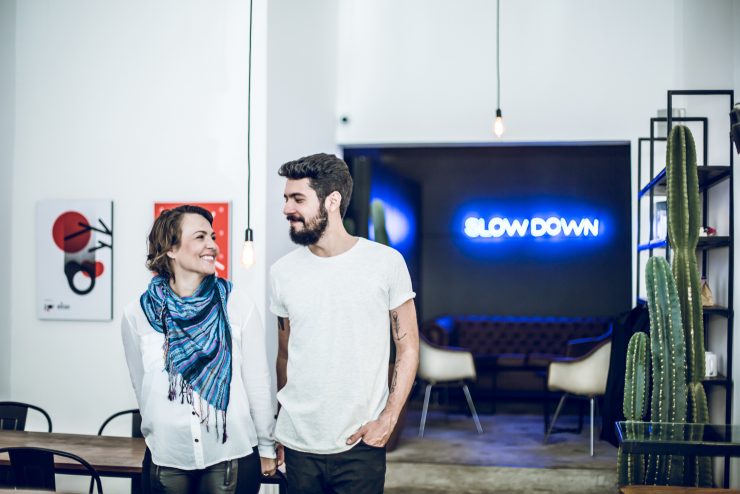
Adriene Cobra and Tiago Damasceno take it slow at OOP Coffee. (Photo: Luiza Ananias)

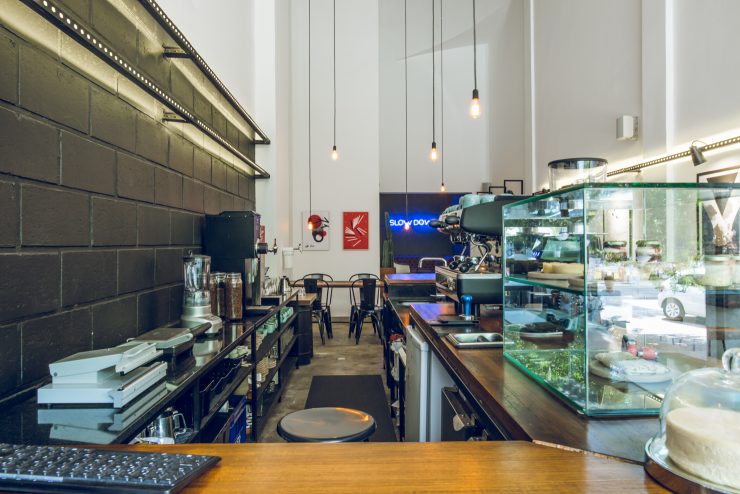
One cannot visit Belo Horizonte, the capital of Brazil’s Minas Gerais state, and miss the Savassi neighborhood. It hosts most of the bars, cafes, restaurants, and commerce areas in the metropolitan area, and it exudes a cosmopolitan feel that’s rare in other parts of the city. The area orbits the Praça da Savassi square—called the “Praça Diogo de Vasconcelos” until the 1930s when both the square and the neighborhood became associated with a popular local Italian bakery. Just a block away is OOP Coffee, a crucial hangout for workers, tourists, and all the others who need a break from bustling Savassi.

oop coffee cafe belo horizante savassi minas gerais brazil sprudge

(Photo: Flávio Charchar)

Tiago Damasceno and Adriene Cobra, OOP’s founders, met at their formal job, in a bank. Damasceno, originally from Belém in the north of Brazil, always had a coffee habit, but got deeper into specialty coffee after moving to Belo Horizonte. Cobra’s family had a coffee farm in the south of Minas Gerais, and she knew the country routine well. After watching a TV show about how the owners of Beluga, in São Paulo, left their regular jobs to open a coffee shop, Damasceno invited Cobra—“the perfect partner,” as he said—to join him in a similar pursuit. Savassi is similar to Beluga’s part of São Paulo, close to many design, architecture, and marketing firms. They knew it had to be there.

To test the waters, the duo staged pop-up events to gauge public acceptance of specialty coffees and were surprised by the number of people who approved of both the cafe idea and their coffee. So encouraged, early in 2016 the pair found a pretty, high-ceilinged location a block removed from the Savassi madness, on a quiet street.

oop coffee cafe belo horizante savassi minas gerais brazil sprudge

(Photo: Luiza Ananias)

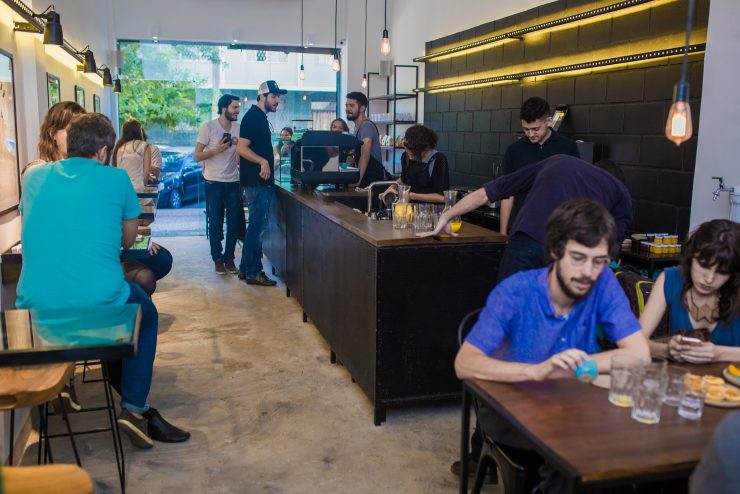
The welcoming vibe at OOP begins when you are greeted by a barista at the counter upon entering—not an accident, as Damasceno and Cobra want a place not just for specialty coffee lovers but also the less-knowledgeable general public. “We don’t want to be a niche destination, but rather to make our contribution to enlarge the specialty coffee public in Belo Horizonte,” Damasceno explains.

Work on the clean, streamlined cafe was completed with designers Paulo Augusto Campos and Marina Garcia. So when Cobra and Damasceno wanted to have a neon sign, the architectural duo had the idea for an area in the back with a couch, which now rests under a neon “Slow Down” sign. Damasceno jokes that this is now BH’s Tour Eiffel—one of the town’s most photographed icons. “It turns out that slowing down is exactly what we want customers to do,” Damasceno adds. “To take time to enjoy their moment, their cup of coffee.”

oop coffee cafe belo horizante savassi minas gerais brazil sprudge

(Photo: Flávio Charchar)

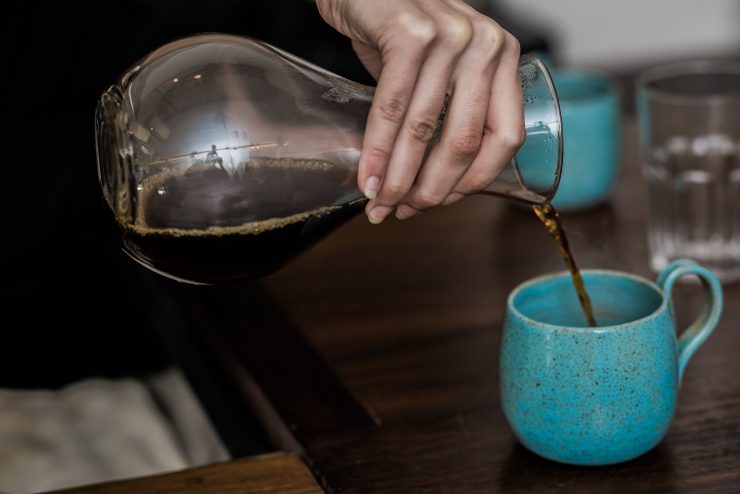
Along OOP’s walls, you’ll always find artwork from local artists. The ceramic cups were specially made for the shop by local supplier Ateliê de Cerâmica. The benches were made by Leonardo Bueno, another Minas Gerais artist, with wood reclaimed from Mineirão, Belo Horizonte’s largest stadium, during its pre-World Cup renovations.

oop coffee cafe belo horizante savassi minas gerais brazil sprudge

(Photo: Flávio Charchar)

OOP’s espresso beans rotate weekly, and barista Victoria Magó will happily introduce you to any new coffee being used. (V60 and AeroPress options are also available.) Damasceno recently started roasting, while Cobra is focused on sourcing the best green coffee she can find. Upon my visit I tried a sweet, beautifully roasted pour-over from Serra da Canastra.

The food menu at OOP is short and uncomplicated. I recommend the Canastra cheese (really well-made raw-milk cheese from the same mountainous area in Minas Gerais that my pour-over came from) served with homemade jam. The jam I tried the day I visited was the acerola one, made by Cobra’s aunt in the countryside. Combine it with a pour-over and it will make your day, I promise.

oop coffee cafe belo horizante savassi minas gerais brazil sprudge

(Photo: Luiza Ananias)

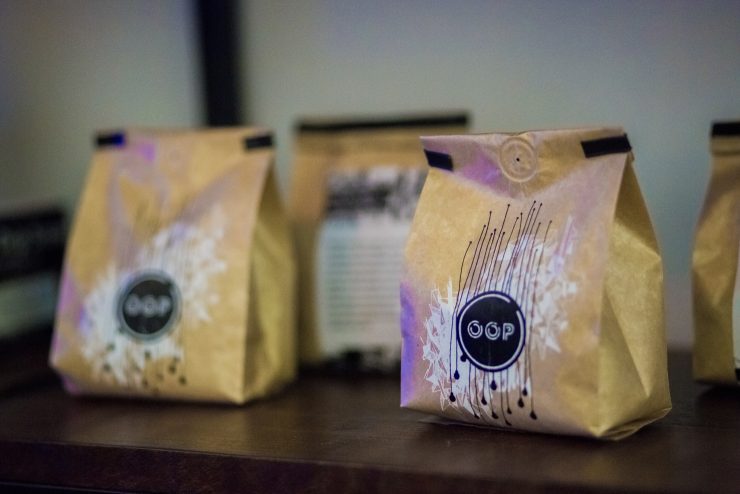
The word oop means “open” in Afrikaans, which is exactly the mission of this cafe: to be open to the local community of artisans, open to Savassi passersby, open to new sensorial experiences with specialty coffee, open to taking a break from the crowd. Long live the coffee shops that aim to be truly open in those senses.

OOP Coffee is located at Rua Fernandes Tourinho, 143 Belo Horizante, Brazil. Visit their official website and follow them on Facebook and Instagram.

Juliana Ganan is a Brazilian coffee professional and journalist. Read more Juliana Ganan on Sprudge.

The post Slow Down At OOP Coffee In Belo Horizonte, Brazil appeared first on Sprudge.


from RSSMix.com Mix ID 8200593 http://sprudge.com/oop-coffee-112807.html

Kurasu Kyoto: The Simple Beauty of Japanese Coffee Culture

kurasu japan ceramics coffee subscription cafe kyoto sprudge

kurasu japan ceramics coffee subscription cafe kyoto sprudge

“The ability to see great beauty in the everyday objects around you is a rare and precious gift.”

These may not be typical words for an investment banker, but Yozo Otsuki, formerly of Goldman Sachs, isn’t typical. After leaving his position in Tokyo and following his wife to Sydney, Australia, Otsuki decided to take a break from banking and think about what he wanted to do next. His fondness for the simple and understated beauty of Japanese homeware led him to start Kurasu, an online store marketing his favorite lifestyle products to Australia.

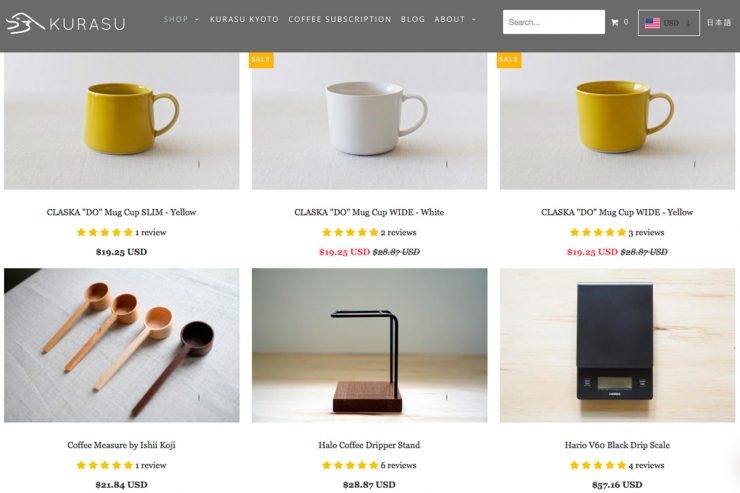
After roughly two years of operation, Otsuki noticed that nearly 60% of his sales came from his coffee-related items and decided to follow the trend. He shifted the site’s focus exclusively to coffee goods, moved his shipping operation directly to Japan, and aimed for a global market. The gamble paid off, and things have gone well for Kurasu. A look at their online catalogue gives some insight into why.

kurasu japan ceramics coffee subscription cafe kyoto sprudge

The products on Kurasu’s website are hand-picked, and the emphasis is on craftsmanship and aesthetic value over quantity. The store sells mostly manual brewing hardware; drippers, kettles, carafes, and mugs are all featured and the selections change often. The collections of ceramic mugs made in the pottery town of Hasami in Nagasaki are a perfect example of what Kurasu adds to the coffee community: a unique, artisan product that normally would only reach design and pottery fans within Japan now has a global audience.

The site also offers a coffee subscription service which features specialty coffee roasters from throughout Japan. Each month a different roaster is selected, some of whom—such as Light Up Coffee, Trunk Coffee, and Glitch Coffee Roasters—Sprudge readers may be familiar with. Kurasu pairs its subscription coffees with stories and photos of the people behind the beans, giving drinkers a more intimate connection to their beverage.

kurasu japan ceramics coffee subscription cafe kyoto sprudge

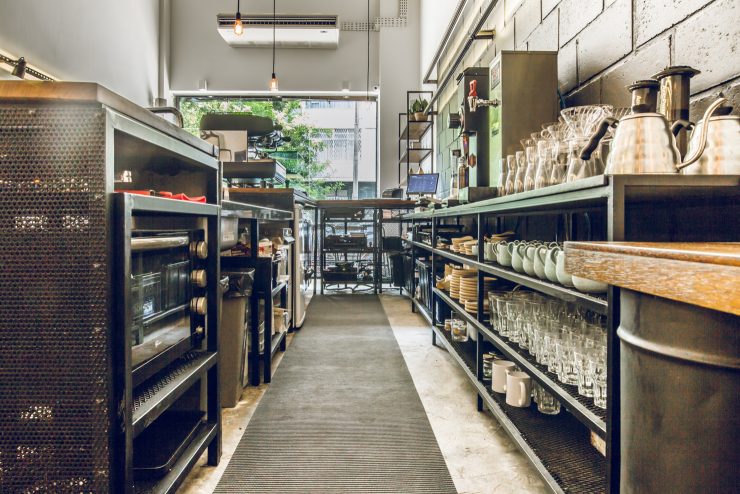
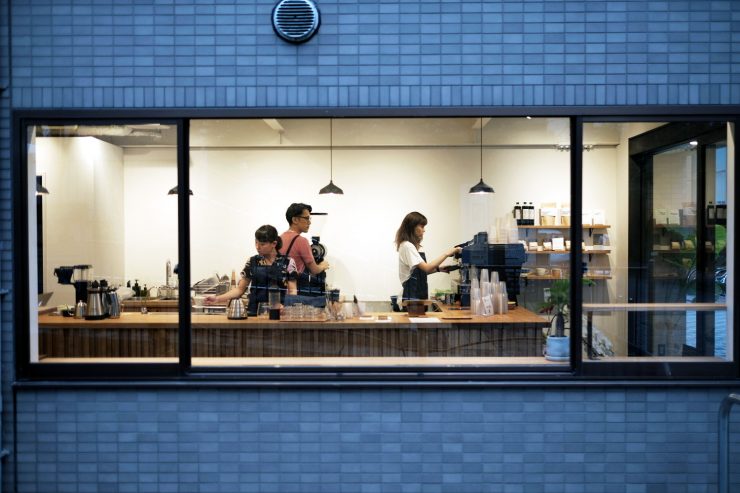
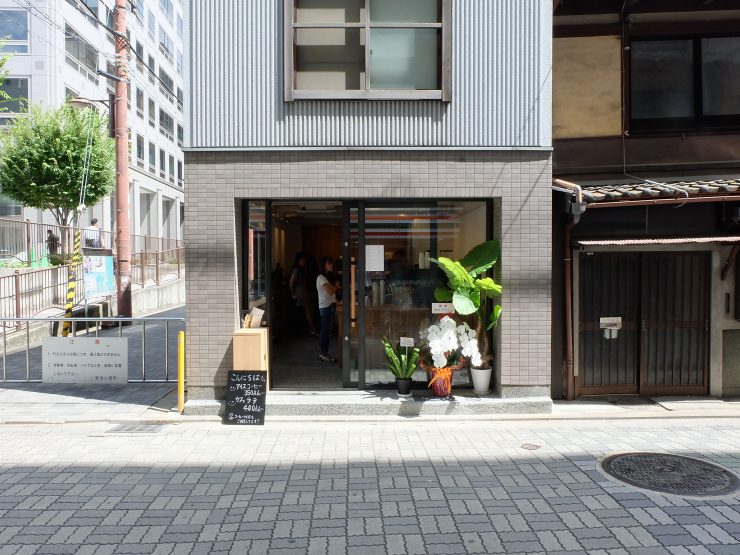
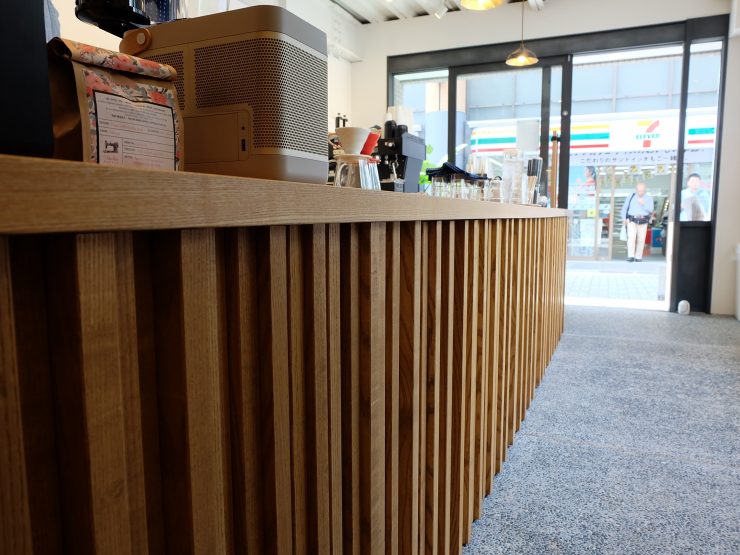
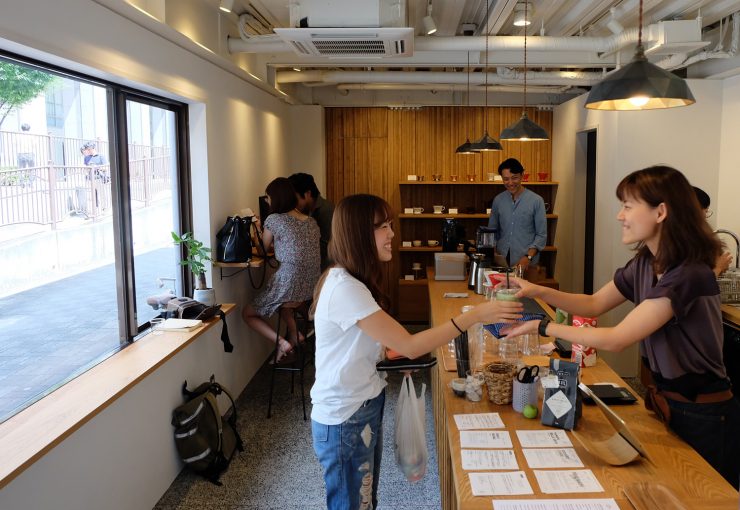
As the site has built a following, Otsuki began to get questions about a physical location. The idea made sense. A brick-and-mortar shop would give a face to his operation, allow people to touch the products he sells, and to deepen the connection to the coffees the shop features. This past summer that idea became a reality, and Kurasu opened a cafe/showroom minutes from Kyoto Station. It’s a place where visitors to Japan and locals can sample featured roasters from throughout the nation and check out some of Otsuki’s favorite merchandise. The design of the cafe has many similarities to their collection—it’s clean and functional, but uniquely Japanese. The layout is streamlined and open, and the subtle details, such as the white ash counters and the araidashi floors (pebbled laden concrete traditional to Japan), give it a quiet elegance.

kurasu japan ceramics coffee subscription cafe kyoto sprudge

kurasu japan ceramics coffee subscription cafe kyoto sprudge

Coffee is a global product, from seed to cup it’s touched by countless hands across the world. As this global community is pulled closer together sites like Kurasu offer a bridge to other coffee cultures. “We wanted not just to be a provider of Japanese coffee equipment, but to focus on the education of the Japanese way of home brew, the Japanese coffee culture, and the art of coffee itself,” says Otsuki. The roaster may speak a different language and the cups may be a different size than we are accustomed to, but there is a familiarity to all of it—a shared experience.

Kurasu is located at Kyoto, Shimogyo Ward, Higashiaburanokojicho, 552. Visit their official website and follow them on Facebook, Twitter, and Instagram.

Eric Tessier is a freelance journalist based in Tokyo. Read more Eric Tessier on Sprudge.

Additional photos courtesy Kurasu.

The post Kurasu Kyoto: The Simple Beauty of Japanese Coffee Culture appeared first on Sprudge.


from RSSMix.com Mix ID 8200593 http://sprudge.com/kurasu-110206.html

7 Defectos de Granos Verdes que Tostadores y Productores Deben Reconocer

La Asociación de Cafés Especiales de América establece que los granos verdes de especialidad pueden tener no más de 5 defectos en una muestra de 300 gr de café y ningún defecto primario.

Pero, ¿Qué es un defecto primario? ¿Cómo se ven los defectos de granos verdes? Y ¿Cómo afectan el sabor final en taza?

Visité a Ricardo Villegas Wilkie de Tecnocafé en Bogotá en el laboratorio de su empresa para descubrirlo. Tecnocafé, fue ganador el año pasado de cuatro medallas de oro, tres de plata y tres de bronce en el Concurso Internacional de Cafés Tostados en Origen realizado en París. Han estado tostando cafés de especialidad por 11 años y llevan un año trabajando directamente con productores. A continuación lo que Ricardo me comentó.

English Version: 7 Green Bean Defects Roasters & Producers Need to Recognise

seleccion de granos de cafe

Seleccionando los defectos de granos de café verde. Crédito: Tecnocafé

Cómo se Analizan las Muestras en el Laboratorio

Tecnocafé compra café en pergamino y luego el primer paso es analizarlo en verde. Preparan muestras, las trillan y clasifican por mallas, los granos que tienen un mismo tamaño se pueden tostar mejor. Luego se mide, la humedad (la cual debe estar entre 11% y 12.5%), densidad del grano y factor de rendimiento (la cantidad de sacos de pergamino que se necesitan para obtener 70 kilos de café verde).

espicifaciones de calidad del cafe

Especificaciones de Clasificación del Roasters Guild. Crédito: Angie Molina Ospina

Luego, se identifican los defectos físicos. Tecnocafé se rige por los parámetros de la  SCAA (ahora SCA) para esto: solo se permiten 5 defectos secundarios y 0 primarios.

Los defectos primarios son: grano negro, grano vinagre, cereza seca, piedras grandes, piedras medianas, palos largos, palos medianos. Los defectos secundarios son: pergamino, cáscara, grano partido, grano brocado, vinagre parcial, flote, caracol, piedras pequeñas, palos pequeños y dañado por el agua.

defectos de grano de cafe

Defectos de granos de café verde. Crédito: Coffee Research

7 Defectos Comunes de Granos Verdes

Existen muchos defectos de granos verdes y algunos son más fáciles de detectar que otros, todo sabemos cómo es una piedra. Ricardo me habló acerca de los dos defectos primarios que son difíciles de reconocer -negro total y vinagre- y cinco defectos secundarios comunes.

Grano Negro Total y Negro Parcial

Los granos totalmente negros son un defecto primario, mientras que el negro parcial es un defecto secundario. Los granos son color café o negro, arrugados y con la hendidura demasiado abierta. Esto se debe a la sobrefermentación, cereza sobremadura y agua insuficiente durante el desarrollo de la cereza.

grano de cafe negro

Grano negro total es un defecto primario y el grano parcialmente negro es un defecto secundario. Crédito: Angie Molina Ospina

Grano Vinagre o Vinagre Parcial

Los granos vinagres son un defecto primario, mientras que un vinagre parcial es un defecto secundario. Tienen un color entre café claro y oscuro. Esto es causado por la larga espera entre la recolección y el despulpado, un proceso demasiado largo de fermentación o el almacenamiento de los granos con un contenido de humedad demasiado alto.

granos de cafe vinagre

Los granos vinagres son un defecto primario y los parcialmente vinagres son un defecto secundario. Crédito: Angie Molina Ospina

Granos Partidos, Mordido o Cortado

Este es un defecto secundario que normalmente es causado por la máquina despulpadora.

granos partidos por la maquina despulpadora

Granos partidos por la máquina despulpadora. Crédito: Angie Molina Ospina

Grano Brocado

Otro defecto secundario, el cual es ocasionado por las plagas de café, la broca, el perforador blanco del tallo del cafeto, el gorgojo del café, entre otros. Los granos dañados por la broca, tienden a ser agrios y terrosos.

granos de cafe con broca

Grano brocado. Crédito: Angie Molina Ospina

Granos Sin Trillar

Los granos sin trillar son un defecto secundario, los cuales causan astringencia y amargor en taza. Además, la cáscara se puede quemar durante el proceso de tueste dañando otros granos en el proceso.

granos de cafe sin trillar

Granos sin trillar. Crédito: Angie Molina Ospina

Te puede interesar:  

Cómo Disminuir Los Defectos

Ricardo me dice que en Tecnocafé son afortunados de trabajar con proveedores confiables y leales. La cantidad de defectos en café verde que reciben es mínima. Sin embargo, están atentos a los defectos que reciben y lo utiliza para dar retroalimentación. Los productores luego pueden mejorar su recolección y métodos de producción.

Es importante entender que cada finca y cada país es diferente. Algunas regiones tal vez deban lidiar con la broca, otras deben hacer frente a la sequía o lluvias repentinas. Todo esto conlleva a defectos específicos.

Los tostadores y compradores deben tener en cuenta estos defectos antes de comprar café, es clave para asegurarse de que reciben granos de alta calidad y para dar retroalimentación a los productores.

Sin embargo, Ricardo me recuerda que lo que importa al final del día es el resultado en taza. “Algunos cafés pueden tener un buen aspecto físico, pero… el sabor en taza puede no ser atractivo para mi”. Es por eso que el análisis de los granos verdes es solo uno de los diferentes procesos de control de calidad que existen para el café de especialidad.

Escrito por Angie Molina Ospina, un agradecimiento a Ricardo Wilkie, Jhonatan Arias y Uber Camacho de Tecnocafé.

Perfect Daily Grind no está asociado con ninguna de las personas mencionadas en este artículo, y no puede contactarlos directamente.    

¿Quieres Seguir Leyendo Artículos Como Este? ¡Suscríbete Aquí!

The post 7 Defectos de Granos Verdes que Tostadores y Productores Deben Reconocer appeared first on Perfect Daily Grind.


from RSSMix.com Mix ID 8200593 https://www.perfectdailygrind.com/2017/03/7-defectos-de-granos-verdes-que-tostadores-y-productores-deben-reconocer/

Tuesday, March 28, 2017

From Farm to Café, How Can Your Coffee Be More Sustainable?

Coffee is a lifeline for millions, a major global commodity, and a crop that’s farmed in dozens of countries. It’s fusion of science and art that forms the start of our day, and fuels minds the world over – but how environmentally sustainable is speciality coffee really?

We at Southampton Solent University have teamed up with Union Hand Roasted Coffee Co. and Mettricks Tea & Coffee to answer that exact question. And we’re not limiting ourselves to just the impact on producers, or on deforestation: we’re assessing the environmental and social impacts of production, roasting, and retail brewing and consumption. In other words, the entire coffee supply chain.

Here’s how we’re doing it, and what impact we expect our research to have.

SEE ALSO: Green Coffee: A VIDEO on Eco-Friendly Roasting

Mettricks tea and coffeeSouthampton Solent University researchers Dr. Laurie Wright (left) and Sam Williams (middle), and Founder & Director of Mettricks Tea & Coffee, Spencer Bowman (right). Credit: Paul Watts – PBW PIX

Why Does Sustainability Matter?

The global coffee market is vast and vitally important – culturally, socially and economically. As a major global commodity and crop, it has a huge role to play in our quest for a more sustainable society.

Mismanagement of plastic waste leads to over 8 million tonnes entering the world’s oceans annually – something with catastrophic effects on marine fauna and flora (Plastic Oceans Foundation, 2016). Ongoing deforestation in the tropics is another great tragedy, born from the need to provide food for the world’s growing population. An estimated 13 million hectares of forest were lost each year between 2000 and 2010 (WWF Global, 2016).

Then there’s the waste we produce during and after production of goods, such as used coffee grounds. As our population increases, so will total production. The issue of waste will only continue to grow.

Mettricks tea and coffeeWaste in coffee: used coffee grounds. Credit: Sam Williams

How Are We Studying The Entire Supply Chain?

We want to document the processes of the entire specialty coffee supply chain. That means looking from the growth of the coffee in the country of origin to the roasting and retailing in the country of consumption.

By recording all inputs, processes, and outputs on the journey from seed to cup, we can assess the the industry’s impact at any stage. Issues can be identified, quantified and measures can then be taken to mitigate them.

Environmental and social impacts will be identified. For example, we will record how much water is used in the growing, process, roasting and brewing processes – providing us with a definitive amount of water used per beverage. Similarly, accounting for the number of cherry pickers, how long they pick for, how much coffee they pick, and what they get paid will determine the fairness of their pay.

This data will then allow us to identify the effect of the coffee industry on human health, resource depletion, global warming, land use, and more.

The Methodology

Our study is focused on the production of a single origin coffee grown in Costa Rica, roasted by Union Hand Roasted, and served by Mettricks Tea & Coffee. It’s important to understand that there will be regional variations in sustainability, based on climatic conditions, infrastructure, customer preferences, and more. However, our technique can be repeated multiple times with different coffees, roasters, and cafés, allowing for comparisons.

Union Hand Roasted Coffee of London use direct trade, and so have been able to work with their long-term Costa Rican partners to collect data on every stage of production processing, and transportation.  They then record data on their roasting and transportation to Mettricks Tea & Coffee, where Founder Spencer Bowman provides the final data.

Union Hand Roasted Co-Founder Steve Macatonia says, “I think it is a fascinating question that I am not aware has been applied to specialty coffee in this way previously… It could help producers with decision making on how to manage limited natural resources.”

Mettricks tea and coffeeFounders of Union Hand Roasted Coffee, Steven Macatonia (left) and Jeremy Torz (right). Credit: Pascale Schuit

What Results Do We Expect?

The study is still in its early stages, and won’t be completed until July. However, we anticipate water usage to be one of the biggest impact areas, especially in drought-stricken areas, along with energy and milk production.

Our aim is to determine which areas of the supply chain are the most damaging – and which the most efficient. With this information, we as an industry can make improvements.

After the study has been completed and published, we can begin working with farmers, roasters and retailers. This may mean looking at water usage or reusing water in another area of the process. It may mean using less energy-intensive equipment to reduce the overall CO2 outputs. Or it may mean reducing the amount of milk wasted after each milk-based beverage. This will both reduce wastage and save on costs for retailers.

Mettricks tea and coffeeSpencer Bowman, Owner & Founder of Mettricks Tea & Coffee. Credit: Paul Watts – PBW PIX

There are 125 million coffee producers around the world, and they supply an enormous number of roasters and retailers. Our results will reflect on all of them. What’s more, the challenges of sustainability are not isolated to the coffee industry alone. Waste management and resource usage are part of the production of every single thing we consume as a society.

If we are to become a sustainable society, and reduce the burden on our environment, we need to start gathering data on entire supply chains. What’s more, we need to use that data to transform those supply chains – making them more environmentally friendly and more fair.

Written by Sam Willams.

Perfect Daily Grind

Want to read more articles like this? Sign up to our newsletter!

The post From Farm to Café, How Can Your Coffee Be More Sustainable? appeared first on Perfect Daily Grind.


from RSSMix.com Mix ID 8200593 https://www.perfectdailygrind.com/2017/03/farm-cafe-can-coffee-sustainable/

Is Cascara ACTUALLY Banned? Mixed Messages in The EU

News has struck that cascara, tea made from the dried fruit of coffee cherries, is “banned”. The UK’s Food Standards Agency (FSA) has reportedly even raided coffee shops to confiscate it, claiming EU law as the problem. But is it really? We decided to do a little research into this.

Why Are People Saying That Cascara Is Banned?

James Hoffmann summarises the situation in this five-minute video. Watch it – and then read on find out what we discovered when we investigated further.

SEE ALSO: Cascara: How to Brew Coffee Cherry Tea in 2 VIDEOS

But Is Cascara ACTUALLY Banned?

Selling any food or beverage requires meeting certain legal standards – one that define what “food” is, how it’s labelled, and determine acceptable standards. Since cascara tea is a relatively new addition to coffee shops in the EU, the regulation that applies here is novel foods. The EU defines this as “food that has not been consumed to a significant degree by humans in the EU prior to 1997”.

EU Novel Food Definition

Screenshot from The European Commission Food Standards website.

This means cascara needs to be evaluated by the European Commission before it can be sold as a food product – and there are reports that Danish shop The Coffee Collective have already submitted an application for cascara. But when we went to the list of Applications for Authorisation and their Status, it wasn’t listed.

Confused? So were we. Until we checked the Novel Food Catalogue and found this:

Cascara in Novel Food Catalogue

Screenshot from The European Commission Food Standards website.

Yes, that’s right – that’s cascara. With a green tick. Which according to the website, means…

EU Novel Food Status Definitions

Screenshot from The European Commission Food Standards website.

So is cascara banned in the UK? Well, if it is, it’s not because of this particular EU law. However, that doesn’t mean it’s not banned because of other laws. Equally, this could be a recent status update that only came into effect after the UK raids. It’s a murky situation, with the experts being the same Food Standards Agency that has reportedly been confiscating cascara.

Should I Stop Selling Cascara?

As the European Commission’s website says, “it is recommended to check with the national competent authorities”. But if they do claim that Novel Food Regulations are the issue, feel free to show them this and ask for further clarification.

Feature photo credit: Migle Seikyte via Flickr, CC BY 2.0

Please note: Perfect Daily Grind does not own the rights to these videos and cannot be held accountable for their content.

Want to read more articles like this? Sign up to our newsletter!

The post Is Cascara ACTUALLY Banned? Mixed Messages in The EU appeared first on Perfect Daily Grind.


from RSSMix.com Mix ID 8200593 https://www.perfectdailygrind.com/2017/03/cascara-banned-mixed-messages-eu/