Wednesday, June 28, 2017

Jason Mraz Is Growing Coffee Now

Coffee: it grows in California. We’ve been writing about it since 2010 (and again in 2011!), but a couple of weeks ago the New York Times got all worked up on the topic. Tucked away in this interesting-ish feature that you might as well click on—it’s worth one of your 10 free NYT articles this month, probably—is the following progression of paragraphs:

Jason Mraz, a Grammy-winning singer and songwriter known for his hit “The Remedy,” expects to produce his first significant coffee crop in about two years. “I started my career in a coffee house, and I love the coffee culture,” Mr. Mraz said. “I knew right away that California coffee could be special.”

So two years ago, he and his farm crew planted some 2,500 coffee bushes among the avocado groves on the 1,700 acres he farms near San Diego. Each plant’s roots had to be caged to protect them from gophers. The bushes were caged above ground, too, and then wrapped to insulate and protect their leaves — just planting them took three months.

Today, Mr. Mraz said, the bushes are waist high and producing a few coffee berries. Only a handful were lost, mostly to gophers, coyotes and wind.

He gets a variety of reactions when he tells people about his coffee venture, he said.

“In the 1960s, people didn’t think you could grow wine grapes in California, either,” Mr. Mraz said. “I like to let the coffee deniers I meet here know that not only is coffee growing well in California, it also has its own flavor profile — and right now, it’s one of the rarest coffees in the world.”

Jason Mraz, whose music has serenaded countless Starbucks entry scenes worldwide, may someday be the one growing your coffee. The frequently be-hatted troubadour’s biggest hits include “I’m Yours”, “Lucky”,  and “The Remedy” (aforementioned), which remain soft pop mainstays on your mom’s car radio a decade plus after their original release.

On the topic of Jason Mraz growing coffee, I won’t worry my life away. (Hay, oh.) Jason Mraz can grow as much coffee as he wants, and our official take on the situation here at Sprudge is beefless, much like the plant-based diet Mraz enjoys and not dissimilar to the southern California vegetarian restaurant Cafe Gratitude, in which Mraz is an investor. 

I only wish Mraz’s sonic contemporary John Mayer had found a similar post-Bush era agricultural hobby—growing activated charcoal or something, I don’t know—instead of ruining the Grateful Dead.

Jordan Michelman is a co-founder and editor at Sprudge Media Network. Read more Jordan Michelman on Sprudge Wire.

Top image courtesy of San Diego Magazine. (Mraz is the one in the hat.)

The post Jason Mraz Is Growing Coffee Now appeared first on Sprudge.


from RSSMix.com Mix ID 8200593 http://sprudge.com/jason-mraz-growing-coffee-now-123121.html

Can New Brewing Tool Control Agitation & Increase Cleanliness?

Every so often, a new coffee tool comes along that could challenge how we think about brewing. Take the Melodrip – this tool sets out to alter how we perceive agitation and cleanliness. It’s still in the beta stage, but we decided to find out a little more about it.

Why Is Agitation Important?

Agitation refers to moving the grounds around during brewing, often with a spoon or simply through pouring technique. Many people swear by it, because coffee brewing is all about extraction. This is the process of getting soluble coffee compounds out of your roasted and ground coffee to create a tasty beverage.

But the thing is, different flavours are extracted at different points in the brew. First, you’ll get the sweet or acidic notes (which is why underextracted coffee can taste sour). Later on, you’ll get the bitter notes. So if some of your coffee grounds extract more than others, you’ll have uneven extraction and inconsistent flavour profiles. To a certain degree, uneven extraction is inevitable; the goal is really to be as even as possible.

Agitation can cause the grounds to have more even amounts of contact with the water. This should lead to a more even extraction and better coffee. It will also usually accelerate extraction.

However, like all coffee-brewing concepts, it can also get more complex the more you look at it.

Melodrip states, “Kettle-pour agitation is essential, but only when skillfully applied.” They argue that it causes more insolubles, which they refer to as “nasties”, to end up in your final cup. This is because insolubles are also distributed by the agitation. They can be as small as 1 nm, so most filters will not be able to keep all of them out of your brew.

What Is The Melodrip?

The Melodrip is designed to give you a cleaner cup by keeping out more insolubles and allowing you to have greater control over agitation. It’s still in the beta testing process (you can sign up to be a tester via their website).

You can see it in action in the video below. It controls how the water drips into the coffee, creating a “sprinkle effect”. This will lead to a more gentle pour and les intense kettle agitation. Notice, however, that the brewer doesn’t avoid agitation – they also use a stirring stick during the bloom.

SEE ALSO: What Is Coffee Extraction? & Other Key Brewing Concepts

How to Use The Melodrip

Want more info on how to use the Melodrip? Their video guide breaks down the process, giving tips at every stage. Notice how closely they hold the Melodrip to the coffee bed. This will shorten the fall of water, making it an even gentler pour with more controlled agitation.

SEE ALSO: Why Should Your Coffee Bloom? A VIDEO Experiment

So what are your thoughts? Would you use this tool? Do you think agitation leads to too many insolubles? Let us know!

Feature photo credit: Melodrip via YouTube

Perfect Daily Grind

Want to read more articles like this? Sign up to our newsletter!

The post Can New Brewing Tool Control Agitation & Increase Cleanliness? appeared first on Perfect Daily Grind.


from RSSMix.com Mix ID 8200593 https://www.perfectdailygrind.com/2017/06/can-new-brewing-tool-control-agitation-increase-cleanliness/

Build-Outs Of Summer: Brewpoint Coffee In Elmhurst, Illinois

Mankind surfs Craigslist for all sorts of things. From the benign to the unspeakable, it’s all there: a cornucopia of heavy equipment and musical instruments, sublets and missed connections, rants, raves, the rare and the mundane. There’s even coffee! Coffee tables, sure, but also coffee brewers, frappe makers, lil’ coffee roasters, and sometimes, even whole coffee shops.

This is the story of one such Craigslist coffee shop. What started as a casual encounter in search of an espresso machine has become something much more in Elmhurst, Illinois. This is the story of Brewpoint Coffee, now preparing to open their second location and roastery in the Chicago suburbs.

As told to Sprudge by Melissa Villanueva.

For those who aren’t familiar, will you tell us about your company?

Have you ever looked on Craigslist for an espresso machine, but ended up buying a coffee shop instead? That is the story of Brewpoint Coffee. It is a hodgepodge of serendipitous opportunities that brewed together to build a booming coffee shop in Elmhurst, IL. I started this business with my boyfriend Angelo and in the midst of under three years, we got married, hired 15 dynamic staff members, and started our next steps of roasting and our second retail operation.

Can you tell us a bit about the new space?

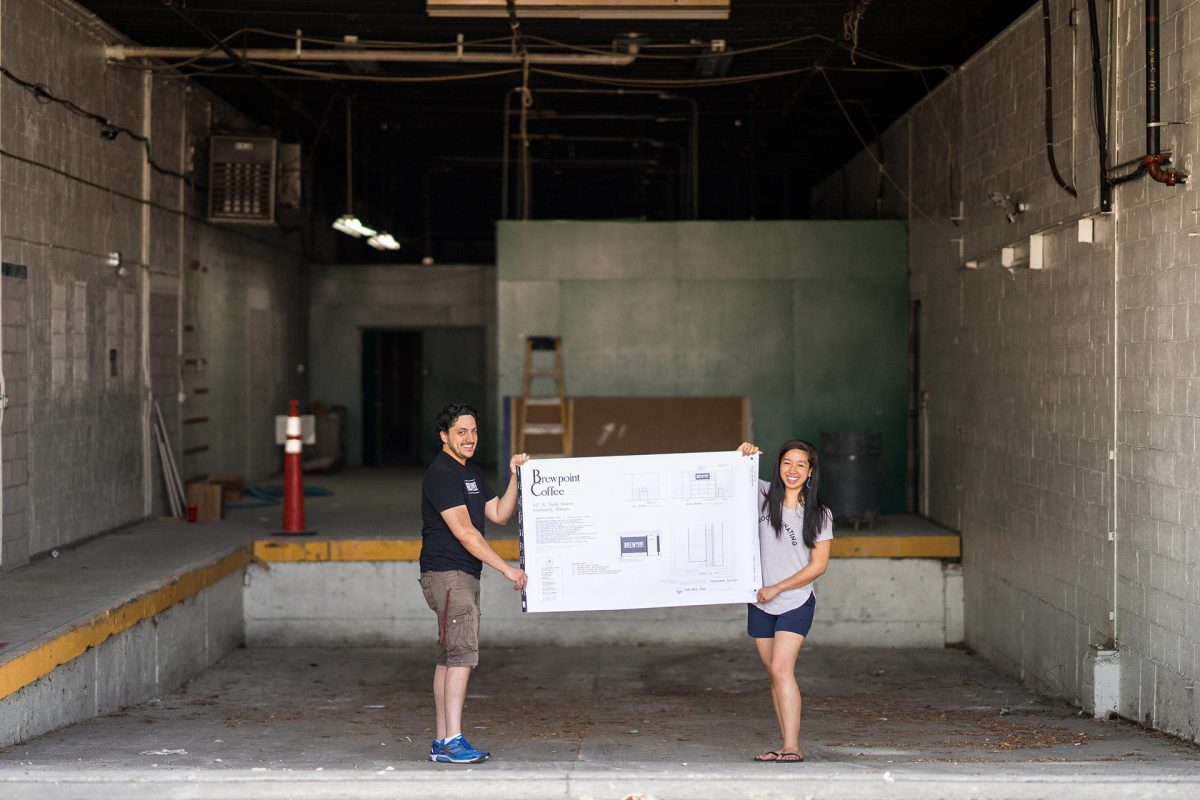
Our mission at Brewpoint Coffee is to create and empower authentic community spaces. Everything we do is an excuse for community. So naturally, when we decided to build out our roastery, it needed to be something that the whole Chicago western suburbs could enjoy. This would be our second location. The build out is starting just after Memorial Day and our opening will be in September.

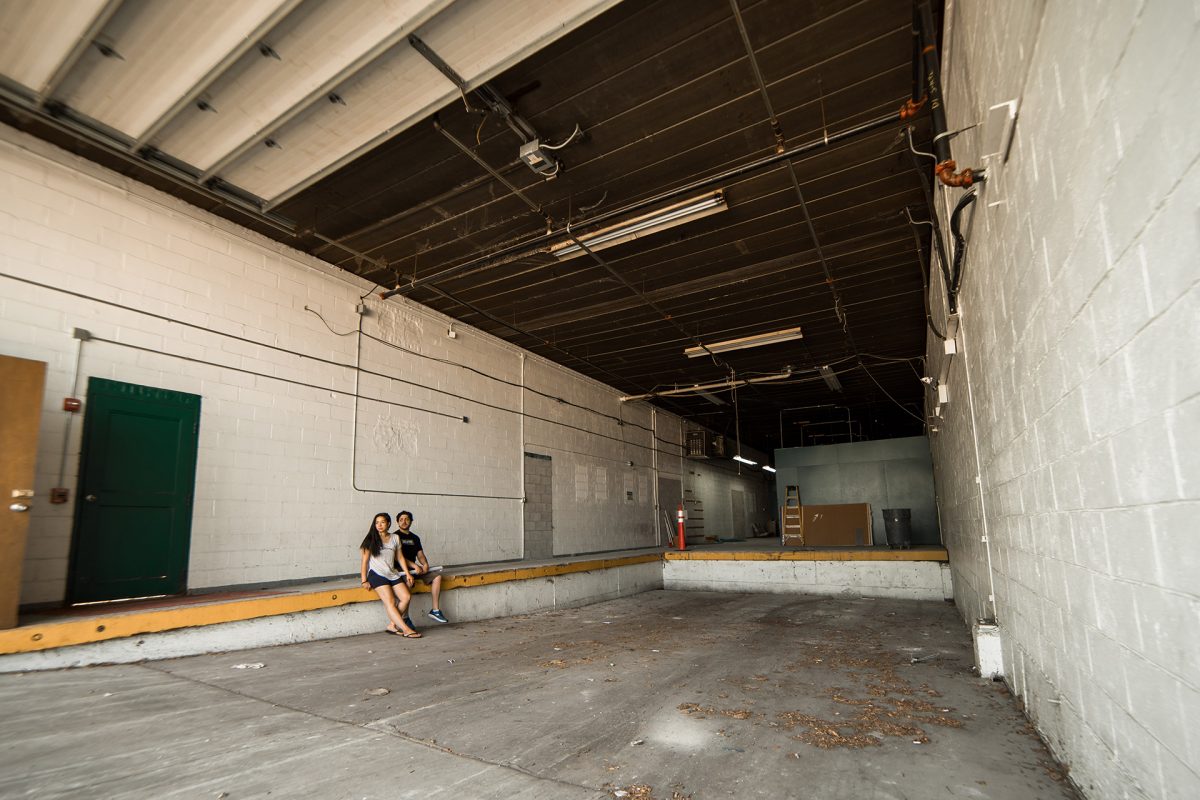
We are renovating a 4,500 square foot loading dock on the north side of our town (Elmhurst) to create a coffee and community destination location. We are receiving help from our city and our new landlord for a total of over 50% of our total build out and project costs.

What’s your approach to coffee?

Coffee is our conduit to build up and empower communities. Whether that is through the authentic spaces we build, empowerment to our wholesale cafes to be agents of kindness in their area, or being intentional with partnering with farmers that build up their communities.

The more we can be inventive, creative, and transparent with our coffee the better.

Any machines, coffees, special equipment lined up?

For our main operation we plan on working with a La Marazoco Linea PB two-group manual espresso machine, a Mahlkönig PEAK grinder, and a FETCO CBS-2152XTS. For our roaster we have purchased one of the first USA manufactured Probat 12-2 roasters.

What’s your hopeful target opening date/month?

September 2017.

Are you working with craftspeople, architects, and/or creatives that you’d like to mention?

Our architect Bill Rock has been a rockstar. Our design company Spoon Inc. (Michael Gold) has helped our company astronomically since we opened. Roz Long who hosts all the big artist events in the western suburbs is a big part of our success. Of course, without our staff we wouldn’t be able to dream this big. And lastly our family, with their unwavering support is our foundation.

Thank you!

Brewpoint Coffee is located at 617 N York Rd, Elmhurst, IL USA. Check out their official website and find them on Facebook, Instagram, and Twitter.

The Build-Outs Of Summer is an annual series on Sprudge. Live the thrill of the build all summer long in our Build-Outs feature hub. Got a Build-Out of your own? Get in touch.

The post Build-Outs Of Summer: Brewpoint Coffee In Elmhurst, Illinois appeared first on Sprudge.


from RSSMix.com Mix ID 8200593 http://sprudge.com/build-outs-brewpoint-coffee-in-elmhurt-il-122605.html

Purple Reigns At Purple Llama, Chicago’s New Coffee Shop Record Store

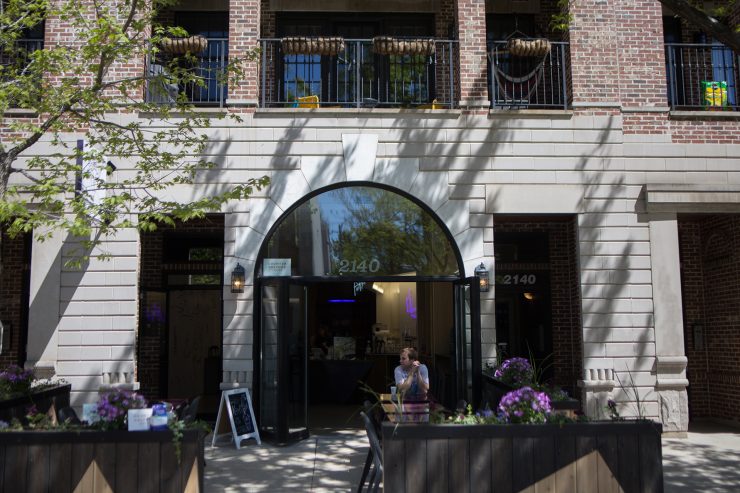
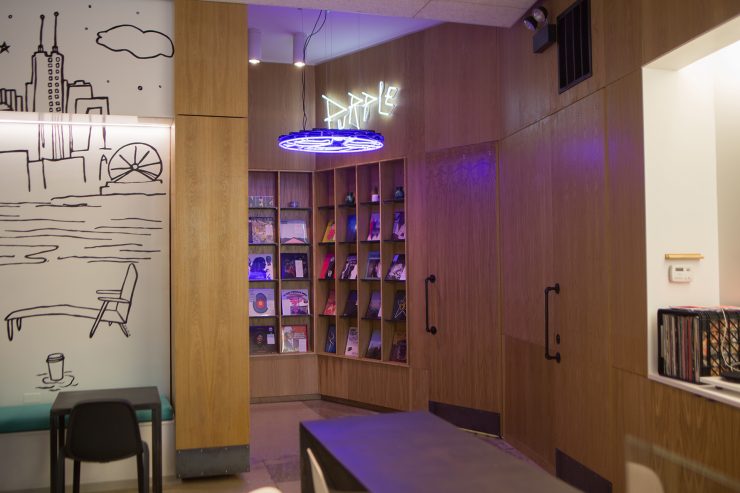
This summer, Chicagoans will be found drinking coffee on patios, and one of those patios has distinct purple chairs—and some surprises beyond its doorway. Purple Llama opened recently on Division Street in Wicker Park, owned by Joel and Shannon Petrick with Kevin Lardner at the helm of the coffee program. Purple Llama combines the pleasures of coffee and records, for those who appreciate either—or both.

Kevin Lardner began his journey in coffee at Store Street Espresso, a London shop down the road from the British Museum, while earning his undergraduate degree. Joel Petrick, a friend of Lardner’s brother, had been thinking of opening a record shop for new and reissued prints. Over a late night drink in Shoreditch during a visit from Joel Petrick, the two decided to open a shop in Chicago that combined the two ideas.

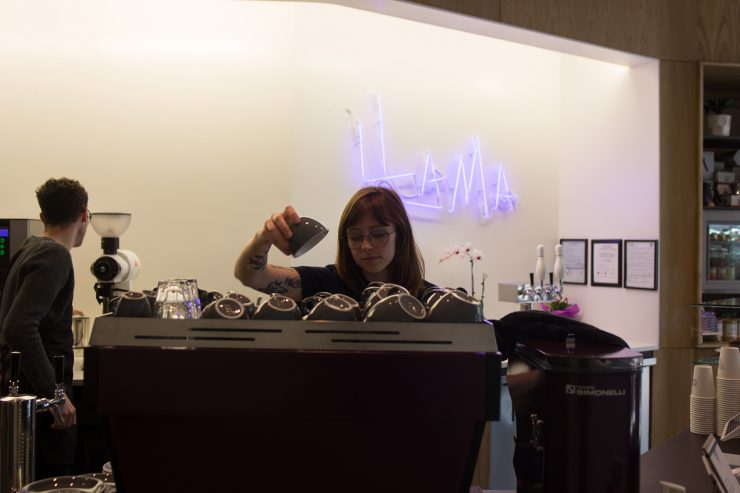
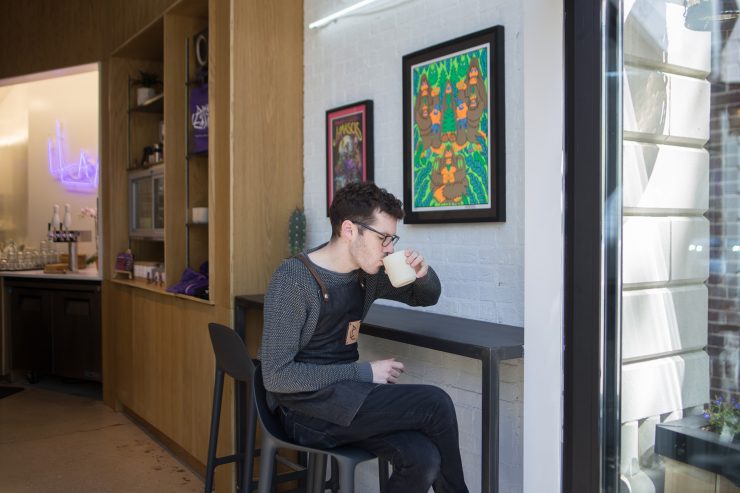
A purple La Marzocco Linea PB and Nuova Simonelli Mythos One grace Purple Llama’s steel bar, which is surrounded by pale walls angling any viewer’s gaze to one end of the room filled with records framed with wood panelling. The space was designed by Danny Wicke, and the bar by Manny Garcia, both of Wheeler Kearns. “The great thing about Danny and Manny was they understood the needs of a coffee bar,” Lardner said. “The back of the bar is intended to be undulating, flowing with the space. The bar is opposite, inviting attention to it as a central focus.”

Bar design is influenced by Lardner’s experiences in London, where table service is common in coffee culture. Lardner also names Heart Coffee of Portland and G&B of Los Angeles as influences in the areas of quality control and consistency—which convinced Lardner that filter coffee is best made with an automatic brewer, on which Purple Llama serves its single-origin coffees.

Beyond the coffee space, Purple Llama’s record nook features records from the likes of Townes Van Zandt and Fugazi, which are spun on the shop’s player for customers to sample while enjoying coffee. Petrick, when first choosing a round of selections, wanted a clean and reframed viewpoint on record buying for those with a stack under their turntable. With a focus on new pressings, their hope is for customers to exchange sifting through boxes from antique shops for a more accessible experience. “The same way we rotate coffee on bar to keep things exciting, we keep records on a constant rotation,” says Petrick. “You see new things every couple days.”

“We want to present our music and coffee while not shoving them down people’s throats,” adds Lardner. Accessibility is the name of the game for Purple Llama, with evidence of the principle at play in the no-nonsense bar layout, record selection, and menu. Find Counter Culture Coffee offerings, along with a regular rotation of guest roasters, joined by Song Tea & Ceramics of San Francisco for black, green, and oolong teas. Pastries from nearby Floriole Bakery finish any visit to the shop.

Joel Petrick sees his shop’s specialties as both particularly well-suited to the neighborhood. “I’d like to participate in the excitement that is a very musically oriented community,” he says, “where most of the residents have an intrinsic excitement for music. I think that translates into the coffee we serve. Because of their taste, they’ve sought out music unique to them. The same is with specialty coffee—if someone is into this, they’ve chosen to dive deep into what their interests are.”

“For our customers, it leads to becoming an audiophile or enjoying the ritual of coffee,” continues Petrick. “That ceremony is the same from what you get from a record. You’re sitting down for that extra time to enjoy it. That tactile participation in your interests and what makes you happy.”

Settled into Wicker Park with their ritual of coffees and records, Petrick, Lardner, and the Purple Llama team are reframing the way people see their drinks and music. Lovers of either may find the best of both worlds in a unique space, with its sincere, passionate staff—and no sparing of purple.

Purple Llama is located at 2140 W. Division Street, Chicago. Visit their official website and follow them on Facebook and Instagram.

Matt Scheffer is a writer and photographer based in Chicago. This is Matt Scheffer’s first feature for Sprudge.

The post Purple Reigns At Purple Llama, Chicago’s New Coffee Shop Record Store appeared first on Sprudge.


from RSSMix.com Mix ID 8200593 http://sprudge.com/purple-llama-chicago-120287.html

This Coffee Cup Is Made From Coffee Husks & It’s Beautiful

What if being more eco-friendly was as simple as buying a different cup? That was the idea behind Huskee, a new range of cups made out of husk, a coffee production byproduct. It recently launched on Kickstarter and we decided to find out more.

Huskee cup

The Huskee cup. Credit: Huskee

What Is Husk & Why Does It Matter?

Coffee “beans” are the seeds of berries, which are normally referred to as “coffee cherries”. And around these seeds are several layeres of fruit. The husk, or parchment, is a thin layer directly round the bean. In coffee production, it is discarded.

But while the husk may be small in size, the waste can soon build up.

Huskee calculates that 3 kilos of waste husk are created every year per consumer. And annually, they claim, this adds up to 1.35 million tonnes.

While we can’t reduce the amount of husk, what we can do is find a new use for it.

The Huskee Cup – Designed For Coffee

The Huskee isn’t just designed to be good for the planet. It’s also been created with coffee shops in mind.

The cups comes in 6, 8, and 12 oz sizes. They retain heat, are contoured for milk pouring, and designed to be easily stacked in coffee shops. Not only are they reusable but they’re also recyclable (great news if you break one). And there’s no denying that they’re stylish.

It’s not the first time we’ve seen cups made out of coffee byproducts – Kaffeeform, for example, is made out of used coffee grounds. But it’s great to see entrepreneurs looking at waste products at all stages of the coffee supply chain.

Watch the Huskee Kickstarter video to find out more:

SEE ALSO: VIDEO: How Is Your Paper Cup Made?

Perfect Daily Grind is not affiliated with any of the individuals or bodies mentioned in this article, and cannot directly endorse them.

Want to read more articles like this? Sign up to our newsletter!

The post This Coffee Cup Is Made From Coffee Husks & It’s Beautiful appeared first on Perfect Daily Grind.


from RSSMix.com Mix ID 8200593 https://www.perfectdailygrind.com/2017/06/huskee-coffee-cup/

Cómo Reducir la Línea de tu tienda Café e Incrementar Ganancias

Como propietarios de cafes de tercera ola, nuestro principal objetivo es servir delicioso café de especialidad, mientras también generamos ganancias. Para hacer esto, contratamos el mejor personal, compramos el mejor equipo, adaptamos un gran lugar y ofrecemos el mejor café que podemos.

Pero cuando se trata de tiempo de espera, a veces decepcionamos a nuestros clientes, y al hacer esto, también afectamos nuestras ganancias y reputación.

¿Estamos realmente preparados para largas filas? ¿Podemos hacer cientos de cafés en poco tiempo? Y ¿cuáles son algunas simples formas para mejorar la eficiencia? Entrevisté a varios propietarios de tiendas de café para averiguarlo. Aquí está lo que aprendí.

English Version: How to Reduce Your Coffee Shop Line & Increase Profits

cafeteria de especialidad

Lista para servir café. Crédito: 5 Senses Coffee

Por qué necesitas Acortar los tiempo de Espera

Hacer un café delicioso puede requerir tiempo– especialmente si es un método de vertido o queremos hacer un grandioso arte latte. Sin embargo, es importante recordar que los productos de buena calidad no siempre tienen que tomar largos tiempos. Los clientes ocupados pueden irse a otro lado si los haces esperar en la fila por demasiado tiempo.

Dale Harris, director de Wholesale en Has Bean Coffee, me  dijo las largas esperas pueden dificultar  el incremento de ventas y servir a nuevas personas.

Por supuesto, sin grandes números de ventas, es difícil tener ganancia. Karl Purdy, fundador de Coffeeangel en Dublín, dijo que mientras el margen de ganancias de café  logra ser bueno, necesitas vender muchos productos.

Con pocas ventas, tendrías que incrementar el costo por venta, ya sea al incrementando precios o reduciendo gastos. La cosa es, los clientes que pagan altos precios esperan un gran producto y un gran servicio al cliente.

Un gran sercicio al cliente es normalmente rapido.

En otras palabras, la eficiencia en servir café es clave para la rentabilidad. Esto puede aumentar los ingresos por hora, satisfacción del cliente y, a su vez,  la retención de clientes.

Veamos algunas formas de disminuir la línea de la tienda y servir café más eficientemente.

tienda de cafe

¿No hay fila? Es el sueño de todo cliente. Crédito: Ozone Coffee

Flujo de Trabajo

Karl me comentó que un buen uso de espacio y una buena ubicación de los equipos permitirán trabajar bien a los baristas.

“Tratamos de tener un flujo de trabajo lineal, así que nuestro equipo tiende a ser consistente ubicado a través de todas nuestras tiendas en términos de ubicación” me dijo. “Al  manejar bebidas calientes, no queremos que nuestro personal tenga que pasar por detrás o por el frente de la gente”.

Un buen flujo de trabajo reducirá el tiempo de servicio. Baristas que se cruzan en el mismo camino del otro no sólo pueden causar riesgos de seguridad, pero también se retrasan mutuamente. Mientras que esto puede ser sólo unos pocos segundos por taza, cuando tienes una fila fuera de la puerta, ese tiempo rápidamente se acumula.

Igualmente, Dale recomienda que consideres todo lo que tu barista necesite, y asegúrate de que estén en el mejor lugar. “Cosas sencillas, como pre-infusionar los filtros de papel y pesar las cantidades de té o café, puede reducir a la mitad el tiempo que toma servir a un cliente. Esto te permitirá enfocar ese tiempo en el cliente y el producto que están comprando.

Karl comentó “No hay sentido en parar por cinco minutos mientras corres por jarras de leche”

barra de cafe

Un buen flujo de trabajo incrementa la velocidad de servicio. Crédito: Marco Beverage Systems

Entrenamiento del Personal

Karl cree que la eficiencia de los baristas va más allá del flujo de trabajo. También se tarta de entrenamiento y delegar.

“La gente, obviamente, debería tener habilidades en todos los aspectos de preparación, ya sea molienda, compactar, extracción, vaporización, verter” dijo, “pero deberían dedicarse a un solo trabajo por cierto tiempo , y moverse cuando se necesite”.

“No deberías tener dos o tres personas compactando, preparando, extrayendo, vaporizando, todo…en el mismo marco de tiempo”.

Tener un miembro del equipo por tarea permite que los miembros del equipo trabajen  con máxima eficiencia – algo que tus clientes ocupados apreciarán.

Stephen Leighton, propietario de Has Bean Coffee, me comentó que el buen manejo del equipo de trabajo no es solo importante para la velocidad sino también para la confianza del cliente. No hagas esperar al cliente mientras ordenas las cosas, nosaconseja. En vez, asegúrate que tus baristas estén cómodos con sus tareas y las puedan hacer bien.

barra de cafe en has bean coffee

Has Bean Coffee [H]and en Londres. Crédito: Has Bean vía Marco Beverage Systems

VER TAMBIÉN: Servicio: ¿El Paso que Falta al Servir Café de Especialidad?

Equipo

Kasim Ali, fundador de World Tea Brewers Cup y Cardiff café Waterloo Tea, dijo “Invertir en buenos equipos a menudo conduce a mejoras en la eficiencia “.

Desde los molinos hasta las máquinas de espresso, diferentes equipos tendrán diferentes niveles de eficiencia, y no solo debes considerar qué tan eficiente es la pieza de equipo, sino lo eficiente que será para tu cafe en particular.

Toma por ejemplo las máquinas de espresso: una máquina de tres o cuatro grupos te permitirá servir más cafés al mismo tiempo. Superficialmente, esta es fácilmente la opción más eficiente. Sin embargo, para  tiendas pequeñas, una máquina de uno o dos grupos puede mejorar el flujo de trabajo. Es más fácil colocar la máquina de espresso donde la necesite en la tienda. ¿Cuál es el más eficiente? Depende del tamaño del cafe y del número de clientes.

También puedes encontrar maneras inesperadas de ser más eficiente. Karl me dijo que el uso de la máquina de café espresso como una fuente de agua caliente para bebidas diferentes al espresso  llevaba a retrasos. Se vieron obligados a esperar que la presión del vapor y la temperatura de la caldera en la máquina de café se recuperarán, lo que significó que sus clientes se vieran obligados a esperar también. Necesitaba un suministro externo de agua caliente.

No subestimes el impacto que esto puede tener. Karl mencionó que optó por el Marco MIX, un sistema multi-temperatura controlado por volumen y en este año ganó Mejor Nuevo Producto SCA en Seattle y Budapest. ¿El resultado? “Más o menos, en dos semanas nuestros volúmenes de café aumentaron al menos un 30%”.

Kasim – que también utiliza el Marco MIX – me dijo que las tiendas también deben preocuparse por el ahorro de energía. Explicó que hay una gran cantidad de uso de agua caliente durante el transcurso del día. Los “altibajos” del servicio pueden hacer que la eficiencia energética sea importante desde una perspectiva tanto financiera como ambiental.

Esto es especialmente importante para las cafeterías que sirven té de la especialidad también. El té requiere una mayor variación en la temperatura de infusión que el café, con diferentes rangos para  hojas de negros, oolong, verdes y blancas.

marco mix

Marco MIX. Crédito: Marco Beverage Systems

¿Quieres mejorar los ingresos de tu cafetería, la satisfacción de los clientes y la retención de ellos? Reduce el tiempo de espera del cliente.

Sin embargo, si simplemente le dices a tu personal “trabajen más rápido” podría estresarlos, hay varias maneras fáciles de mejorar la eficiencia en el servicio: buen flujo de trabajo, capacitación y gestión del personal, y la elección de equipos.

Escrito por Angie Molina

Por favor, ten encuenta: Marco Beverages Systems es un patrocinador de Perfect Daily Grind

Traducido por Alejandra M Hernández y Editado por Karla Ly

¿Quieres Seguir Leyendo Artículos Como Este? ¡Suscríbete Aquí!


The post Cómo Reducir la Línea de tu tienda Café e Incrementar Ganancias appeared first on Perfect Daily Grind.


from RSSMix.com Mix ID 8200593 https://www.perfectdailygrind.com/2017/06/como-reducir-la-linea-de-tu-tienda-cafe-e-incrementar-ganancias/

Tuesday, June 27, 2017

What Is Coffee Extraction? & Other Key Brewing Concepts

Home preparation is one of the amazing things about coffee. If you drink coffee at home, you’re probably doing at least a little work, like grinding beans or pouring hot water. And this sets it apart from things like specialty cacao, beer, and wine.

However, there’s a lot more science and technique involved in making coffee than you might expect. Many people to struggle to brew good coffee at home.

So if you’re trying to create the same great coffee you drink in a café, I’m going to explain the basic concepts for you. You’ll learn the differences between immersion and infusion; what extraction, solubility, and TDS are; and why brew ratios and extraction percentages are helpful.

We’ll also look at simple ways to make your coffee taste better, like agitation/the coffee bloom and pulse pours.

SEE ALSO: How to Brew Coffee at Home: A Beginner’s Guide

Coffee brewingDo you know what variables you need to consider to brew the perfect cup of coffee? Credit: Mike Flores

Extraction & Solubility

Scientifically speaking, brewing coffee is the process of extracting the soluble material in roasted and ground coffee. As this coffee is brewed in hot water, hundreds of unique compounds are extracted from the ground beans – creating brewed coffee.

These compounds are what we’re speaking of when we talk about coffee’s solubility. Extracted coffee typically contains the following water-soluble compounds:

  • Caffeine (bitter)
  • Acids (sour and/or sweet flavors, like oranges, apples, or grapes)
  • Lipids and fats (viscosity)
  • Sugars (sweetness, viscosity)
  • Carbohydrates (viscosity, bitterness).

Solubility and extraction can be affected by a wide range of things: the coffee’s genetic characteristics, grind size, water mineral content, roast degree, brew methods…

Sometimes a brew method that works well for one type of coffee might not work as well for another. This means getting the perfect brew can require some detective work. Baristas will often refer to “dialing in” a coffee. They typically start with a single recipe, and then make adjustments in dose or grind setting to affect the flavor. They will continue dialing in until they get an extraction with which they’re happy.

Let’s dive deeper into brewing by dividing it into two basic categories: immersion and infusion.

Coffee brewingExperiment until you brew the perfect cup of coffee. Credit: Aryan Joshani

Immersion

Brewing by immersion means the coffee grounds are fully submersed in water. This water then extracts the coffee over time.

Probably the most common immersion brewing method is the French press, but others exist too: the vacpot siphon, the Clever, the AeroPress, and the coffee industry’s standard quality evaluation technique, cupping. Most cold brew methods that involve a long soak (like a Toddy) are also immersion.

Immersion can be a fairly hands-off method of brewing. Just add water and wait: 4 or 5 minutes is pretty standard for hot coffee.

Nearly all immersion brews will also need filtration. French presses use a metal filter while the Clever uses a paper one, for example. Whatever filter is used, it serves to remove coffee grounds and the finest particles from the final brew. (Paper filters also remove some of the oils and lipids from the coffee.)

Extraction slows down as the immersion time continues. This is because, as coffee solids dissolve into the water, the brew becomes gradually more and more saturated. The water “fills up” with coffee solubles, meaning it is less and less able to hold more of them.

This doesn’t mean you can’t get a great cup of coffee, or a strong one for that matter, from infusion brewing. But it could mean that you may need employ a few tricks to get the optimally extracted brew. We’ll look at some of these a little later in the article.

Coffee brewingWhich full immersion method is your favorite? Credit: Roast House Coffee

Infusion

Infusion brewing involves water constantly flowing through a bed of ground coffee and filter. All drip brewing methods uses infusion. The Chemex, Kalita Wave, and V60 are common manual drip methods, but even an auto-drip machine like a Mr. Coffee, a BonaVita, or a batch brewing Fetco are infusion.

Infusion is a little more efficient at extracting coffee solubles than immersion. This is because it solves immersion’s saturation problem with a constant supply of fresh water. More soluble material is able to be extracted into the beverage, provided enough hot water is added… up to a point, of course. Eventually, the hot water will have extracted all of the coffee’s soluble material.

Infusion can also present some challenges. Manual methods are susceptible to bad pouring techniques. For example all, infusion methods run the risk of channelling, where a stream of water finds an easy route around the ground coffee. This will mean that some of the coffee doesn’t get extracted.

Additionally, if coffee is ground too finely it can obstruct the flow of water. This will result in either an abnormally long brew time or filter baskets that overflow, ruining your coffee and dirtying your countertop.

Coffee brewingPour over methods can be tricky, but some devices are more forgiving than others. Want to start experimenting? Try the Kalita Wave!  Credit: Ian Steger

Espresso

Technically, espresso is a form of infusion, but there are many differences that put espresso into its own category. The most important is this: espresso is a coffee extracted under pressure. Any coffee can be extracted as espresso under the right conditions and using the proper equipment.

The serving size of an espresso is typically much smaller, usually just 20–40 ml. It is also much more concentrated than regular drip coffee. A finer grind, along with the pressurized water, enables quicker and more efficient brews, usually in just 20–30 seconds.

Finally, espresso is also different because the brew ratio differs from standard drip or infusion methods. Let’s take a look at brew ratio now.

Coffee brewingThe right water-to-coffee ratio is key for a perfect extraction. Credit: Adam Friedlander

Brew Ratio

A coffee’s brew ratio is the ratio of ground coffee to water used to brew. It’s convenient if you want to scale up or down the amount of coffee you brew.

If you were to ask a barista their standard brew ratio for a drip coffee, they might say 1:16. That means that for every gram of ground coffee, they’re adding 16 grams of water. Most brew ratios for coffee lie between 1:15 and 1:18.

However, because espresso is so quickly and efficiently extracted, its typical ratios are closer to 1:2.

Measuring both your coffee and your brew water is crucial if you want to pour these ratios correctly. Doing so will also help you to easily repeat a recipe. A digital gram scale, especially one that is waterproof and has a protective covering from heat, will become your most trusted tool when crafting coffee at home. Weight, not volume, is the best way to quantify your brew recipes.

Coffee brewingYou can experiment with different ratios and brewing devices, but a scale is always a good idea. Credit: Eka Suryadi Chandra

Refractometers & TDS

Additionally, you can quantify extraction with a refractometer. This tool will measure how much a substance, such as dissolved coffee compounds, changes the direction of light beams in a solution, such as brewed coffee.

From this information, the refractometer can infer the amount of Total Dissolved Solids (TDS) in a solution. The more solids, the more the direction of the light changes. The more TDS, the more the coffee has been extracted.

When people talk about a coffee’s strength, it’s the TDS they’re referring to – whether they know it or not. Strong coffee has a higher ratio of solubles to water. However, that doesn’t necessarily mean better coffee or good extraction.

With TDS and brew ratio, you can determine your extraction percentage. This tells us how efficiently the dry ground coffee was dissolved into the water that we drink as coffee. It is a powerful tool for dialing a coffee into its best tasting brew.

Coffee brewingDo you want to know how perfect -or not- your extraction was? Take it to another level measuring the TDS! Credit: Matty De Angelis

Brew Manipulation

I mentioned earlier that it’s possible to affect the way a coffee brews. There are a few techniques that can potentially improve flavor, so let’s look at some of them.

Agitation:

Agitation is stirring, or somehow disturbing, the bed of coffee grounds. Doing so in immersion or infusion brewing will usually increase your extraction.

It’s especially useful for immersion, for two reason. First, it breaks up the crust of wet coffee grounds that float to the surface. Ever tried to push the plunger down on a French Press without stirring? It’s not easy!

Second, remember how immersion brews can become saturated before the coffee is optimally extracted? Stirring can help with this issue.

Coffee brewingAgitation or no agitation? Credit: Ana Valencia

Bypassing

Bypassing is adding water to already brewed coffee. It’s a simple way to dilute your cup. If you like the flavor of strong coffee, but dislike the viscous mouthfeel, just add a little water. You’ll reduce the brew strength without affecting your brew ratio or extraction percentage.

You can get pretty technical with this if you like, weighing your bypass water and comparing pre and post-bypass TDS to achieve optimal results.

Pulsing

Pulsing means adding a little water at a time when infusion brewing, rather than creating a constant stream. It allows the coffee grounds in the filter bed to settle before more water is added. This technique can be used to compensate for fresh coffee. Done consistently, pulsing will help improve the consistency and efficiency of extraction.

Coffee brewingPulsing can help create a more even extraction. Credit: Zachary A. Kelley

Pre-infusion (sometimes called “the bloom”)

Pre-infusing coffee means introducing just enough water to saturate the grounds. Used in infusion brewing, typically brewers will first pre-infuse and then wait for 30-60 seconds before continuing to brew.

Much like pulsing, the bloom can help you to brew fresh coffee consistently. It will improve the overall quality of the extraction for most drip brew techniques.

Coffee brewing

Fresher beans, bigger bloom! Credit: E.J. Schiro

Coffee brewing can get technical – and the better you want your coffee to be, the more technical you should get. Yet while these concepts may sound intimidating at first, you will find you can grasp them relatively quickly. Practice these techniques and see how great your coffee can become.

Written by Chris Kornman, Lab and Education Manager of The Crown: Royal Coffee Lab & Tasting Room. Featured photo: Royal Coffee

Please note: Royal Coffee is a sponsor of Perfect Daily Grind.  

Want to read more articles like this? Sign up to our newsletter!

The post What Is Coffee Extraction? & Other Key Brewing Concepts appeared first on Perfect Daily Grind.


from RSSMix.com Mix ID 8200593 https://www.perfectdailygrind.com/2017/06/coffee-extraction-key-brewing-concepts/