Tuesday, November 28, 2017

Department Of Brewology’s Sequence No. 3 Box Set Is Now Available

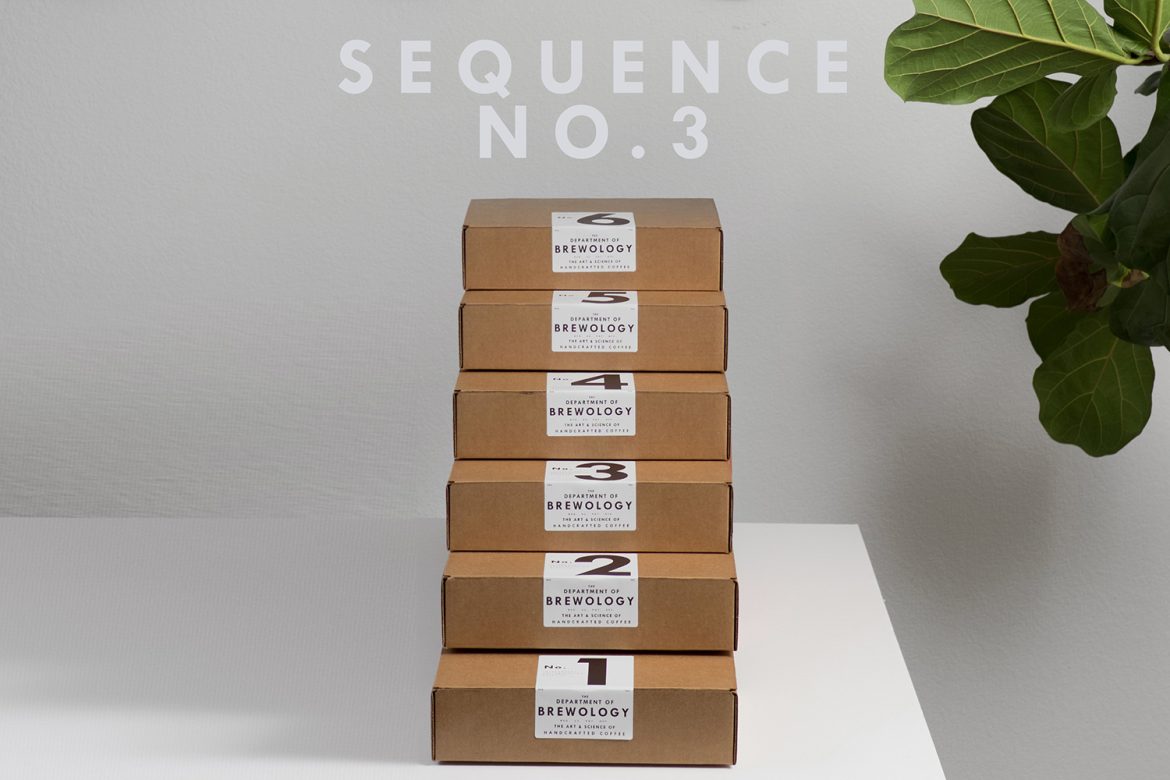
Just in time for the holiday season, the Department of Brewology has returned with third coffee box set series. Sequence No. 3 is a six-month subscription featuring a roster of coffee roasters from around the world, brewing essentials, and Department of Brewology swag, all in a perfectly giftable format.

Delivered on the third week of each month beginning in January, Sequence No.3 includes American roasters Methodical Coffee, Sweet Bloom, Metric Coffee, and Black & White Roasters—the new collaboration between the current and last year’s US Barista Champions Kyle Ramage and Lem Butler, respectively—as well as offerings from international roasters The Barn and Koppi. Each month’s box will also include a capsule of Third Wave Water, a tube of Coffee Blossom Honey, a brew guide, a box set series pin, and an exclusive print.

Additionally, each full series subscriber will be automatically entered into monthly giveaways from ACAIA, Comandante Hand Grinder, notNeutral, Baratza, Melo Drip, Kruve, Pullman Coffee Tampers, and Fellow Products.

To sweeten the deal, as if it needed to be any sweeter, the first 200 subscribers will get a Gesha coffee roasted by Black & White, and the first 100 subscribers will be entered to win a Ratio Brewer.

For those looking to give Sequence No. 3 as a gift, a Department of Brewology pin and card confirming the subscription will be sent out by December 15th, in time to wrap and present to the lucky duck in the “To:” line.

For more information or to order your box set while there’s still a chance to win the Ratio, visit the Department of Brewology’s official website. If you need my address to send me a box set, lmk.

Zac Cadwalader is the news editor at Sprudge Media Network and a staff writer based in Dallas. Read more Zac Cadwalader on Sprudge.

*top image via Department of Brewology

The post Department Of Brewology’s Sequence No. 3 Box Set Is Now Available appeared first on Sprudge.


from RSSMix.com Mix ID 8200593 http://sprudge.com/128401-128401.html

#CoffeeToo: Speaking Out Against Sexual Harassment In The Coffee Industry

On October 15, the sexual harassment and assault hashtag #metoo went viral, taking over Twitter and Facebook feeds around the world. While the US watched a cascade of powerful men get ousted from jobs over allegations of sexual harassment and assault, the coffee world waited for the next step: acknowledgment that if experiences of sexual harassment and assault are universal to other industries, they must exist in equal measure in coffee as they do in politics, food, media, and food media. But how would the specialty coffee industry—which at times feels like it functions like a small town or a large family—go about addressing these same issues while causing the least harm? Working with a certainty that specialty coffee has the power to eliminate harassment within its own ranks, industry veteran Molly Soeder worked with colleagues to found the new organization #coffeetoo, a volunteer-run grassroots community project dedicated to gathering and sharing information and resources with coffee professionals on the topics of discrimination and sexual harassment within the coffee industry.

While attending a major coffee event this past fall, Soeder both witnessed and experienced harassment. “Unfortunately,” she tells Sprudge, “this wasn’t surprising.” Throughout her 13 year coffee career, she’s experienced and heard endless stories of harassment and discrimination; this time, she and other attendees started a conversation about it. “We agreed that something had to be done to stop the toxic behavior we’d endured, so we drew up a plan that same night.” She found out about the #metoo movement the next day, and it solidified for her how truly ubiquitous the experience of her and her colleagues were. “It’s essential that we all do our part to combat these problems. Looking at them in an industry-specific way breaks them down into a manageable size. I believe that if we all continue to speak up and say, ‘We will not tolerate this any longer,’ we will see change.”

Soeder, who currently works as a barista at Broadcast Coffee Roasters in Seattle, is responsible for guiding the project, which is currently focused on establishing a diverse leadership team that can see and tackle the whole spectrum of issues of harassment and discrimination, which manifest differently for different groups of people in coffee. The two specific goals of #coffeetoo (a temporary name the leadership team says will eventually change) are 1. to inform coffee pros of their rights, including information about what to do if those rights are violated and about acute self-care after discomfort or trauma occurs, and 2. to reduce the actual incidence rate of sexual harassment and discrimination in coffee by arming individuals with this knowledge.

As their main project, leaders of #coffeetoo plan to host a nationwide live-streamed event featuring talks from and an HR rep, a union rep, a lawyer, and a mental health professional. While working towards this goal, #coffeetoo will regularly share the information they amass to their Facebook page, along with reposts of videos, links, and followers’ #metoo #coffetoo stories.

For interested folks both in and out of the specialty coffee industry who want to support #coffeetoo, you can help by reading about #coffeetoo, following their page, and getting in touch if you want to contribute. “We would love to hear from anyone who wants to be a contributor, financial supporter for events, and/or sponsor,” said Soeder.

By creating space for people to engage around these issues, #coffeetoo is doing much-needed work to further an important conversation on harassment and discrimination in coffee. An information-focused approach with clear, specific goals can have a huge benefit on an industry that often feels too small for open conflict, and Soeder is excited to do that work and empower people to do their part to end toxic behavior in coffee.

Follow #CoffeeToo on Facebook or reach out to the organization via email.

RJ Joseph (@RJ_Sproseph) is a Sprudge staff writer, publisher of Queer Cup, and coffee professional based in the Bay Area. Read more RJ Joseph on Sprudge Media Network.

The post #CoffeeToo: Speaking Out Against Sexual Harassment In The Coffee Industry appeared first on Sprudge.


from RSSMix.com Mix ID 8200593 http://sprudge.com/coffeetoo-speaking-out-against-sexual-harassment-in-the-coffee-industry-128372.html

The Ultimate Coffee Gift Guide Under $100

The holidays are here, bringing with it the simultaneous joy and burden of gift giving. Now is the time to stock up on coffee-themed gifts for all of your coffee loving friends and family. Because when you give the gift of coffee, you’re really giving the gift (don’t laugh!) of love.

We here at Sprudge want to make sure your coffee gift buying is easy and pain-free, and so in what’s become a much-loved tradition at the site, we’re rolling out a series of gift guides to serve our readers (and their families). Our first guide was all about books, because books rule, but now let’s get into the rest of it.

Is your great aunt Ruth stumped on what to get you this year? Send her this link. Here are ten perfect holiday coffee—and coffee-ish—gift categories for under $100.

Coffee Class In New York City

Get your coffee loving friend/family member something they’ll remember forever: an instructional class and/or event in New York City!

Toby’s Estate Brooklyn can host a private cupping for you and your friends for $75. “We can hold a private brew class just for you and four guests at our Williamsburg and West Village locations. Classes are available Monday through Saturday. You may book up to five people in this class. Classes are 90 minutes.”

Joe Coffee offers a roaster tour and cupping at their Red Hook roasting facility for $75. If you’re traveling from outside the city this gift *will* cost a little bit more, but hey, then you get to visit New York.

Bag of Coffee With Dunkable Ball ($16)

Stumptown Coffee recently rolled out a refreshed packaging look, but they’re bringing back their iconic kangaroo bag for a special Portland Trail Blazers blend collab. This coffee bag includes an actual ball for dunks. 

A Warm Winter Sweater

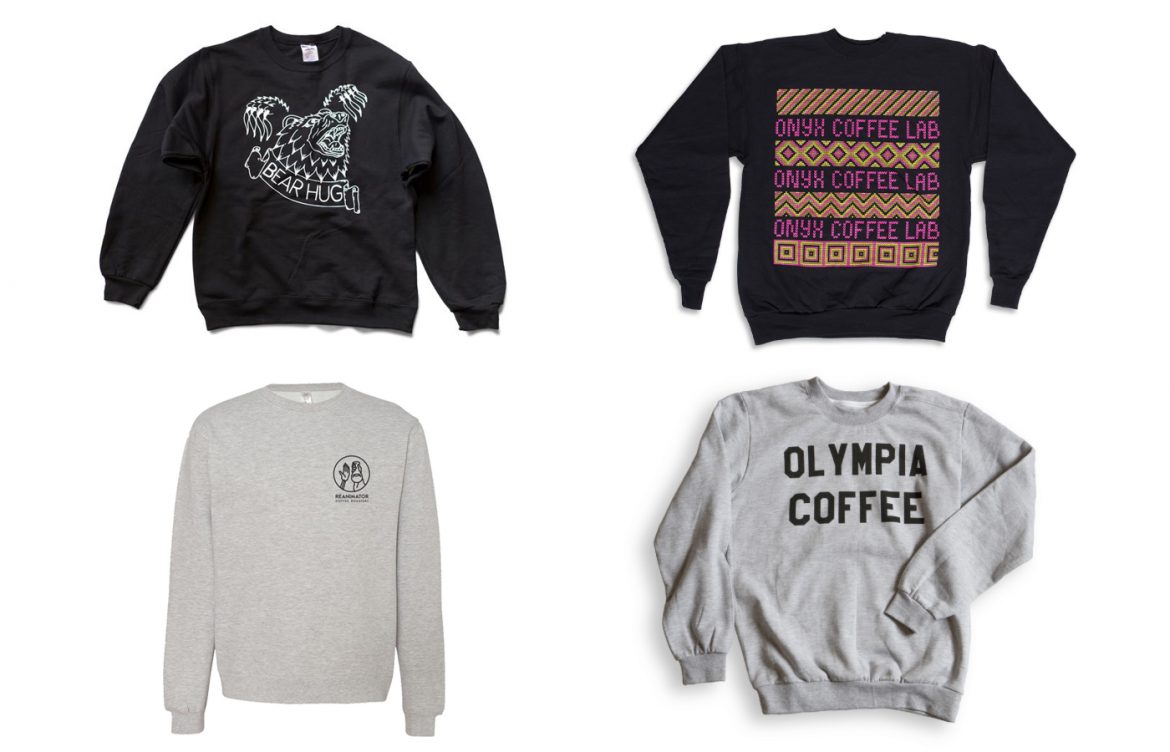
Tis the season for wearing a snuggly coffee sweater. Cuddle up by the fire and a nice, cozy jumper (that’s what they call it outside the USA) from these folks: Dogwood Coffee Bear Hug Sweatshirt ($30), ReAnimator crew-neck number ($35), Olympia Coffee Roasting Co. gym class sweatshirt ($32), and the awesome/ugly Onyx Coffee Lab Ugly Sweatshirt ($30).

Holiday Blends

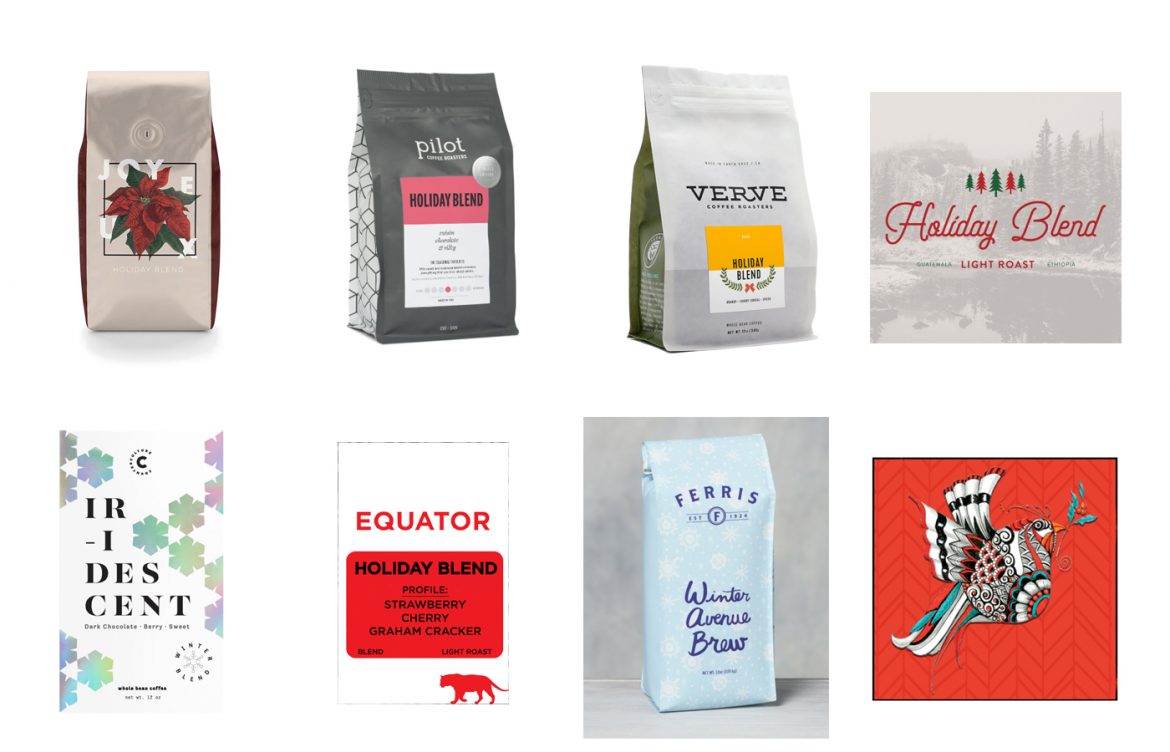
You really can’t go wrong with a nice holiday blend, and our partner roasting companies have got a handful for you to choose from: Populace Coffee Joyeux Blend ($19, 12oz), Pilot Coffee Roasters Holiday Blend ($20 CAD, 12oz), Counter Culture Coffee Iridescent ($18.25, 12oz), Equator Coffee Holiday Blend ($18.25, 12oz), Ferris Coffee Winter Avenue Blend ($13, 12oz), Verve Coffee Holiday Blend ($20, 12oz), Reunion Island Coffee Holiday Blend ($20 CAD, 12oz), and the Batdorf & Bronson Holiday Blend ($15, 12oz).

This is just a smattering, just a surface scratching of the wonderful holiday blends available, and that diversity of options means you can buy a blend that suits your family just right. Happy brewing!

Soft Tees

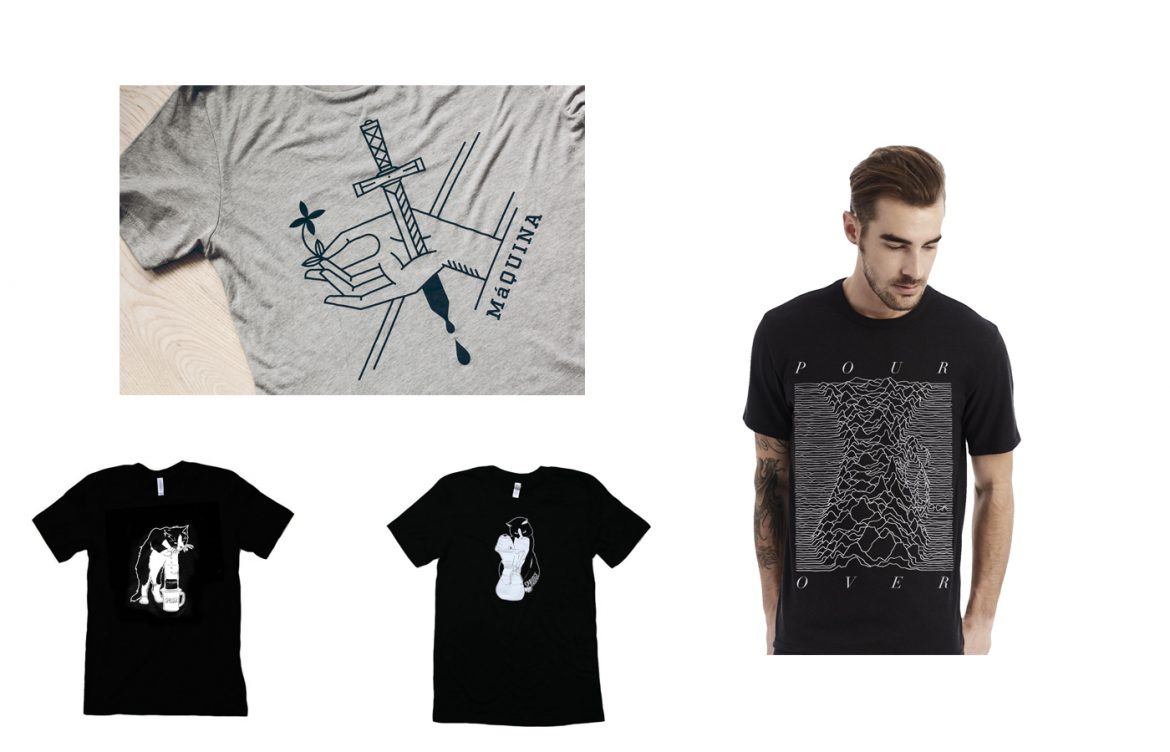
Get your coffee loving family member a nice looking t-shirt from a nice coffee company. We like the Maquina Coffee Roasters “Maquina Bleeds” Tee ($25), which feels like it could be sold at the merch table of a very fun punk rock show. Elsewhere the Department of Brewology Joy Division Tee ($35) directly plays with a fusion of coffee and music themes. DoB are industry design leaders and you may well get stopped on the street wearing this.

Last but certainly not least we’ve got heaps of new Sprudge Tees ($15) in our very own Sprudge Shop.

Gear

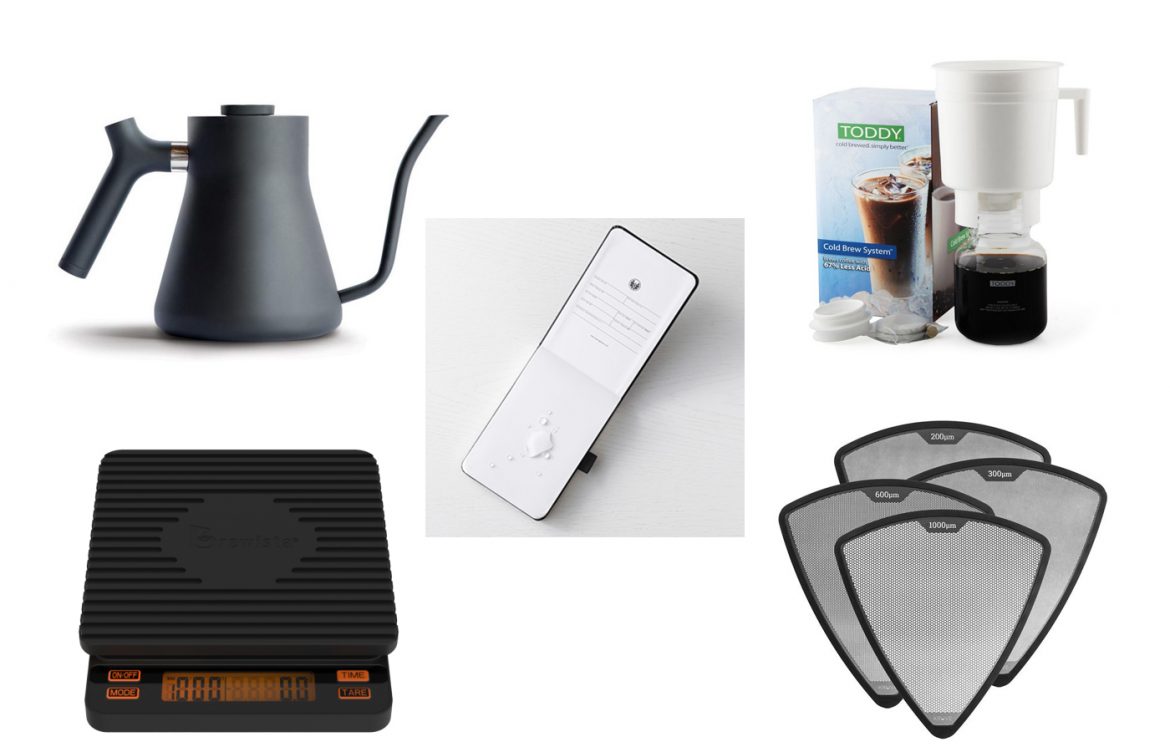
Coffee nerds don’t just love gear: they need it to continue surviving as a nerd. Fortunately there’s plentiful gear to be had. Let us recommend a Stagg Kettle ($69), the nerdy Brewista Smart Scale ($99), the beautiful and industry-adored Kruve Sifter ($45), a timeless Cold Brew Toddy System ($39), and for something a little different, the Blue Bottle Waterproof Journal ($19).

Vessels

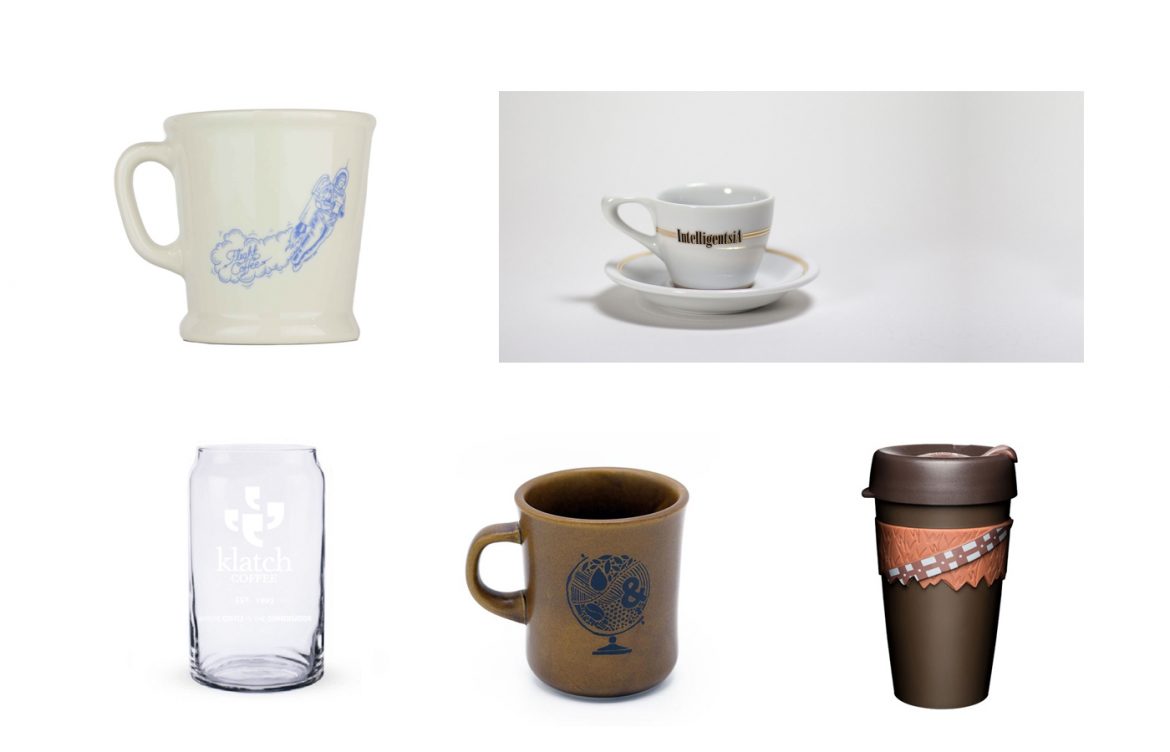
Every coffee drinker needs something to drink it out of, and we’re big fans of the Flight Coffee Blue Space Person Mug ($17) out of New Zealand, the beautiful throwback Intelligentsia 20th Anniversary Demitasse ($12), the licensed Star Wars line of coffee tumblers from KeepCup—our favorite is the Chewbacca KeepCup ($22)—the stylish Klatch Coffee Glass Can ($7), and the Japanese Phil & Sebastian Kinto Mug ($16.50) by way of Canada.

Clubs, Subscriptions, and Box Sets

Why settle on just one coffee when you can set your loved ones up with a subscription, club membership, or box set? April Coffee Roasters Membership Club (140,00KR) can get you set up with whole bean or capsule coffee from Denmark, Five Elephant Box Set (31.47 Euro) will let you customize a colorful package from Berlin, and the Moustache Coffee Club Subscription (Starts at $26) can get you sorted with weekly shipments of quality coffee from Los Angeles.

Bejeweled Starbucks Tumbler ($50)

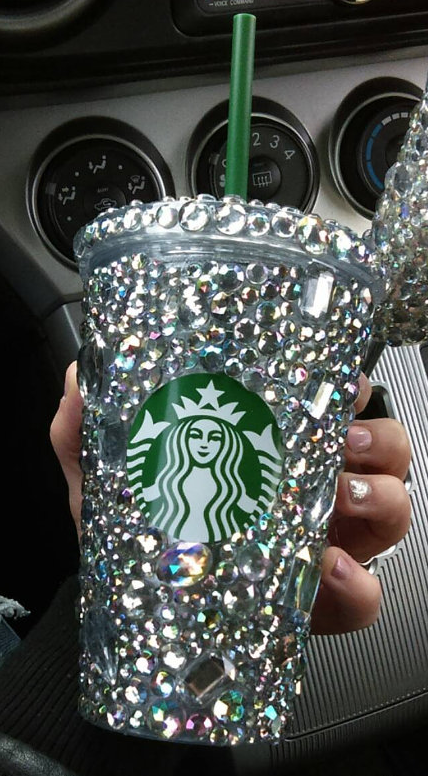
Jennifer Lopez has been seen around town with a Swarovski crystal-encrusted Starbucks cup, custom made by Taylor Made Bling Embellishments. It’s this season’s must-have bejeweled coffee product. You can order a custom cup from Taylor Made via their Instagram for around $500 or you can get a similar style: hand-glued rhinestones on a Starbucks cup for around $50 on Etsy.

Drink Some Tea 

Try as we might, mankind cannot live on coffee alone. But if you love coffee it stands to figure there’s a bunch of other stuff you might love. One of those is tea. Tea is good! San Francisco’s Song Tea is home to some exceedingly rare small lot teas that might change how you think about this stuff, with a founder who travels regularly to Taiwan and China on sourcing trips. Prices range from the Song Red ($15), a blend of tea cultivars from Fujian, to the Mr. & Mrs. Chen’s Oolong ($92), a truly distinctive oolong tea from a tiny production husband and wife team from Nantou County, Taiwan, with a dozen or so other teas priced between. Unsure what to buy? Song offers a gift card option as well.

Drink Some Wine

We are pretty strong believers that if you’re into coffee, you should be into wine, too. Wine—and especially wines made in the minimal intervention, no added ingredient style sometimes called “natural wine”—is fast divesting itself from “that Frasier Crane shit” and is today, perhaps for the first time in America since the Gold Rush, a fun and tasty thing for young people to enjoy. Imagine that!

If you’re new to natural wine, and don’t happen to already live somewhere like San Francisco, Los Angeles, New York, London, Melbourne, Tokyo, Paris, Barcelona, or what-have-you, web stores are your friend. We strongly recommend the online wine shopping at Chambers Street Wine of NYC, Domaine LA of Los Angeles, and Flat Iron Wines (SF & NYC). All three of these shops offer gift certificates, and for less than $100 you can gift the gift of a mind-blowing wine experience. Just be forewarned that the ensuing rabbit hole will cost more than $100 in short order.

The post The Ultimate Coffee Gift Guide Under $100 appeared first on Sprudge.


from RSSMix.com Mix ID 8200593 http://sprudge.com/the-ultimate-coffee-gift-guide-under-100-128337.html

A Coffee Buyer’s Glossary of Contract Terms

There are a lot of perks to being a coffee buyer: traveling to origin, meeting producers, experiencing the coffee harvest… Yet this glamorous job also demands a sound knowledge of contracts, shipping, and more.  

Mutually amicable and agreed-upon contracts are critical to the health and longevity of trade relationships – whether it’s a long-term direct-trade partnership or a one-time transaction. Using a common language for coffee buying and shipping can help avoid confusion and streamline a lengthy, complicated process.

Let’s take a look at some common contract terms and their definitions. This will include some of the most important ways that contracts describe sampling, quality, the transfer of risk, and payments.

SEE ALSO: Green Bean Storage: What Factors Do You Need to Control?

coffee bagsCoffee warehouse. Credit: Royal Coffee

Samples & Quality

Tasting and approving samples prior to purchase is a critical stage in the coffee-buying process. There are many different steps along the supply chain when coffee may be sampled. Both physical and sensory qualities will be under analysis.

Let’s break down some sample types:

  • Type Sample: This is a non-representative sample, meaning it does not directly correspond to a specific lot of coffee for sale. It may be used as an introduction to a new relationship (i.e., “This is the type of coffee we often carry”) or as a substitute for many representative samples in a long-term, high-trust relationship (e.g., “Here’s the type sample for the 10 containers we will sell you this season”).
  • Representative or Stocklot Sample: This sample type corresponds directly to a specific quantity of coffee in a specified location. Representative samples typically draw from multiple bags of the same stocklot in an attempt to provide a holistic and accurate depiction of the coffee. However, standards vary from warehouse to warehouse.
  • Offer Sample: A representative or stocklot sample of coffee that is “offered” with a quantity available for purchase. This sample type is not associated with an existing contract. However, if the buyer likes it, it might be used as a pre-shipment approval in some cases.
  • Pre-Shipment Sample (PSS): Typically offered as a “fulfillment option” for existing agreements, this is usually the point of no return for a buyer. The coffee in question may already be milled and ready for transporting, or the sample may have been specially prepared in advance of dry milling. In either case, an approval of a PSS is taken as an agreement to move forward with preparing and exporting the finished coffee to the buyer.

coffee shippingContainers ready to be shipped. Credit: Royal Coffee

Poor-Quality Samples & Contractual Requirements

Setting certain quality standards can be an important part of building a contract between a coffee buyer and seller. It’s important to remember the various roles that contributors along the supply chain will have in terms of quality. For example, a farmer may not have any control over the timeliness of ocean transit or the screen sizes of beans. Keeping this in mind, contracts and expectations should take into account when and where the coffee is sampled, and who is responsible for its quality preservation at any given time.

A common term used in contracts is SAS, or “Subject to Approval of Sample”. This is where a buyer will sign a contract with a seller in advance of receiving a sample. However, fulfillment of that contract is dependent on approval of the sample. The buyer does not need to purchase the coffee, or justify their decision, other than by saying that the coffee does not meet their quality standards. (Although feedback to the seller can be quite useful for them.)

SAS terms may be “no approval, no sale” (NANS). Alternatively, they may be “replace” (or “repeat”), meaning a new pre-shipment sample would be offered in place of the rejected sample. In some cases, a seller might offer multiple options for the buyer.

When a PSS is approved and the coffee is shipped but arrives in a different state than expected (e.g., diminished sensory quality or higher physical defect count), arbitration is often not necessary (and, in my opinion, should be taken only as a last resort). More frequently, shipments of a disappointing physical or sensory quality can result in a quality “claim”. This is where the buyer requests a discount on future purchases or a partial refund from the seller. These disputes can often be resolved amicably if communication channels are open and clear.

coffee bagsCoffee bags in warehouse, ready to be shipped. Credit: Royal Coffee

Shipping Terms & Risk

The details of shipments, insurance, and ownership of risk can be intimidating for buyers and producers – especially because of the many abbreviations and industry-specific phrases that are used!

When a buyer commits to a coffee at a price per pound, that per-pound cost actually includes far more than just the product itself. It includes the cost of things like labor, fertilizer, post-harvest processing, storage, and the partial or total cost of shipping and insurance in varying degrees. This can change greatly depending on the terms of the contract.

As of such, both the buyer and the seller should be crystal clear on who’s responsible for what transportation, where, and when. Incoterms (International Commerce Terms) is a set of terms defined by the International Chamber of Commerce; these are used broadly throughout commodity trading markets. They clarify who is responsible for ensuring the coffee (in our case) gets to a predefined location and who assumes the risk.

(We use this “transfer of risk” to understand who is accountable in the case of the loss or damage of beans. Sometimes the party who pays for the transit is not the same party that owns the risk.)

Remember that for our purposes, in most cases the seller will be an exporter or producer and the buyer will be an importer or roaster.

total loss coffee arrivalDamaged coffee bags in container. Credit: Royal Coffee

The Most Common Shipping Types:

  • FOB – “Free on Board”: This means the seller must deliver the coffee onto the ship at the port in the country of embarkation. Any overland transportation costs from mills or warehouses to the port of origin must be paid for by the seller. The buyer agrees to book and pay for oversea shipping, insurance, and any drayage/transportation, customs, and overland freight costs incurred on arrival to the port of destination.
  • FAS – “Free Alongside Ship”: The seller relinquishes risk at the dock rather than on the ship.
  • FOT – “Free on Truck”: The buyer, not the seller, is required to organize and pay for overland transport to the dock and account for any loading and drayage fees at the port. The transfer of risk occurs when the coffee is loaded onto a truck from a given warehouse.

FOB, FOT, and FAS terms are typically followed by the location of the transfer, e.g., FOB Buenaventura or FOT Kigali. These terms are of the utmost significance for direct trade buyers and coffee importers, as they are the most common for purchasing directly from a farmer or exporter.

coffee bagsCoffee bags in storage. Credit: Royal Coffee

Other Shipping Types You Might Experience:

  • CFR / CIF – “Cost and Freight” / “Cost, Insurance, and Freight”: Like FOB and FOT, CFR and CIF transfer risk once the coffee is on the ocean vessel. The difference is that the seller, not the buyer, is responsible for contracting and paying for the oversea transit. In the case of CIF, the seller must also provide minimum insurance coverage. In both of these cases, the location will be listed as the destination port (e.g., CFR New York).
  • EXW – “Ex Works” or sometimes “Ex Warehouse”: A bit like FOT, this indicates that the buyer takes responsibility for overland transport. However, for EXW there is no overseas shipment. Most domestic coffee sales will transfer ownership this way, for example a roaster will buy “spot” or arrived coffee EXW from the warehouse of an importer and also pay the additional cost of trucking it to their facility. In casual conversation, a trader might say “Ex Oakland” or “Ex Continental”; this indicates that the coffee is coming from a warehouse in Oakland or Continental Terminals in New Jersey, respectively.
  • FCA / CPT / CIP – “Free Carrier” / “Carriage Paid To” / “Carriage and Insurance Paid To”: The land-transit versions of CFR and CIF, these mean that the seller – not the buyer – arranges and pays for overland transportation. FCA brings the coffee to the buyer’s doorstep, while CPT and CIP will designate a specified location other than the buyer’s address.
  • DAT / DAP / DDP – “Delivered at Terminal” / “Delivered at Place” / “Delivered Duty Paid”: These indicate delivery in terms of risk, meaning that the buyer should not assume the coffee will be delivered to their doorstep. Rather, the seller relinquishes risk at the port terminal or another specified location (“at place”). Duty Paid terms require the seller to also pay for import and customs. The buyer must then arrange for any fees not covered at the docks, plus overland shipment and insurance.

Coffee bags being moved into a container. Credit: Royal Coffee

Container Loads: The Contractual Definition

Modern container shipping methods have almost completely replaced the older methods of shipping where bags were loaded loose onto the ship (known as “break bulk”). But how much is a container?

In most cases, containers are shipped as Full Container Loads (FCL). This is loosely defined: it simply indicates that the container is filled.

Most commonly, coffee is packed in 60–70-kilo jute (or similar fiber) bags. Commonly used 20-foot containers are usually filled at around 325 60-kilo bags or 275 70-kilo bags, though numbers may vary slightly depending on the organization or persons “stuffing” (loading) the container.

In some cases, Less than Container Loads (LCL) are acceptable… but keep in mind that shipping charges both for space and by weight. As such, it is cheaper pound-for-pound to ship a full load. Partial containers are also more susceptible to damage during shipment because the contents are loose, rather than packed solid.

coffee bagsBag of green coffee. Credit: Royal Coffee

Proof of Shipment

One last thing about shipping: it’s common to include Advice of Shipment in a contract. This requires the seller to advise the buyer as soon as possible of the date of embarkation and other relevant shipping line information.

In addition to this shipping advice, the seller is almost always required to provide the buyer with a “clean” (that is, the coffee appears to have not suffered damage in transit) Bill of Lading (B/L or BoL). This important document is necessary for clearing customs and is often the trigger for a transfer of funds.

coffee shippingShipping containers. Credit: Royal Coffee

Payment Terms

Incoterms highlight the complexity and importance of clarity in shipment – however, they only refer to shipment. They don’t deal directly with the transfer of money or actual ownership. This is done separately.

In the case of a direct trade exchange or the purchase of a coffee in FOB terms (for example), payment is usually expected upon the buyer’s receipt of the Bill of Lading. This is typically in the form of a wire transfer. Some contracts specify the need for receipt of a physical B/L while others may accept a digital copy.

Credit & Commitments to Buy

It is uncommon for exporters and farmers to extend credit to coffee buyers. Rather, the opposite may occur: a farmer or exporter may request an official signed commitment to purchase from the buyer well in advance.

This can enable the supplier to secure financing up-front for the costs of processing and overland shipments, for example. Coffee growing and processing is often seen as a risky investment by bankers. Financing options can be limited for farmers without a committed buyer.

However, credit terms from an importer to a roaster are far more common. A good credit application can result in a friendly relationship with a domestic coffee seller, who is able to extend financing to the roaster.

Credit terms typically cover two things: the amount to be paid and the timeframe for payment. A common example might be “Net 30” where the buyer has to resolve the unpaid balance (the “net” sum) within 30 days.

Sometimes, this might be preceded by an additional set of numbers – and in some cases, a discount might be offered for early payments. That might look like this: “2/10 Net 30.” In this example, the buyer has 30 days to pay the net balance, but if it’s paid within 10 days they’ll receive a 2% discount.

coffee bagsSpilled coffee beans in container. Credit: Royal Coffee

Coffee buying can be thrilling work, but to be successful you should equip yourself with the appropriate tools and knowledge of the trade. Understanding contract terms and sampling procedures will go a long ways toward securing great coffee and enjoying excellent relations with farmers, producers, suppliers, and vendors.

Perhaps the most important piece of advice I can offer, however, is this: if you don’t understand something, ask! You have much less to lose by asking a question than by accepting terms with which you don’t agree.

Written by Chris Kornman, Lab & Education Manager at The Crown: Royal Coffee Lab & Tasting Room.

Please note: This article has been sponsored by Royal Coffee.  

Want to read more articles like this? Sign up to our newsletter!

The post A Coffee Buyer’s Glossary of Contract Terms appeared first on Perfect Daily Grind.


from RSSMix.com Mix ID 8200593 https://www.perfectdailygrind.com/2017/11/coffee-buyers-glossary-contract-terms/

Monday, November 27, 2017

The Ember Is The Mug You Didn’t Know You Needed (But Also Maybe Don’t)

Mugs are great. They hold coffee and make it easy for the coffee to make it to my face. But if I’ve said it once, I’ve said it a thousand times: why can’t coffee mugs be overly complicated? A new mug called the Ember looks to solve the over-underly-complicated nature of cups and the problem of cold coffee at the same time… with the addition of a heating system.

According to Popular Science, the Ember is a ceramic mug with a stainless steel core and a “microprocessor-controlled heating system [that] gathers information from four separate temperature sensors.” When the liquid in the cup goes below the desired temperature—set using a smartphone app that connects to the mug, because everything connects to a smartphone now—the Ember “activates its adaptive dual heating mechanism” to keep and hold the liquid at that temp.

It also has an LED light to tell you when your coffee is at the ideal drinking temperature and also when your coffee cup is running out of batteries, something I never thought I’d say. The Ember is also able to detect when there is no liquid in the cup and will put itself to sleep (to save the one hour battery life) and even has “a three-axis accelerometer to recognize movement and wake the mug back up.”

Call me old fashioned, but I actually enjoy the way a cup of coffee changes as it cools. Part of the dynamism of great coffee is how the flavors evolve as the temperature shifts. And sure, maybe people don’t like drinking cold coffee, but if you can’t get through 10 ounces—the size of the Ember—before your beverage is room temperature, then you most likely forgot about your cup and let’s face it, that one hour battery life isn’t probably going to be long enough to save your forgotten friend.

But what do I know? Time gave it a Best Inventions of 2017 award. And I used to think cell phones were stupid, “because why would I want people to get of a hold of me no matter where I was?” Now I can’t live without it. Maybe I just don’t understand how much I need the Ember because I don’t have one yet.

The Ember retails for $80, and if you buy me one for Christmas I’ll use it. I’m willing to be wrong. But for now, I’m going to keep my coffee warm in my Zojirushi thermos; those things are actually magic.

Zac Cadwalader is the news editor at Sprudge Media Network and a staff writer based in Dallas. Read more Zac Cadwalader on Sprudge.

*top image via Popular Science

The post The Ember Is The Mug You Didn’t Know You Needed (But Also Maybe Don’t) appeared first on Sprudge.


from RSSMix.com Mix ID 8200593 http://sprudge.com/the-ember-is-the-mug-you-didnt-know-you-needed-but-also-maybe-dont-128371.html

Melbourne: Acoffee Is A Coffee Showroom In Collingwood

Sometimes when I hear of another cafe opening in Melbourne, the skeptic in me often wonders: is there even space for more in this town? There do seem to be more and more cafes popping up that do pretty much the same thing, but it’s refreshing when something different actually comes along. Enter Acoffee. Walking along Sackville Street in the inner-northern suburb of Collingwood, Acoffee is located within an eclectic mix of a brewery, a mechanic, a nursery, and housing.

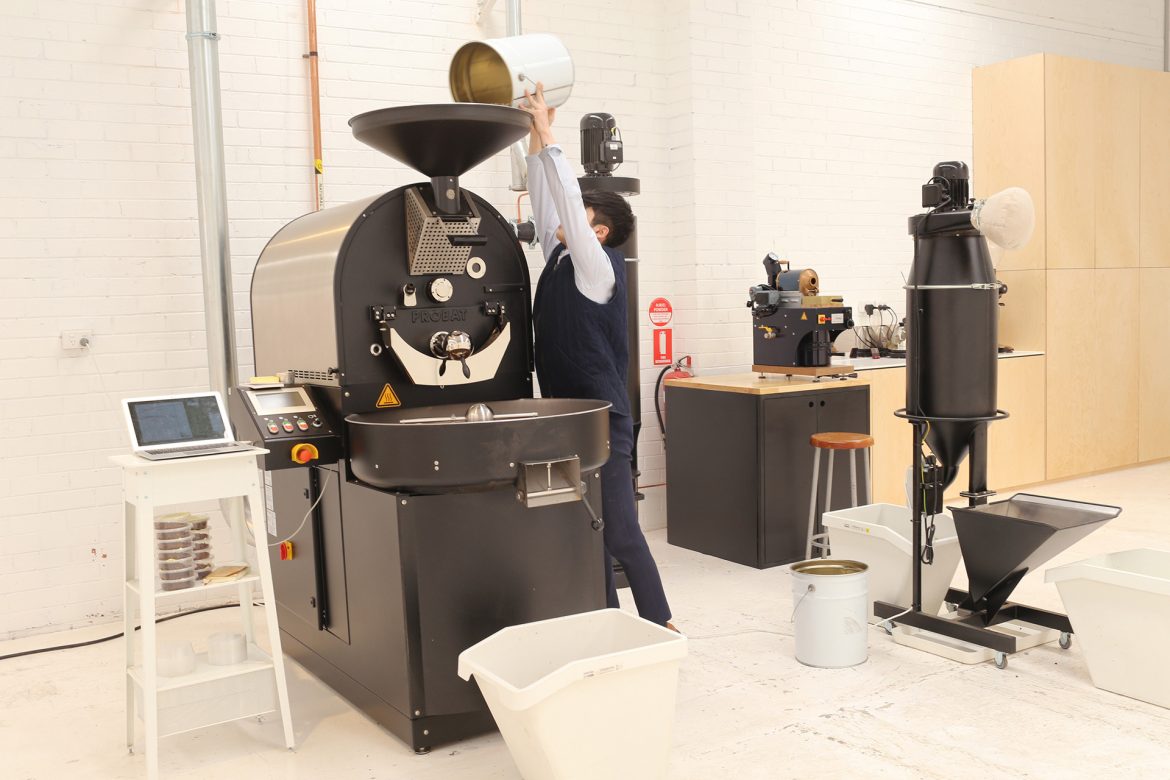
Acoffee, which opened in April 2017, is a strikingly minimal space with one not-so-simple focus: coffee. The Acoffee brand began as a stand-alone roastery close to a year before the Collingwood space opened, when Byoung-Woo Kang (known as BW around Melbourne, formerly a roaster at Market Lane) set out on his own, turning beans brown on his brand-new Probatone 12 in a corner of the Sensory Lab production facility in Port Melbourne after his initial space fell through.

acoffee melbourne australia eileen p kenny

Over time, through supplying folks such as Slater St. Bench and Little Rogue, a unique partnership was formed with Frankie Tan, Nick Chen, Clay Tobin, and Joshua Crasti, which led to the collaborative opening of the Collingwood location (and the permanent home for Acoffee’s roasting operations).

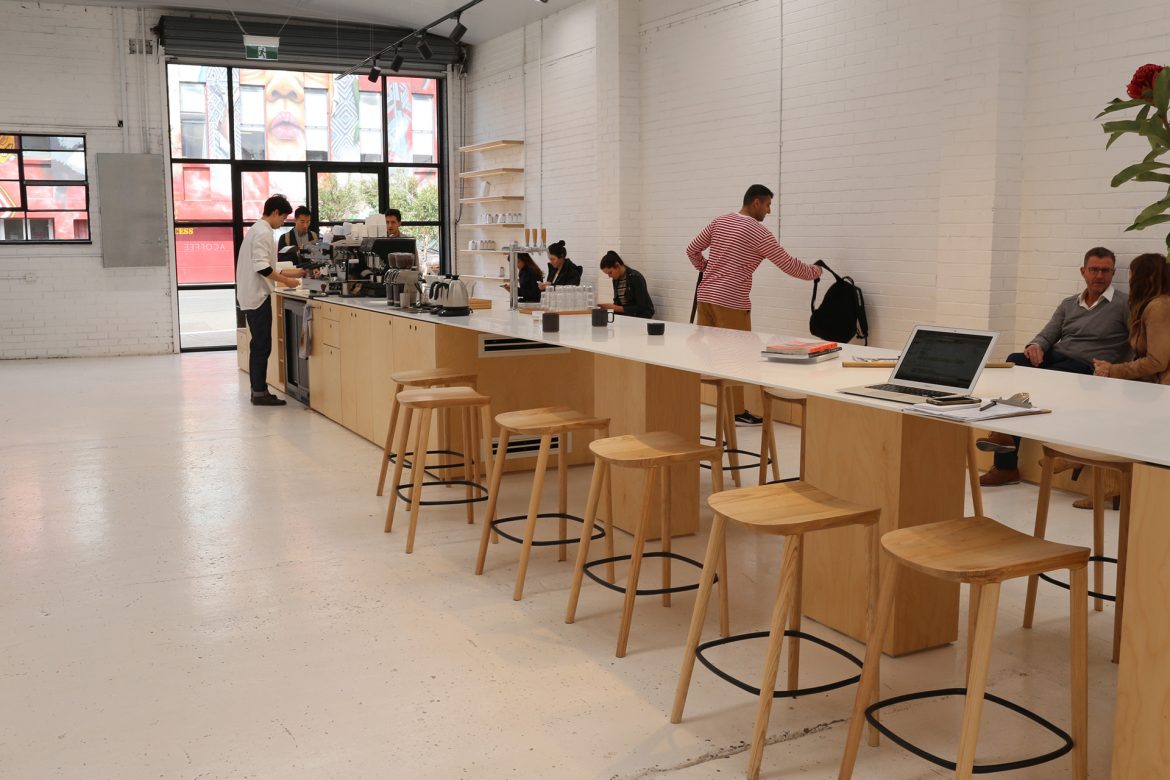
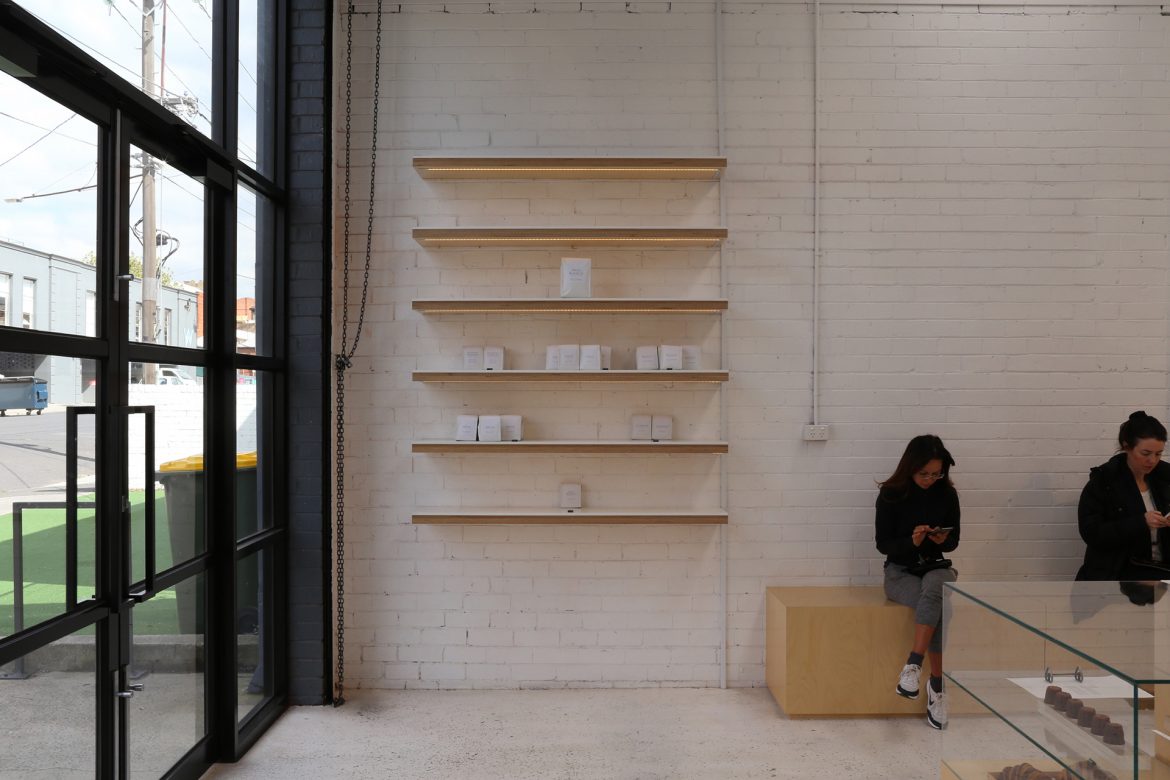
Designed by the team of owners themselves—and with architectural and building experience and insight from Crasti specifically—Acoffee was transformed from an empty warehouse shell to a purposeful coffee haven, echoing the simple and transparent nature of the company’s goals. This process led to a design aesthetic that is largely minimal with one long white bench down the middle, encompassing the espresso machine, filter coffee brewing, and seating. Upon entering the space, this long line leads your eye toward the coffee roaster and the green storage at the back (sourced from Melbourne Coffee Merchants, Cafe Imports, Shared Source, and Caravela), making it incredibly clear what the focus of Acoffee is.

acoffee melbourne australia eileen p kenny

Talking to BW, it’s clear that every element of the place is incredibly deliberate. “A lot of people think of this place like a cafe, but it’s actually not—it’s a showroom where we showcase our product,” he says. “This is meant to be a place where people can enjoy our product and enjoy themselves as well and have a seat and do some work. So I’m hoping that this is a place where you can focus and just go into yourself.”

The brand design and packaging for Acoffee’s retail offering was done in collaboration with Remy Ventura Horta with a goal to keep the information to the essentials and nothing more. That same intention translated into the starting point for the Collingwood location’s operations.

Here, the offering stays in line with the aesthetic and is minimal—espresso coffee is brewed using a La Marzocco Linea PB (flanked by Victoria Arduino Mythos One grinders), while filter coffee is brewed exclusively using Hario V60s and Baratza Forte grinders. Pastries come from Penny for Pound in Richmond, with unique savory treats in the cabinet from Kolache Cravings in Preston, including delightful Czech-inspired items such as bread buns with fillings like pulled pork, or even ham and cheese.

This simple but deliberate ethos has gone over well with the busy Melbourne coffee world, with Acoffee showing up as guest coffee at places such as Lune Croissanterie and Market Lane Coffee, and Collingwood locals (among those further afield) finding their way there regularly.

“People come in here, and they don’t really see much, but to make it work we pay attention to a lot of the details,” says BW. “We just wanted to do something that we could do well, and we could do better.”

Acoffee is located at 30 Sackville St, Collingwood. Visit their official website and follow them on Instagram.

Eileen P. Kenny is a coffee professional, winemaker, and Sprudge Media Network contributor based in Melbourne. Read more Eileen P. Kenny on Sprudge.

The post Melbourne: Acoffee Is A Coffee Showroom In Collingwood appeared first on Sprudge.


from RSSMix.com Mix ID 8200593 http://sprudge.com/acoffee-is-a-worthy-addition-to-the-collingwood-area-of-melbourne-126840.html

Coffee Books: The Sprudge Holiday Buying Guide

They say that knowledge is power. Books are like 90 percent knowledge by weight, so this holiday season, give the gift of mostly-power to your loved ones. “Power do to what?” you ask rhetorically. Why, the power to be better at coffee of course. Whether you’re making it, finding it, or talking about it, there have been a host of wonderful books to be published recently on one of the many facets of coffeedom.

And the best part about giving coffee books as gifts is that is a completely selfish act in the guise of thoughtfulness. The giftee will be all like, “Oh what a thoughtful gift. You really get me!” And you can be all, “Yep, I sure do. Hey, this one seems to say that you need to work on your pouring technique; maybe you should give that a try now.” And boom, you’re getting better coffee served at your every beck and call because you are the giver of such a thoughtful and indebting gift.

Being scholars (and sometimes contributors) to the dark arts, we at Sprudge have already devoured these new coffee texts and can confirm that they are of the utmost quality, sure to make the reader a better coffee person, and you look like a thoughtful gift giver. It’s a win-win (but you win more).

Coffee Art

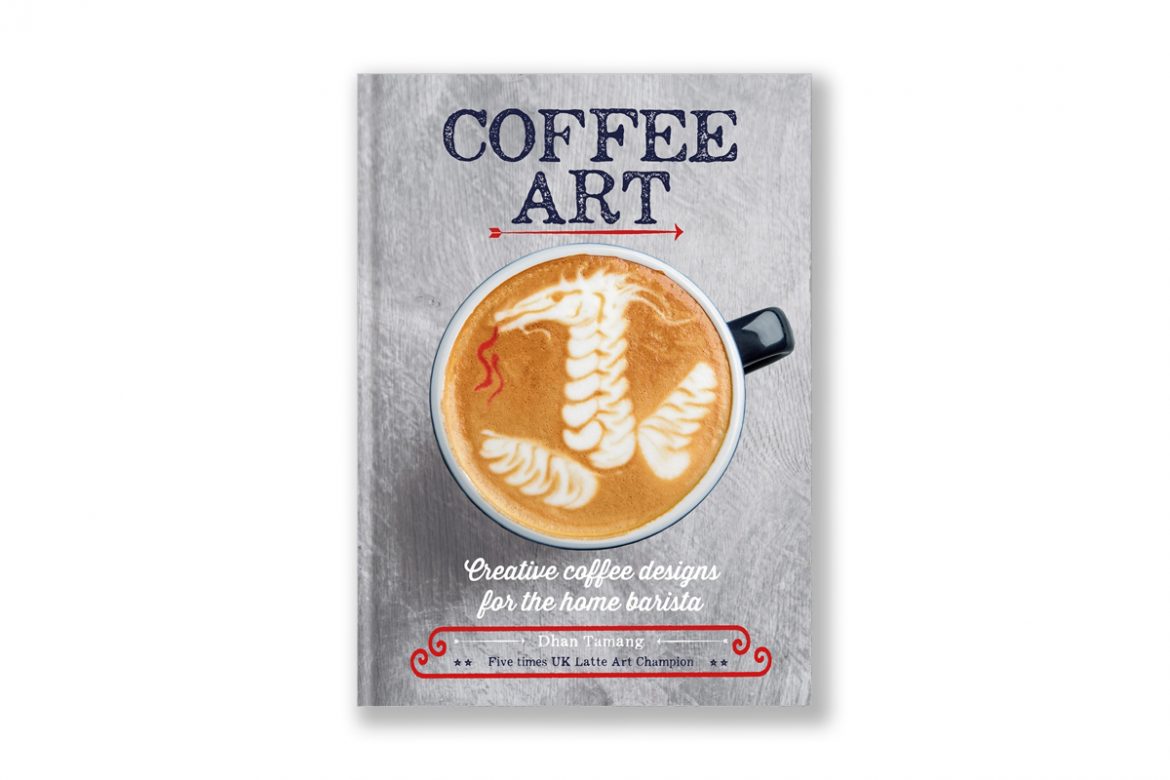
Say what you will about the importance of latte art, a really lovely rosetta served to a family member is the surest way to exhibit your home coffee prowess. Coffee Art, a new book from five-time UK Latte Art Champion Dhan Tamang, will teach you not only how to pour better hearts, tulips, and rosettas, but it also provides tutorials on more obscure etchings and 3D art, all accompanied with beautiful color photography examples. From the fundamentals of achieving proper milk texture to step-by-step guides to recreating some of Tamang’s signature pours, Coffee Art is sure to take your latte art to a whole new level.

Coffee Art retails for £10 ($12.99 USD) and is available through Octopus Books and major book retailers.

Where To Drink Coffee

One of the scariest parts of visiting a new city is having no idea where you can actually get good coffee. Not all specialty cafes are created equally and no one wants to schlep to the other side of a new town on a suspect recommendation only to be left wanting. Where To Drink Coffee makes sure this won’t ever happen to you no matter where you are in the world. Published by Phaidon—the folks behind such guidebooks as Where Chefs Eat and Where Bartenders Drink—Where To Drink Coffee is authored by Avidan Ross and Sprudge associate editor Liz Clayton and features contributions from some of your favorite Sprudge writers (a well-traveled and worldly lot if I’ve ever seen one) as well as veritable who’s who of coffee pros. If ever there were a group of people you’d want coffee shop suggestions from, it would be these folks.

Where To Drink Coffee retails for $29.95 and is available through Phaidon and major book retailers. 

What I Know About Running Coffee Shops

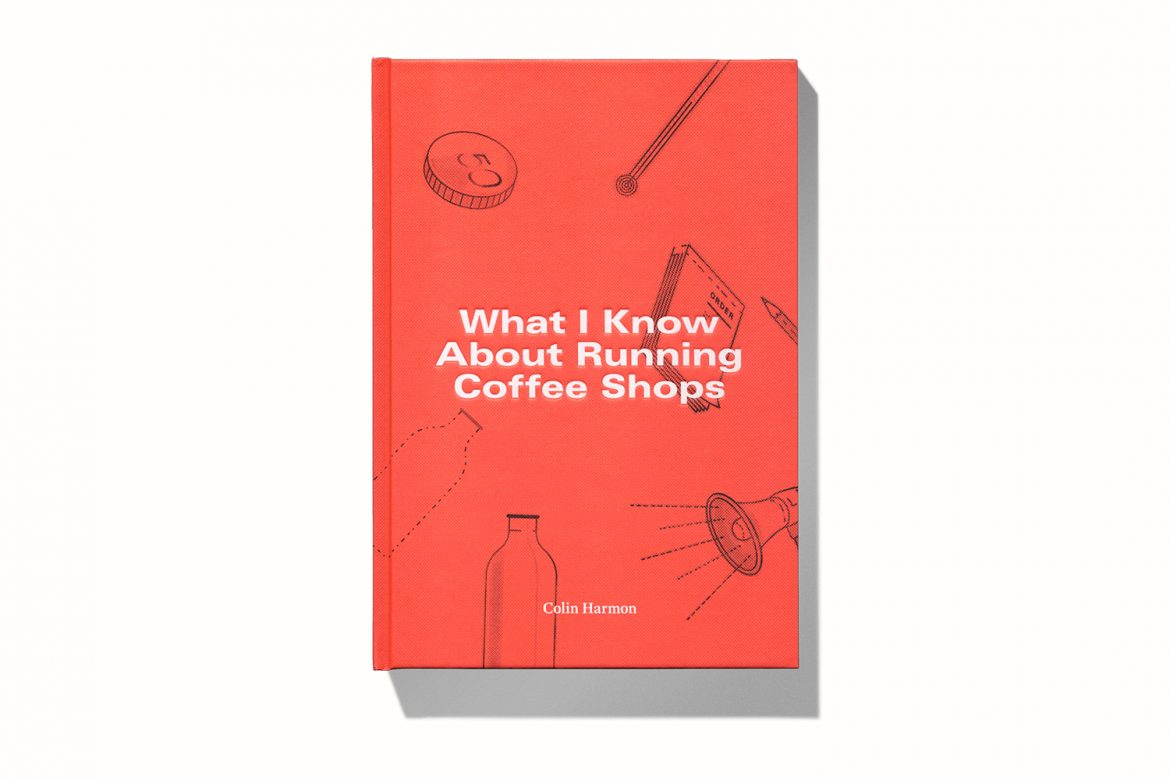
Colin Harmon is a four-time Irish Barista Champion and founder of 3fe Coffee in Dublin, a cafe that has provided some of my best coffee shop experiences to date. Basically, when Harmon offers advice on how to run a successful coffee shop, you listen. What I Know About Running Coffee Shops is all of his years of coffee experience categorized and collated, in print form. Though perhaps unsexy topics, Harmon’s book tackles issues on choosing buildings, staffing, milk, marketing, culture, and just about everything else needed to keep a cafe afloat in the nefarious world of thin margins. For anyone toying with the idea of taking the plunge into cafe ownership, this book is a must-read.

What I Know About Running Coffee Shops retails for €30 and is available through the book’s official website.

Craft Coffee: A Manual

Despite its ubiquity amongst home users, brewed coffee is often a lackluster affair outside of a cafe setting. But thanks to Craft Coffee: A Manual, that may not be the case for much longer. Written by Jessica Easto—not a “coffee professional—with the help of her husband and coffee educator at Halfwit Coffee Andreas Willhoff, Craft Coffee is a beautifully written guide to improving your home coffee no matter what your brew method or current coffee setup. Whether you’re buying your first v60 or have every piece of brewing equipment on earth, Easto and Willholf provide clear steps to improving your cup as well as the theories underlying them. If this book doesn’t make your brew better, then I’m coming over to your house every morning, because your coffee is already top notch.

Craft Coffee: A Manual retails for $19.95 and is available through Agate Publishing and major book retailers.

Coffeeography: The Coffee Producers

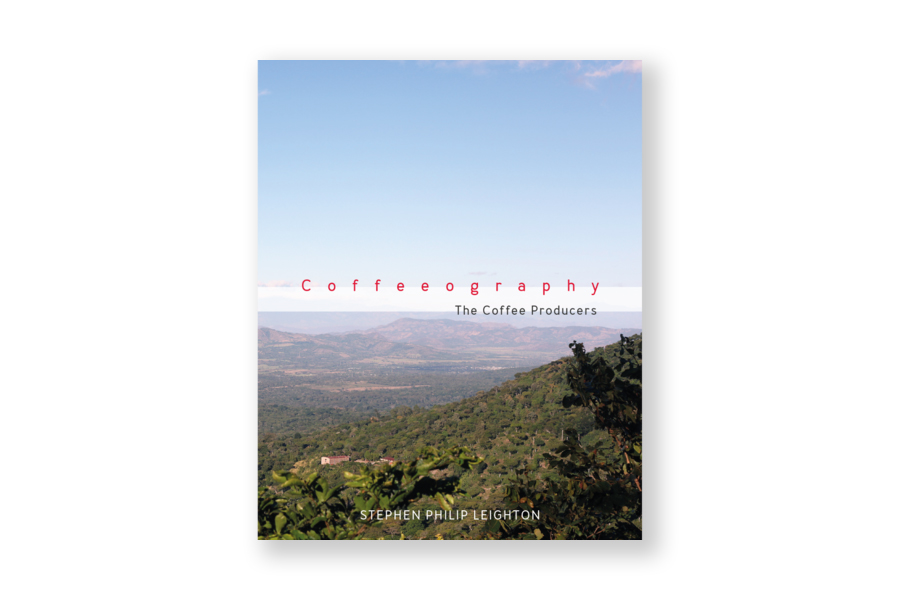
Not all coffee books have to be about making coffee, you know. Some can enhance your appreciation for the world’s most popular beverage by providing you with a more complete view of the people who make it all possible. That’s the idea behind Coffeeography: The Coffee Producers by Stephen Leighton. The founder of Hasbean, co-owner of 3fe and Drop Coffee, co-host of Tamper Tantrum, and emcee of many World Barista Championships, Leighton is a man of many interests, and most of them are coffee-related. Relying on his many years visiting origin and 30,000+ photos taken during those trips, Leighton’s newest project profiles 40 coffee producers from 11 different countries. Through beautiful color photos and interview-style discussion, Coffeeography: The Coffee Producers brings to life stories not often told but nonetheless some of the most important in coffee.

Coffeeography: The Coffee Producers retails for £19.99 and is available through Hasbean.co.uk.

Zac Cadwalader is the news editor at Sprudge Media Network and a staff writer based in Dallas. Read more Zac Cadwalader on Sprudge.

*top image via Dame Magazine

The post Coffee Books: The Sprudge Holiday Buying Guide appeared first on Sprudge.


from RSSMix.com Mix ID 8200593 http://sprudge.com/coffee-books-a-holiday-buying-guide-128323.html