Wednesday, December 20, 2017

Brewista Printables: Free Coffee Gear Designs To 3D Print At Home

Coffee brands: always trying to get me to buy things, you know? Like, we get it, you make coffee stuffs and need to receive currency for them in order to “not go out of business,” but c’mon, why can’t you just sell stuff for free?. Luckily Brewista—the makers of a wide variety of coffee equipment—have heard my penurious cries and just released Brewista Printables, all for free.

But because nothing in life is ever truly free, there is a catch; you have to have access to a 3D printer. Brewista Printables are free downloadable designs that can then be 3D printed and used in concert with other Brewista products. The first drop includes two designs meant for use with their Smart Scale: a two espresso cup platform and a drip tray support. A third design—a portafilter stand—is coming soon.

The idea for Brewista Printables was borne out of the need to meet international needs without wholesale redesigns to existing products:

“We are fortunate that people in the coffee industry often bring us ideas for new products but it doesn’t make sense to take all of those ideas to market. Some ideas solve the problems of a very small niche,” said Brewista brand manager Christian Krause. “A key European distributor asked about making a two-cup platform for the Smart Scale, but there’s not much demand for that in the U.S. Creating the design with 3D software was relatively simple and quick.”

And if none of these designs move the needle for you, Brewista will be launching new Printables as they are designed and are even taking suggestions on what you the consumer would like to see. So if you’ve got an idea, shoot them a message at info@mybrewista.com

I’ve already submitted my idea for a fully functional barista automaton that always makes coffee five minutes before I wake up, but I haven’t heard back from them yet. It’s a pretty good idea, so I’m pretty sure they’re going to make it.

Zac Cadwalader is the news editor at Sprudge Media Network and a staff writer based in Dallas. Read more Zac Cadwalader on Sprudge.

*top image via Lulzbot

The post Brewista Printables: Free Coffee Gear Designs To 3D Print At Home appeared first on Sprudge.


from RSSMix.com Mix ID 8200593 http://sprudge.com/brewista-printables-free-coffee-gear-designs-to-3d-print-at-home-129094.html

Sprudgie Awards Spotlight: The 2017 Nominees For Best Coffee Film/Video

Bitterness in Coffee: What Is It & Is It Always Bad?

Bitter has become a dreaded word in the specialty coffee industry. We all “know” that good coffee should be sweet and well-balanced, maybe a little acidic, and definitely not require sugar to make it palatable.

But what is it that causes coffee to be bitter – and is it always such a bad thing? Read on as we find out.

SEE ALSO: Coffee Science: Breaking Down Where Flavor Comes From

Coffee that hits the sweet spot. Credit: Matt Fury

Is Bitterness Bad?

Bitterness is not always a bad thing. In fact, if your coffee had no bitterness in it all, you might find it too acidic or sweet. The key is balance. A small amount of bitterness will help to ensure complexity and complement other flavors – without being overwhelming.

And that, really, is the problem. For most of us, throughout our lives, we’ve been more likely to be served a brew that’s far too bitter rather than one that’s too sour. This trend has led to a backlash against a trait that is actually essential to good coffee.

However, there’s no doubt that excessively bitter brews are a bad thing – so let’s take a look at what bitterness really is and how we can avoid tasting too much of it in our coffee.

coffeeCoffee being brewed on a Kalita Wave. Credit: Tyler Nix

What Is Bitterness?

Everyone can remember tasting something bitter. However, in many cases, that “bitter” food or drink might not have tasted bitter to someone else. This trait is a perceived taste, meaning it will change from person to person.

It’s also important to note that it’s not just taste that creates the experience of bitterness. Flavour is a combination of many things, including smell, emotion, music, and altitude. However, that’s a topic for another article; for now, we will be focussing on taste.

So let’s dig into some science and look at what causes bitterness in coffee. You may want to grab a cuppa and make sure you’re sitting comfortably!

coffeeA bitter brew? Hopefully not. Credit: Matt Fury

The Science of Bitterness

People used to think that the tongue was split into a kind of “taste map,” with different areas able to detect sweetness, saltiness, sourness and bitterness. But now, we know that flavour can be tasted in all parts of the tongue.

This is because our tongues’ sensory cells contain numerous proteins. And around 35 of these (according to the US America’s Institute for Quality and Efficiency in Health Care) react with the compounds in food substances to create the experience of bitterness.

This means that how bitter a coffee tastes comes down to these compounds, which are called phenolic compounds. Some of the most prevalent of these are the chlorogenic acids, which we’re going to talk about a lot. They account for up to 8% of the dry mass of green Arabica beans and have a large influence on the sensory elements of coffee.

There are many types of chlorogenic acid but there are two particular ones that you should know: 5-caffeoylquinic acid, which is the most common within green coffee, and di-CGA, which bears particular responsibility for coffee’s bitterness.

Although the majority of coffee’s bitterness comes from chlorogenic acids, Verônica Belchior, a Q-grader and PhD student researching the relationship between chemical compounds and flavours, explains that caffeine also plays a role. However, it is just a secondary one.

coffeeThis coffee’s complex flavour compounds will interact with proteins in the tongue’s taste buds. Credit: Matt Fury

Bitter Green Beans

When we talk about bitterness in coffee, we often think of roasting (more on that to come!) – but some coffees are just more likely to create perceived bitterness than others.

To begin with, Robusta is far more bitter than Arabica. This is because it has more chlorogenic acids and caffeine. Chlorogenic acids in Robusta can make up to 10% of the dry mass – a whole 2% more than in Arabica. What’s more, Robusta has almost twice Arabica’s caffeine content.

SEE ALSO: Coffee 101: A VIDEO Guide to Arabica & Robusta

It’s not just the species and variety of coffee that affects its bitterness, however. In 2006, Adriana Farah and Carmen Marino Donangelo published a study on phenolic compounds in coffee in The Brazilian Journal of Plant Physiology. Their conclusion?

“Generic factors such as species and variety, the degree of maturation, and to some extent environmental conditions and agricultural practices, are important determinants of the composition of chlorogenic acids in green coffee beans, and will also affect the composition of the final beverage.”

They also drew attention to processing, particularly the monsoon method. This is an Indian tradition that exposes green coffee to humid monsoon winds. It has been found to reduce both chlorogenic acids and bitterness.

As for cherry ripeness, Verônica Belchior explains that “unripe beans, for example, have more chlorogenic acid content. That’s why the beverage is so astringent when there is a lot of these beans in a lot.”

coffeeGreen coffee beans. Credit: Café Don Emilio

Does Roasting Increase Bitterness?

Okay, here comes the last bit of science, I promise!

Throughout roasting, something happens to the chlorogenic acids. They start to break down. And here’s the thing: while chlorogenic acids are responsible for the bitterness in coffee, they aren’t actually bitter. Not until the roasting process breaks them down into chlorogenic acid lactones and phenylindanes, that is.

Dr. Thomas Hofmann, a leading researcher on the topic, revealed in 2007 that these phenylindanes are what create the perception of bitterness. Moreover, the amount of phenylindanes in your coffee is linked to the roast profile

Light to medium roasts will have more of the acid lactones, which create what Hofmann describes as a “pleasant, coffee-like bitter taste quality.” Darker roasts, on the other hand, will have more phenylindanes, which creates a “lingering, harsh type of bitter sensation.”

So light to medium roasted coffees are likelier to taste less bitter and yet still contain those classic coffee aromas and flavours that we know and love. But of course, as we said before, bitterness is in the tongue of the taster (quite literally). Just because you dislike the taste of a dark roast doesn’t mean your friends will agree with you.

coffeeFreshly roasted beans at Saltspring Coffee Roasting Facility. Credit: Kris Krüg via Flickr, CC BY-SA 2.0

How to Avoid Overly Bitter Brews

So does this mean that, if you buy lightly roasted high-quality Arabica, you’ll be able to avoid a bitter coffee? Not necessarily. The brewer, whether that’s you or your barista, also affects the final taste in the cup.

To avoid bitterness, you’ll need to not over extract your coffee. This is because bitterness increases later in the brew. There are a lot of variables that affect extraction – brew method, grind size, water temperature, brew time… but there are some general guidelines that you can follow.

First of all, make sure you have the recommended grind size for whatever brewing method you’re using. As your grind size decreases, you increase the total surface area of your coffee and so may extract more flavour than you’d bargained for (plus, with drip/pour over brewing, it will increase your brew time and so also increase extraction).

The next thing is to check your water temperature. The hotter the water, the more efficiently flavour and aroma compounds will be extracted. If your coffee’s lip-curlingly bitter, you can try using water a couple of degrees cooler.

Then there’s the brew time: if your coffee has a bitter tang, you may be brewing those grinds for too long.

Remember, however, that extraction is a delicate balance of all these factors. And if you adjust one (such as grind size), then another (such as brew time) may also be affected.

coffeeA sweet filter coffee requires the right grind size, water temperature, and brew time. Credit: Matt Fury

Bitterness – it’s not bad, but when it drowns out all the other flavors in your coffee, it becomes a problem. Fortunately, as our understanding of the chemical compounds behind this flavor develops, we’re learning more and more about how to control its development and extraction.

So follow the steps I’ve listed for a perfectly balanced, complex coffee with just the right level of bitterness.

Written by Matt Fury, with thanks to Verônica Belchior and Scott Rao for their input.

Perfect Daily Grind

Want to read more articles like this? Sign up to our newsletter!


The post Bitterness in Coffee: What Is It & Is It Always Bad? appeared first on Perfect Daily Grind.


from RSSMix.com Mix ID 8200593 https://www.perfectdailygrind.com/2017/12/bitterness-coffee-always-bad/

Tuesday, December 19, 2017

International Voices Respond To Deferred Candidacy

In November, the Specialty Coffee Association rocked the coffee world with the announcement that three major world coffee competitions would remain in Dubai this year, despite the numerous protests of the global coffee community—especially those who are LGBTQIA+ or allies. As an amendment to their initial rollout of Dubai as event location, SCA officials added the Deferred Candidacy Policy, which allows candidates to defer to another year if they cannot attend world competitions for reasons of safety, health, or unforeseeable circumstances, pending approval from World Coffee Events‘ World Championships Committee—the details of which have yet to be released to the public.

Widely criticized in the coffee community, this decision and accompanying policy have led many across the world to reconsider their involvement with SCA and competitions—including a decision from the SCA Canada Chapter not to send their national competitors to Dubai in 2018. While a vocal minority have sought to characterize protests of the choice of Dubai and the accompanying Deferred Candidacy Policy as a US-centered phenomenon rooted in selfishness, many more across the world have argued that the global coffee community will never profit from any rhetoric that pits global inclusion against queer inclusion—that queer and otherwise marginalized people exist all across the world and that laws that oppress them cannot be supported by a global member-driven nonprofit organization. I talked with coffee professionals across the globe who have seen or felt the impacts of this decision. These are their voices.

XIMENA RUBIO

Wholesale Sales & Education, Qūentin Cafe, Mexico City, Mexico

I have been involved with SCA for about 4 years. I went to WBC in 2014, competed in World Aeropress Championship in 2015, and then went to World of Coffee this past year. I’ve been a volunteer for two years as well.

First of all, I think people that are not part of the LGBT community cannot even have an opinion about this; they should be listening to their LBGT coworkers and friends rather than having opinions based on their own experience. Going to a country where they support this discrimination is horrible for anyone who is competing, judging, or volunteering, or even just working with a brand that will be in the show. The decision not only supports discrimination, it’s also actively dangerous.

In Dubai, unlike in other locations where you have a chance of encountering discrimination, it is the state itself, the police and government, that is discriminating. It’s not like if you come to Mexico and someone on the street harasses you. It’s not the same and you cannot compare it, because it’s the government that enforces these laws, not individuals.

I think the SCA had a lot of money invested in this deal, and I think they didn’t measure how many sponsors and judges are going to back out if they go through with it. I was thinking about competing this year, but I’m going to stop before nationals if the worlds are going to be in Dubai. If you look into the history of world champions, there was a World Brewers Cup champion who is transgender. Imagine if the competition had been in Dubai that year—he couldn’t have competed.

I also think SCA should let their members vote directly on competition locations and other things that directly affect them. SCA are based in democracies, so I don’t understand why there’s not a better direct voting system for important decisions.

I also want to say that this situation is a perfect example of how media language barriers work. For example, I was talking to some coworkers about this, and they didn’t even know what the issue was. They weren’t able to be informed and measure the issue because there’s no available information in Spanish about it.

MAT NORTH

Owner of Full Court Press, National Coordinator for SCA UK, Bristol, UK

After many years of helping with SCA competitions from the fringes, I was challenged to take a more active role after criticising previous chapter volunteers. This led to two years as Events Coordinator and now my current role as National Coordinator for the SCA UK chapter.

It’s hard to have an opinion on the Deferred Candidacy Policy when it doesn’t exist yet. The communications surrounding it were poorly handled at best and offensive at worst and the SCA knows this. It’s not and never will be a solution to the site selection issues regarding the LGBTQIA community. That’s for another policy to solve. That isn’t to say that the DC policy can’t be useful for others though, and that we can have a part in making sure it and the site selection policy serve all of the members.

Largely though, I feel that these are two separate issues with one root cause, a lack of diverse representation at the upper levels of the SCA. It’s complex marrying the desire to promote speciality coffee values around the world and the good that association can do on the ground with the need to protect its members. Dubai appears to be complicated by a lack of other bidders, suggesting that the process was in need of urgent review. This adds an extra layer to the decision-making and to judgement errors—errors which have directly impacted the lives and safety of members.

The idea that this is a US-centered issue is a misreading of the situation. People are seeing that a large number of those who are questioning this situation are loudest in a certain location and equating that to being a localised problem. Human rights are a global issue that concerns us all, not something to be ignored if it “doesn’t affect us.” I have heard discontent from parties on all continents but for a myriad of reasons they can’t or are not able to make their voices heard.

JULIANA GANAN

Roaster, Entrepreneur, Writer, Minas Gerais, Brazil

I’ve taken barista and sensory classes at SCA certified schools in Brazil and at the BSCA (Brazilian chapter) headquarters in Varginha, Minas Gerais, Brazil. I am not and never was an SCA member.

When I heard about this decision, I felt sorry for many people in the industry I know who would have to travel so far and spend so much time and resources and still not feel safe. The Deferred Candidacy Policy seems like a very poor workaround for something that should have been properly addressed and considered from the beginning. If I were one of the competitors, I would be extremely disappointed with their decision. Coffee communities around the globe are supposed to be inclusive and diverse, and the choice of location and the SCA handling of it ever since was everything but inclusive.

Being born and raised in Brazil but also having lived in the US for some years, I feel like the US is more vocal about these issues, but they are felt everywhere. I would even dare to say that they are mostly felt where the voices are not being heard, since sometimes people do not share the same freedom of speech that most Americans are entitled to. I admire Americans for speaking up and also for representing voices around the world, they play an important role in transmitting some issues. The fact that they are the ones that mostly speak up doesn’t mean that they are alone in that battle. They are joined by many other voices—sometimes silent ones—around the globe.

ASH PONDERS

Freelance Journalist, USA, Europe, and Panama

I’m from Panama, but I’ve lived in the USA and Europe off and on for a while. I’ve competed and fussed around with SCA events in the early aughts, but it’s been a while and I never really cared for them.

Regarding the Dubai decision and DCP, delegating responsibility for the safety and wellbeing of competitors to the competitors themselves seems calloused and backward. I can’t recall another major international competition organization that abdicates its role in providing safety for its competitors.

When the winter Olympics were held in infamously “homosexual-free” Sochi during a wave of virulently homophobic Russian propaganda, dozens of gay Olympians lodged formal and informal complaints with the various governing boards of the Olympics. The IOC took their complaints seriously, even while acknowledging they could not back out of their selection for fiscal reasons. At no point was a deferral for gayness ever seriously discussed. In fact, several teams (the US and the Dutch off the top of my head) had a number of previously closeted members come out in outspoken solidarity against the selection of an avowedly LGBTQ-hostile city and against the policies that led to the selection.

Even the UFC, hardly the bastion of progressive wholesome values, ensures its (many!) LGBTQ fighters and staff are protected and respected legally and ethically by the host countries and cities it sends them to. Why won’t the SCA?

Equality and accessibility are universal virtues. Even if they have less adherents in regressive quasi-theocratic oligarchies (like the US) they still matter. If your organization purports to represent and support its membership, then it has an obligation to do so for all of its membership. Equality for most people is not equality at all. This fact doesn’t stop at a border any more than gravity does.

TIM WENDELBOE

Owner of Tim Wendelboe Coffee, Coffee Producer, World Barista Champion and World Cup Tasters Champion, Oslo, Norway

I’ve been member of the SCAE before and in the recent years only been member of the SCAA, now SCA, until June this year. In 2004 I won the World Barista Championship after being first runner up twice and in 2005 I won the World Cup Tasters Championship. My history as a member and contributor to the SCAE started in 2000. I served on the board of the WBC in 2006/ 2007 and have volunteered as a judge, lecturer, held several workshops in the past both nationally and internationally.

I don’t have first-hand information on how the SCA decided on hosting the event in Dubai, so it’s hard to judge whether it was a well thought-through process or not. Hopefully the people who made the decision to host the events in Dubai weren’t fully aware of the controversial laws in Dubai and how they could affect its members and visiting participants before they made the decision—I mean, every day people make decisions without knowing the full impact of those decisions. But, once the SCA board was made aware that the decision was controversial and that by hosting the competitions in Dubai they would exclude a lot of members, they should have made a more inclusive decision and moved the events to another country where everyone feels safe to visit. After all, SCA is a global organization that is supposed to gather people in our industry. By hosting an event in Dubai they are doing the exact opposite of that.

When I heard about the Deferred Candidacy Policy I got really upset and very disappointed as it clearly is quite discriminatory towards the SCA’s current and future LGBTQIA+ members. As a former World Barista Champion I know how much work and effort goes into competition performances. I also know how many opportunities come with winning the WBC and I believe every competitor regardless of whom they love or who they are deserves an equal chance to win those opportunities. The Deferred Candidacy Policy is for sure a policy I do not agree with and I do not want to be a member of an organization that is not inclusive and that is discriminating against its members. Therefore I decided not to renew my SCA membership.

I think that is not true at all that this is a US-specific issue. Although I live in a country where same sex marriage is legal, we still have a long way to go as a society not only in Norway but all over the world. There are still a lot of countries where being gay is a crime and Australia just had a vote whether they should allow same sex marriage or not. It is ridiculous to say that this is only an US problem.

Norway is considered a forward-thinking country when it comes to the rights of our LGBTQIA+ community, but we are still facing a lot of challenges every day in our country too. If people don’t speak up then things will not change.

Last week we had a similar discussion going on in Norway too because the board of my favorite Norwegian football team (Rosenborg) recently decided to have their winter training camp in Dubai. The decision was met with huge protests from its fan club due to Dubai being a society that has a history of torturing convicts (according to Amnesty International) and discrimination towards women and LGBTQIA+ people. When the board of the football team was made aware that their decision was controversial they revoked their decision and the training camp was moved to another country. This sends a strong and important message about the club’s values to its team, employees, members, and fans. I instantly thought of the Deferred Candidacy Policy when I read about this as it is exactly the same situation. A global coffee organization like SCA should be inclusive and foster an environment where everyone feel safe and equally treated. By hosting global coffee competitions in Dubai and announcing the Deferred Candidacy Policy the SCA is doing the exact opposite.

GABRIELA RIBEIRO

Barista and Coffee Shop Owner, Rio de Janeiro, Brazil

I’m a barista and a coffee shop owner in Rio de Janeiro for two years now, and so I follow SCA releases and events, but never actually took a course with them.

I think this decision endorses Dubai’s homophobic stance, delegitimizing the LGBTQI+ community, and strengthening the issue of trans people’s invisibility. Beyond just being non-inclusive, their decision is actively excluding people. This is a serious and oppressive positioning for an institution that supposedly supports diversity. To cite Angela Davis and correlate these oppressions, “In a racist society it is not enough to be non-racist, we must be anti-racist.”

The LGBTQIA+ community is a world community and so is the coffee culture. And the championships. Why would this be just a US issue if it affects all of us around the world? In my point of view this question doesn’t even begin to make sense, it’s too contradictory.

JAMES HOFFMANN

Co-founder, Square Mile Coffee Roasters, World Barista Champion, London, UK

I started competing back in 2005, have competed and judged across a few competitions. I’ve worked with WCE on events like Re:Co, and had some small inputs into Symposiums. I’ve participated in other WCE events like Tamper Tantrum and All Stars events. I’ve attended many events, under the SCA banner, volunteered and given lectures/workshops.

I think Dubai is clearly a problematic decision, as a host. However, I wasn’t surprised. WCE have run several events there, that had been very successful and had received no negative feedback I am aware of. It is a booming part of the world when it comes to speciality coffee, so I think there was also strong interest from sponsors too. Part of the mission of a global organisation is to support and encourage nascent speciality coffee cultures, and those participating in them. Hence why I can see why Dubai could be arrived at as a decision. However, it is clear that other aspects of the decision-making process hadn’t really been considered. It’s hard to talk about for me, because I found Dubai a challenging place to visit, and have chosen to avoid going there in the last few years. It’s a place that makes me uncomfortable, and I am supposed to feel very welcome there—I struggle to imagine how others, who are actively discriminated against there, would feel.

The proposed Deferred Candidacy Policy was a strangely timed, strangely worded communication. I know it is a proposal, rather than an active policy, but I don’t really understand whether it is supposed to be tied directly to the Dubai decision (I’ve heard both that it is and isn’t). I think the release of it, in whatever state it was in, was a mistake for a variety of reasons. It is clearly problematic in its current form, in ways many people have highlighted.

I think that, while the US is not a particularly coherent country when it comes to culture and politics, it is more coherent than Europe as a whole. I think there are many people in various European countries that are upset about the policy and decisions, I’ve seen a lot of UK based discussion online in particular, led by Mat North. However, there are certainly pockets of other political feelings in Europe too. Even the roots of the organisations that have now merged are very different, SCAA grew from a membership base of passionate roasters—many of whom were driven to improve the lives of the farmers whose coffee they bought. They were, I think, a more politically engaged group as a result. The SCAE’s roots are different: many more equipment manufacturers, or larger roasters with less of a focus on the producers they bought from. As a result, I think some of the political thought is quite different—but I think moving in the right direction more recently.

MOKHTAR ALKHANSHALI

CEO of Port of Mokha, Yemen and Oakland, CA

I’ve been involved in the SCA since I first got into specialty coffee and took my first courses in 2014 (green contracts, defective cupping). I attended my first SCA expo in 2014, for me it was like the coffee Olympics. Everyone from producers to cup manufacturers. I attended a lot of really inspirational talks. I’ve been to Re:Co the last two years. I’ve had the privilege of seeing my coffees make it to the last round of competitions, and this year we made 2nd place (Chelsea Walker from Slate) in the national Brewers Cup. It’s also where I am able as a producer and someone who works with producers, to showcase our work to international buyers. It’s hard to say if I would be where I am had there not been an SCA.

A lot of discussion and debate has been happening around this decision. The biggest reason is that many of our beloved coffee community members can’t feel safe in Dubai because of their policies around LGBTQ rights. For this reason many have urged the SCA board to change the location.

Practically, this makes a lot of sense. There’s no way around the safety issue. It does also pose an issue, which is a problem with all cultural/artistic boycotts: Are you alienating the people within these societies that would likely agree with you? It’s a real challenge. In addition, we have to be honest about the fact that we’re often willing to overlook things in our own culture and less willing to with people we perceive as other. In the US we have mass incarceration; we have police who murder black and brown people with impunity and face zero punishment as a result; we also have massive human rights abuses in the countries we invade and occupy; we have internment camps for undocumented immigrants from many coffee producing countries where numerous human rights violations have been and continue to be reported; and we have drone programs and weapons sales that literally kill Yemeni coffee farmers. We have a president here who’s banned Muslims from seven countries (Yemen included) from entering and I can’t have some of my team Meyer farmers come to attend any SCA events. Point being, the safety issue is real, so is the critique about selective outrage.

It amazes me how the SCA didn’t think this through. You can’t hide being transgender. I guess my question is where can brown, black, LGBTQ, religious, atheist baristas feel safe? A white supremacist rally in Poland drew over 60,000. Are we going to ban all events in Poland?

I hope that in the future we can live in a world where everyone is respected and cared for, from the farm to the cup.

TIAGO DAMASCENO

Owner, Barista, & Roaster at OOP Coffee, Belo Horizonte, Brazil

I have never had any contact with SCA, but I intend to take on of their educational programs and pathways and become an instructor in the future.

It makes no sense to me, as gay, to feel in harm or prevented to do something just for being myself. I would never go to any place where I could be arrested because of my sexual orientation. SCA is deciding who is welcome and who is not in the event, by hosting it in a place where not everybody has the same rights and where people are not protected by the law equally. The deferred candidacy policy does not solve the problem: it just separates who can and who cannot participate in 2018’s comps.

I’m in Brazil and I do feel concerned. It won’t be difficult to find more upset people outside the US, as we have gay people everywhere and they certainly care about their security the same way US people do. Where did the idea that this is just a US problem come from? I can assure you there’s more people here who share this same feeling. It is a global matter.

MATT PERGER

Founder/CEO of Barista Hustle, World Brewers Cup Champion, World Cup Tasters Champion, Melbourne, Australia

I’ve attended and competed in two WBCs, one World Brewers Cup, and two All-stars events, and been to two SCA shows. In 2016 I was a co-emcee for the opening ceremonies. Being in Australia I’m much more involved with our events here under the ASCA banner.

There’s a few things here that I’d like to parse separately.

Firstly, as I understand, there was no other viable option to host the event; it was a choice of having an event or not having one. I feel that this choice was somewhat justified as there are few countries that are truly safe and accessible by a worldwide membership. Almost every country is a problem for someone. But that said, Dubai was definitely deep in the “wrong choice” end of that spectrum.

Secondly, I believe the event announcement, rushed policy, and universally poor communications were the real problem. If the deferment policy was well considered and well-executed, it could’ve been a successful and considerate option for anyone to defer for any reason. Unfortunately it was quite divisive and potentially damaging.

The idea that the US is the only country with non-binary sexuality and gender issues is laughable.

FORTUNE REBECCA BUCHHOLTZ

Editor at Königsfurt-Urania Verlag, Darmstadt, Germany

I’m a former SCAA committee member who now lives in Germany. I was more involved with SCA back in the 00s; I was on the then-SCAA Consumer Committee when Kimberly Easson was chair.

I feel like the Deferred Candidacy Policy is poorly thought out, damages the image and values of the SCA, tears the membership base in shreds, and is probably actionable in law as LGBTQIA+/gender discrimination in some countries in which the SCA operates. Winning at the champs often brings significant financial rewards. Choosing Dubai effectively throws the competition to straight people, especially cis men, which is pure and likely illegal discrimination. But none of the Board seem to consider the possible international legal jeopardy, and its possible costs. This is a total failure of their duty to the organization.

Also, the amount of bad PR and loss of goodwill is only growing. These have measurable costs—but it doesn’t seem the SCA is actually measuring any real data around this, which is shocking in a professional organization. The loss of goodwill and PR damage alone could exceed the cost of breaking the contract with Dubai, but we don’t know for sure because they are irresponsibly failing to collect data.

I couldn’t disagree more with the idea that this is a US-centered issue. This idea that LGBTIAQ+ rights exist only in the USA is completely false. Certainly here in Germany things are even more “politically correct” than in the US.  Since the competitions are employment-related, and many competitors are backed by their employers, I think it’s highly likely the DCP & Dubai choice violates the 17-year-old EU law against employment discrimination, frankly. I hope an EU competitor steps forward with legal backing to formally challenge the policy on these grounds.

Read more: Queer Voices Respond To Deferred Candidacy

RJ Joseph (@RJ_Sproseph) is a Sprudge staff writer, publisher of Queer Cup, and coffee professional based in the Bay Area. Read more RJ Joseph on Sprudge Media Network.

The post International Voices Respond To Deferred Candidacy appeared first on Sprudge.


from RSSMix.com Mix ID 8200593 http://sprudge.com/international-voices-respond-to-deferred-candidacy-129049.html


Bug Out With Your Mug Out: Coffee Is A Doomsday Prepper’s Best Friend

When the apocalypse comes—and let’s be honest, all it takes is one tantrum from our toddler-in-chief before he takes his nuclear football and goes home—the value of a cup of coffee will go up exponentially. I’m not just saying that as someone who already places an incredible amount of worth on a well-made cup, though admittedly apocalypse coffee is one of our favorite topics here at Sprudge.. This is coming straight from the mouths of doomsday preppers.

In an article in GQ, Australian prepper Stuey Bailey says that when the apocalypse comes, “cash will be worth toilet paper,” which you would think means that it’s pretty important—because who wants to live the rest of their life with a post-apocalyptic poopy butt—it actually means the opposite. But what will be worth its weight in gold is coffee.

According to the article coffee ranks high in the prepper’s priority list for much the same reason it does for the military: “it keeps soldiers alert.” Prepper blogger Daisy Luther states that the benefits go beyond alertness:

In a situation that keeping watch was necessary, the boost could help those patrolling stay awake. In cold conditions, nothing helps raise your body temperature from the inside out like a cup of coffee. It even has some health benefits. For example, caffeine has been proven to help relieve headaches, even extremely severe ones like migraines.

Coffee will also help with mental health, according to the article. It’s a creature comfort from the old way of life, a temporary forget-me-now for the current post-society. Bailey notes that coffee has an additional value of being “a good way to make peace and meet strangers in the bush.” Preppers are social creatures, after all.

So if you don’t already have a significant stockpile of coffee, now would be a good time to start accruing. Because the end is near, the sky is falling, the boy cried wolf. It’s all happening.

Zac Cadwalader is the news editor at Sprudge Media Network and a staff writer based in Dallas. Read more Zac Cadwalader on Sprudge.

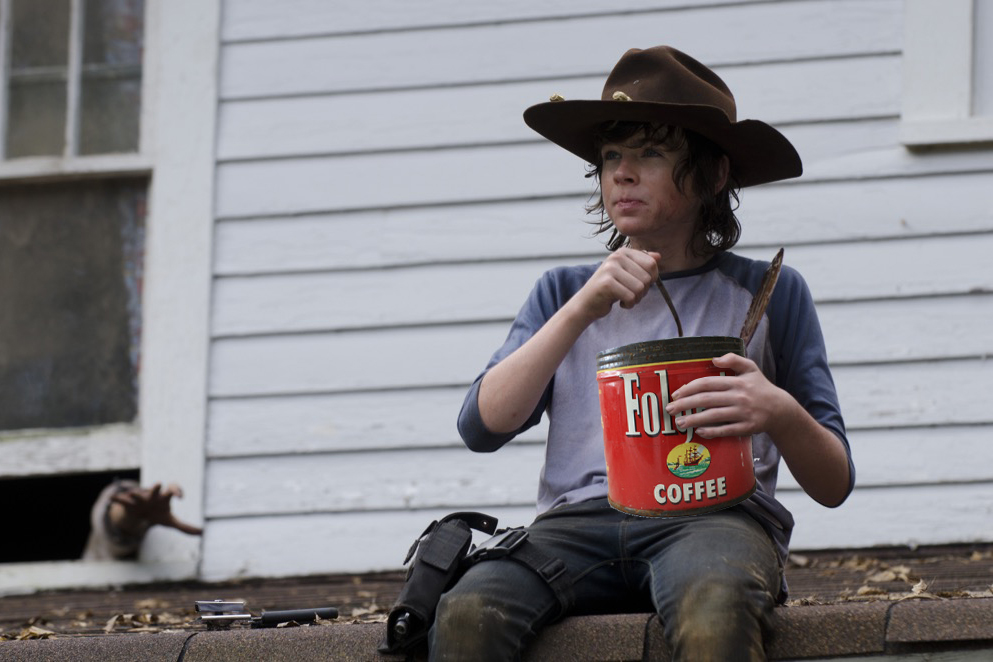
*top image via AMC

The post Bug Out With Your Mug Out: Coffee Is A Doomsday Prepper’s Best Friend appeared first on Sprudge.


from RSSMix.com Mix ID 8200593 http://sprudge.com/bug-out-with-your-mug-out-coffee-is-a-doomsday-preppers-best-friend-129047.html

Chill Brew: Cannabis-Infused Cold Brew By Magic Number

magic number cold brew cannabis tiara darnell

magic number cold brew cannabis tiara darnell

Oregon is home to an array of hyperlocal craft movements, including an internationally known coffee industry. But as of late 2015, recreational cannabis is legal here—one of just a few states with legal pot sales, alongside Colorado, Washington, and as of 2018, the state of California. This has (perhaps unsurprisingly) led to a boom for cannabis businesses here in the Beaver State. Portland alone has over 167 dispensaries and enough coffee shops to merit the title third most caffeinated city in America. The blending of bean and flower here is as natural as it was inevitable.

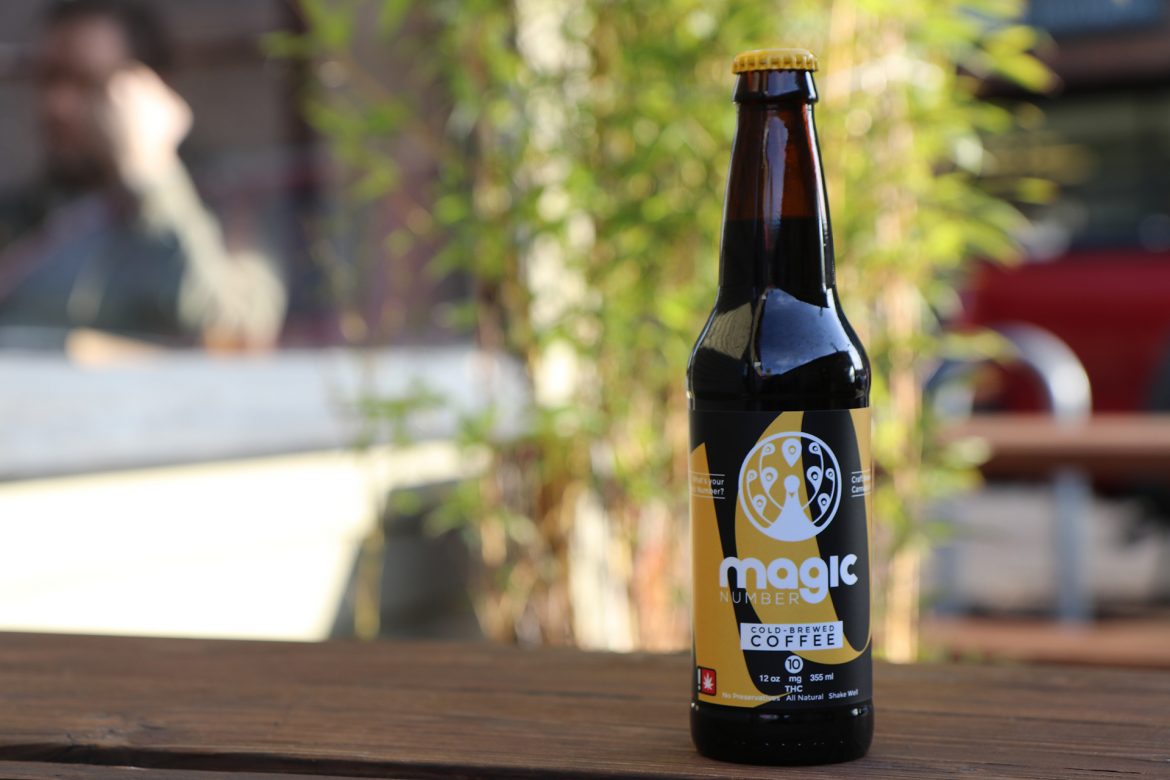
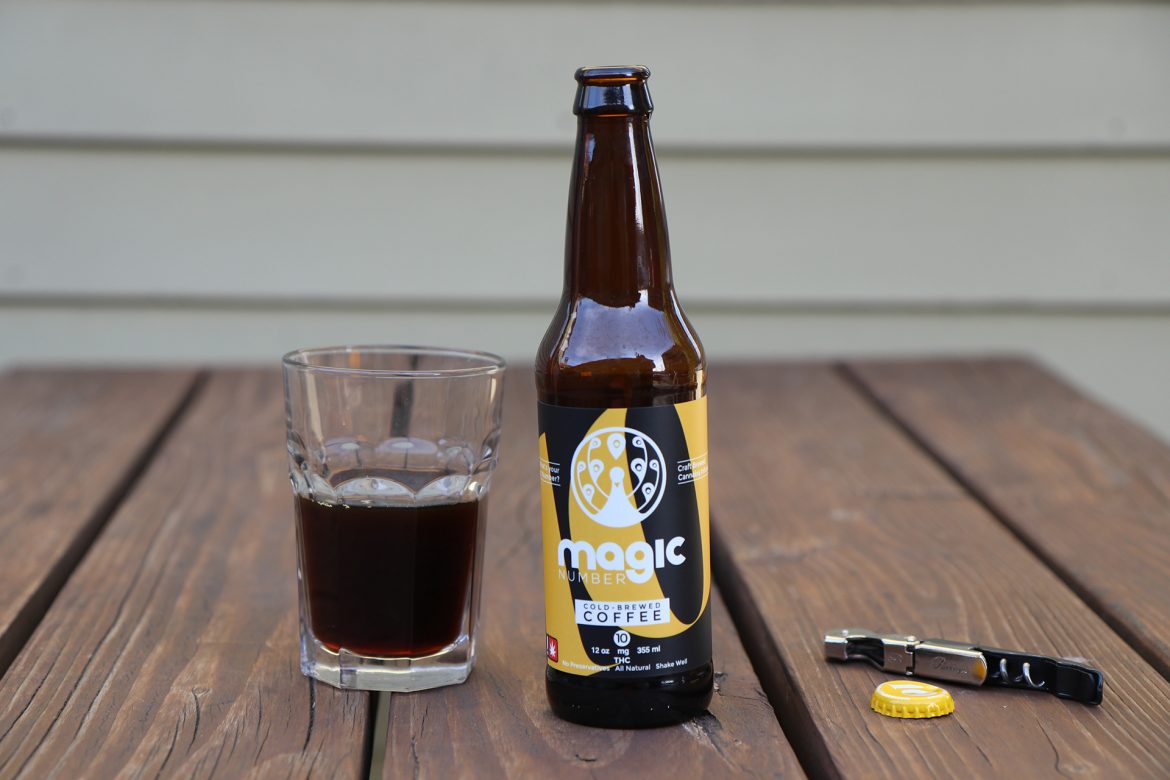
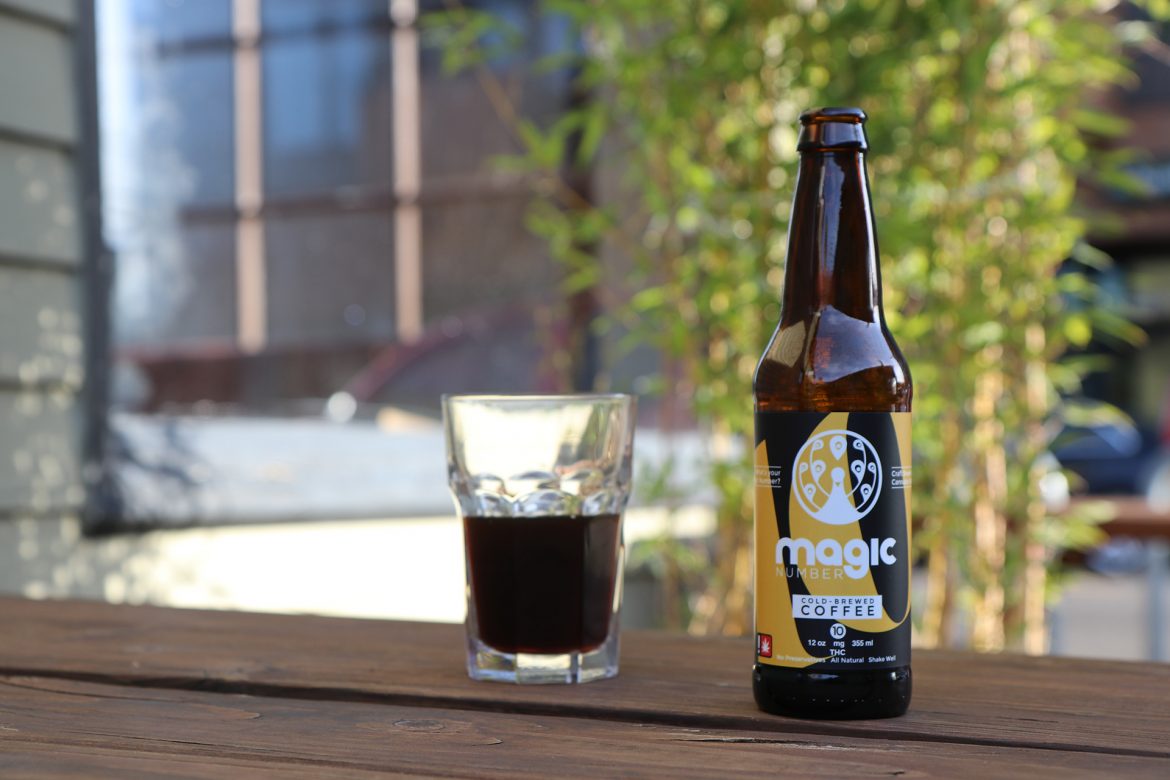
Bend, Oregon-based brand Magic Number is one of a handful of Oregon canna-businesses producing cannabis-infused beverages. In addition to their line of infused ginger beer, they recently started producing cold brew coffee mixed with cannabis oil extract from both uplifting and relaxing strains. The coffee is brewed using coffee roasted and source by Bonsai Beans (also based in Bend). Bottles come in 12-ounce sizes with three options for THC-rich doses: 3 milligrams, 10 milligrams, and 25 milligrams. A quick translation for cannabis novices, those doses mean, roughly: kind of high, pretty high, and roll with RiRi-high. Fabulousness may vary.

magic number cold brew cannabis tiara darnell

On assignment to check out the product for Sprudge, I went to Brothers Cannabis, on SE Division Street, to pick up a couple bottles of Magic Number. They didn’t have the 25-milligram bottles in stock (neither did five other dispensaries I called), but they did have the 3-and-10mg varieties. My helpful budtender [like a barista for weed—Ed.] told me he’d tried it, and described Magic Number as a good way to get a fix of both caffeine and cannabis at the same time. (Obviously.)

I opted for two bottles of the 10-mg cold brew. To start, I casually drank a moderately chilled dose: a five-milligram serving (half a bottle) of the cold brew, shared with a friend during an afternoon sampling session. The coffee had a pleasant and inviting floral aroma. However, upon the first sip, I immediately noticed the drink’s sweetness. Like many non-cannabis infused cold brews, Magic Number adds what they call “just a touch” of cane sugar to their cold brew, but the amount of sugar (five grams per bottle) took me aback. The roast on the coffee was not especially dark, at least compared to other cold brews I’ve had, but offered enough savory, rich chocolate notes that, when paired with the sugar, nearly muted the taste of cannabis oil.

magic number cold brew cannabis tiara darnell

The activation time for Magic Number coffee ranges from 30 minutes to an hour and a half according to the product label, but a couple of hours after lunch and about 25 minutes post-consumption, I started to feel the effects of the THC, caffeine, and sugar. I didn’t experience a cerebral, psychoactive high (my dosage of THC is usually around seven and a half milligrams), but I did feel the effects in other parts of my body: My usually tight upper shoulder and back muscles were noticeably more relaxed. I also experienced a mellow, chatty energy that lasted about two and a half hours and complemented the active end to my day into the start of the evening.

Some people can drink caffeinated coffee on an empty stomach, and others enjoy the racy euphoria associated with certain uplifting cannabis strains. I don’t enjoy either of those two things, and I certainly don’t enjoy them together. So why on earth I decided to attempt an entire bottle of 10mg Magic Number on my own, first thing in the morning and before breakfast, I will never know. The second time around, my first sips left me feeling like I was en route to the moon, not “transported to the rich mountain sides of Guatemala” as described by Magic Number’s website. Feeling jittery, I backed off for a few minutes and then continued to sip the rest of the coffee for a more measured and balanced effect. I eventually noticed a more pronounced taste of cannabis as the liquid warmed to room temperature. Nonetheless, the flavor of the drink was still pretty enjoyable, though I would strongly recommend that casual users take it easy with this stuff on the first try.

For the cannabis consumer that enjoys a little coffee with their daily dose of sugar, I’d recommend Magic Number. For others, who, like me, prefer black coffee with minimal sugar, I advise cutting the infused coffee with an equal part of your favorite non-infused cold brew. Most importantly, if you aren’t sure what dose of THC is right for you, it’s best to start with a lower dosage beverage—perhaps start with trying the 3-mg bottle. Take a few sips, wait 20 or 30 minutes to see how you feel, and then proceed with consuming if you are comfortable enough to do so. This is the best way to find the balance of THC—and sugar and caffeine—that works for you. Cheers!

Tiara Darnell is a globetrotter, budtender, and freelance journalist, based in Portland, Oregon. This is her first feature for Sprudge Media Network. 

The post Chill Brew: Cannabis-Infused Cold Brew By Magic Number appeared first on Sprudge.


from RSSMix.com Mix ID 8200593 http://sprudge.com/magic-number-cannabis-cold-brew-128872.html

Why Some Farmers Struggle to Produce Specialty Coffee

About 70 countries produce coffee, but not all of them are able to effectively engage with the specialty market. In some, producers struggle while growing and harvesting coffee for commodity-grade prices (and sometimes at commodity-grade quality).

The question is: why? What’s preventing these producers from accessing the same high-paying markets as other farmers?

I recently conducted research that sheds light on this exact issue for International Women’s Coffee Alliance (IWCA), as well as a case study with CARE International in Lao P.D.R. Read on to discover my findings.

SEE ALSO: The Complicated Role of Money in Specialty Coffee

coffeeEuropean street café culture in Ostend, Belgium. Credit: Vincent Rouffaer

Is Coffee Growing More Sustainable?

Optimism has spread. The United Nations Development Programme announced in 2015 that poverty has gone down. The digital revolution has connected people. The majority of children worldwide are at school. Access to clean water and sanitation has improved.

All of this has contributed to increasing coffee producers’ capabilities and enabling competitive coffee enterprises.

At the same time, third wave and specialty coffee gives customers unprecedented choice in their drinking habits. It’s an opportunity to “do the right thing” for smallholder producers and the environment – all while enjoying a “unique” artisanal experience, of course.

As consumers, we have agency; our purchases send signals to the market and to producers. We know that we can help drive the trend towards better prices for quality coffee and sustainable farming practices.

coffeeSpecialty coffee enjoyed by cyclists, tourists, students, and locals in Girona. Credit: Sam Tabotta

However, sometimes we can forget that considerable challenges remain for many coffee-producing communities. Persistent poverty; conflict; instability; business hurdles; inadequate access to credit; price volatility; market barriers; and entrenched gender, youth and disability inequalities with regards to resources, decision-making, economic opportunities, services, and influence…These all pose difficulties for producing coffee, and especially specialty-grade coffee.

“To meet the consumer demands of speciality coffee – sustainability, quality and unique or exemplary coffee – is a challenge for poorer coffee producers as well as coffee traders,” says Stephen Leighton, Managing Director of Has Bean Coffee.

coffeeStephen Leighton visits coffee producers on Vincent Paye farm in Copacabana, Bolivia. Credit: Has Bean Coffee

Why Do Some Producing Countries Struggle More Than Others?

My current study for IWCA gives insight into why some producing countries in Central and South America, the Pacific, and African Great Lakes regions have seen impressive progress – while others struggle with poverty and access to productive resources, efficient services and markets, and foreign investments due to their crippled economic growth and development.

I found that a third of these countries suffer serious issues that derail their production. Authoritarian regimes, weak institutional frameworks, a lack of transparency, red tape, unfriendly business climates, and poor infrastructure all plague coffee producers. As a result, these producers can struggle to access international markets. This is particularly difficult in Burundi, Cameroon, Columbia, the Democratic Republic of Congo, Dominica, Guatemala, Nicaragua, Kenya, Papua New Guinea, and Uganda.

Everyday facilities that we take for granted are often inaccessible for poorer coffee farmers. In Uganda, less than half the adult population has mobile phones or access to the internet. Both of these are essential for checking international coffee prices or learning new production techniques and trends.

And in Brazil, Costa Rica, and Kenya, the Global Findex states that only 65% of adults have bank accounts.

What’s more, almost half of these countries are highly vulnerable to natural disasters such as cyclones, flooding, and landslides. The devastation of these can destroy harvests, stock, transport, homes, and ultimately livelihoods. Farmers can slip from one crisis to the next, never able to get back on their feet.

There is positive news: organisations (like IWCA) can provide a platform for dialogue between the public and private sector in the international coffee industry. In this way, they can address challenges and sustainability issues – but there is still much to be done.

And sometimes our best efforts are misguided.

coffeeIn the South Kivu Province of the Democratic Republic of Congo, IWCA lead training events for female producers. Credit: Chantal Binwa

Can Poorer Farmers Produce Specialty Coffee?

Customers, including coffee traders, who demand more “unique” specialty coffee risk excluding the poorest of coffee producers. Even simple changes are hard for low-income producers to deliver, let alone the complex ones needed for, say, experimental processing.

In 2016, I undertook coffee livelihoods research work with CARE International in the cool southern hills of Sekong Province. This area lies next to the Bolaven Plateau, Laos’ largest coffee-producing region.

SEE ALSO: How Producers in Laos Are Turning to Specialty Coffee

There, I met Mrs Noi Impasai, a 24-year-old coffee producer. Noi and her family have three hectares of land which they rely on for their income. 0.5 ha of this is planted with upland rice but the rest is used to grow Catimor coffee. The majority of their trees are under eight years old.

Noi, who has ageing parents and two young children, describes her family as very poor. Her household income comes from agriculture and relies entirely on her and her husband’s labour. They often face six months out of a year with no rice, due to having no income until the coffee is harvested in November. Despite her circumstances, however, she’s determined to give her children a good education and better life choices.

Noi began a journey of farm improvement with the support of CARE International in Lao PDR Women and Income and Nutrition Project (funded by the European Union). She focused on what she can do differently, starting with small steps towards good agricultural practices and quality coffee production.

coffeeMrs Noi Impasai, age 24, in her yard; she left school early to get married. Credit: Vincent Rouffaer

The Need for Resources & Know-How

In 2015, Noi was elected to head a farmer group covering four villages. Through this, she realised that if the farmers worked together, they could share the risks and higher returns.

Three families decided to give it a shot. Together, they pulped their combined harvests to produce parchment. At the time, this was very unusual in Laos. However, as a result, the families were able to cut out intermediaries. They paid ₭1,000 (US $0.12) per kilo to transport their coffee directly to Lao Thai Hoa Company Ltd., a Vietnamese trading company in Paksong. There they were paid ₭3,500 (US $0.43) per kg, compared to the Duk Chueng prices of ₭2,300 (US $0.29) per kilo of cherry.

It was an undertaking of trust, organisation and risk. The families received very little support from the government or players within the industry in finding buyers. They had few networks or relationships within the Lao coffee market.

Yet their gamble paid off. That crop earned Noi’s group more than the average Lao person’s yearly income.

They also gained valuable market information that would otherwise be beyond their reach. They are now better informed about costs and logistics, which will only improve their future practices.

coffeeEvery day, labourers picks an average of 50–80 kg of red cherry and are paid US $3. Credit, Nicole Motteux

The news of Noi’s cooperative’s successful direct market sale spread within and beyond the village. Shortly after, other farmers started using simple hand pulpers to remove the cherry, with the support of CARE International in Lao P.D.R. This reduced the volume of product they needed to dry and transport. At a producer meeting, an overwhelming 83% of participants (60% women and 40% men) said they were keen to pulp.

As well as being time-saving, in Lao, dried parchment has a 30% greater value per kilo than dried cherry. The product is also easier to store if roads are impassable, due to flash floods, landslides and dangerous river crossings during harvest time.

It’s clear that what seems, to consumers, like small investments in infrastructure can represent huge differences in the lowest-income producing groups. Resources, know-how, and a united community: together, these can have an immense impact.

coffeeVillagers ferry a truck in the Duk Chueng District; rivers rise during harvest session, cutting off villages from markets across the Lao-Vietnam border. Credit, Nicole Motteux

Difficulties in Meeting The Market’s Demands

Yet while producers have begun pulping their own coffee, there are still some standards that are harder to achieve – like certification.

Sinouk Coffee was one of earliest large coffee producers to appear in Laos. They worked with the donor community for two years to introduce organic certification, fair trade labelling, and other sustainability schemes.

It’s difficult to achieve certification, particularly when working with many small and remote village farmers. Mr Sinouk found that “the organic procedures are very complex for poor farmers. Many farmers do not have the knowledge nor the capital to invest in international organic standards. At this point, I decided it was better to build the Sinouk brand and use local organic certification standards, not international standards”.

Another popular market demand right now is honey processing. It’s been around for 15 years and adds a distinct yet natural sweetness to the brewed coffee.

SEE ALSO: Yellow, Red, & Black Honey Processed Coffees: What’s The Difference?

Those countries with the right climate and good quality controls, such as El Salvador and Costa Rica, can produce high-quality honey processed coffee and so earn premium prices. However, for many poor farmers in Laos, it remains out of reach, say Karsten Ziebell, CR&S Manager of Outspan Bolovens Ltd, a subsidiary of Olam Specialty Coffee.

For the high quality and exquisite flavours that specialty coffee buyers demand, all processes from cultivation to cup need to be carefully controlled. A favourable environment is also important: no frost or pests, plenty of seasonal rain, the right amount of sunshine during the drying phase, and more.

At the start of this drying phase, producers need to turn the beans hourly to prevent fungal infection – a heavy investment of labour, especially for small husband-and-wife teams who also have children and elderly relatives to care for.

They need to continue controlling the drying process until the coffee reaches a moisture content of 10–12%. This process is complex for small-scale coffee producers with limited capital, including drying facilities, labour, and knowledge.

coffeeCoffee in drying patio. Credit: Amec Velásquez

Long-Term Sustainable Change for all Producers

However, with the right assistance, smallholder producers can take advantage of opportunities to enter the specialty market.

Karsten tells me that Outspan’s focus starts with good agricultural practices and certification (e.g. Forest Alliance and UTZ). The aim is to enhance productivity and returns, access new markets, and improve financial literacy skills. To achieve this, the company works with Jacobs Douwe Egberts and IDH Sustainable Trade Initiative through an out-growers coffee programme in Paksong District.

“It all starts by investing in the fundamentals of good agricultural practices,” Karsten says. “We have to take into account the complexities of rural livelihoods and understand farmers’ technical capacities, resources and finances. Supporting producers to gain skills from planting to processing sets them up for the future. That’s why getting it right – from the very beginning – is so important.”

For many low-income countries, coffee is a driving force in the rural economy. And those that invest in agriculture research and support their farmers with reliable transport and logistics can access the specialty market – something that, in turn, should help to ease poverty.

Yet it requires that initial investment and resources.

coffeeSasa Sestic of ONA Coffee Sasa sources beans direct from the producer on Thalanar Estate, India. Credit: ONA Coffee

Fortunately, the focus on producing high-quality coffee has encouraged positive, long-term changes. There is now a growing consensus among multinational traders and roasters, distributors, governments, civil society groups, and donors that farmers need to be supported in adopting good agricultural practices.

Coffee producers in Brazil, Costa Rica, Honduras, Ethiopia, Guatemala and Mexico are moving up the coffee value chain and earning more income. They now have a greater focus on crop quality, post-harvest handling, diversification and market engagement, says Nathan Hyde of HA Bennett & Sons Pty Limited. As such, the farmers can command a better price for their product and cater to the specialty coffee movement.

Coffee traders are increasingly demanding good agricultural practices, supporting their adoption, and providing a premium for quality or specialty coffee. As a result, smallholder coffee producers now have a viable, financial motivation to improve their quality and work towards sustainable farming systems.

coffeeRoman holds the coffee she produced, having found it on the supermarket shelves. Credit: Nicole Motteux

Finding ways to combat crippled economic growth and development is a daunting challenge, yet recognition of the problems is an important first step. If you want to help break the vicious cycle of poverty and environmental destruction in coffee growing countries, you can. Use your coffee choices to support the incremental steps towards sustainable practices, innovation, and robust systems.

Change and sustainability take time and trust – but with each cup, you can raise coffee producers’ hopes, opportunities, and confidence.

Written by Nicole Motteux, based on research conducted for International Women’s Coffee Alliance and a case study with CARE International in Lao P.D.R (Ms Impasai age 24 takes charge). All interviews were interpreted by Mr. Thongchanh Sengsoulivong and supported by Lilani Goonesena.

Perfect Daily Grind

Want to read more articles like this? Sign up to our newsletter!

The post Why Some Farmers Struggle to Produce Specialty Coffee appeared first on Perfect Daily Grind.


from RSSMix.com Mix ID 8200593 https://www.perfectdailygrind.com/2017/12/farmers-struggle-produce-specialty-coffee/