Thursday, May 24, 2018

How to Ensure Green Coffee Quality in Transit & Storage

After leaving the mill, coffee travels thousands of miles and through numerous hands before reaching the roaster. And across this journey, even small errors can have costly effects on the quality of those precious green beans.

To discover how importers and roasters can protect the quality of their coffee, I spoke to Diego Lara, Global Coffee Specialist at GrainPro, which makes US-patented airtight and ultra-hermetic coffee bags. I also reached out to several of the company’s customers: Jason Long, CEO of Cafe Imports; Alejandro Cadena, CEO of importers/exporters Caravela Coffee; and Sebastian Villamizar, CEO of La Palma Y El Tucán, an award-winning coffee farm and exporter.

Here’s what I discovered.

You might also like A Roaster’s Guide to Green Bean Moisture Content

Coffee bagsOn award-winning Colombian farm La Palma Y El Tucan, coffee is packed in GrainPro bags prior to being shipped overseas. Credit: La Palma y El Tucán

The 3 Biggest Risks to Your Coffee Quality

Three things came up again and again during my interviews: moisture, temperature, and time. This doesn’t mean they’re the only risks you should be aware of (insect damage, for example, is another one) but these are the most likely and therefore most important concerns.

Sebastian Villamizar of La Palma Y El Tucán says, “Sometimes, people don’t see storage as a critical part of coffee quality… [but during storage,] coffee absorbs water very easily, so your moisture levels can go up very easily.” And if the moisture content of your green beans fluctuates, he explains, you can develop defects, including a phenolic taste.

This is a particular challenge, he tells me, in areas with high moisture levels – which describes many producing regions. At his farm, he says that “the average relative humidity is 80%.”

He sees the purchase of hermetic/airtight packaging as an investment. While his GrainPro bags might be costly, he knows that “it’s going to be worth it.”

Jason Long of Cafe Imports agrees, adding that “as a high-end specialty coffee trader, it [is] important to protect the coffee. If the coffee arrives in a poor condition, you could claim to exporters but the money that you get returned won’t make up for the loss financially.”

Bear in mind that temperature variations will also affect the moisture content in the air and therefore the moisture content of your green beans – unless your coffee is stored in hermetic packaging, of course. This is why both humidity and temperature will, ideally, be controlled for.

And, if there are any issues with moisture or temperature, prolonged exposure will worsen its impact – making time another important point to consider.

Diego Lara of GrainPro says that, since coffee beans will sometimes be stored for months before use, it’s important to make sure they are stored well. Otherwise, he explains, “sometimes [the roaster/importer] will lose very good coffee beans that they’ve purchased and that is a loss of money.” He stresses the importance of using hermetic bags to protect the coffee.

And don’t forget that even the most careful of plans can go wrong. Diego tells me about a GrainPro client whose container of good-quality coffee was lost in transit for two to three weeks – a nightmare situation for any roaster or importer.

The client was worried that the prolonged time at sea, with the increased humidity, would ruin the coffee. However, when it was finally found in the Port of Oakland, the beans had been stored in airtight GrainPro bags and so were still in great condition – a relief for everyone involved.

So, let’s break down, from farm to roastery, what you can do to ensure those beans are stored well, no matter where they end up or what moisture levels they’re exposed to.

Coffee warehouseAt Finca Oná, Guatemala, coffee beans are stored in GrainPro´s Patented Cocoon Indoor to protect them from moisture and whitening in the warehouse. Credit: EGS Guatemala

Signing The Contract

After coffee is harvested, processed and dried, it waits in a warehouse until it is contracted and transported for exportation.

The contract should specify details such as quality, quantity, price, payment, delivery conditions, and more. And at this point, transportation and storage conditions can be negotiated and signed on.

Different countries may have different standard contract terms. However, the International Trade Centre (ITC)’s The Coffee Exporter’s Guide suggests referring to the European Coffee Federation and the Green Coffee Association for most commonly used contracts.

Coffee workerCafe Tuxpal from El Salvador packaging their coffees in GrainPro bags. Credit: GrainPro

At The Farm or Mill

Before the coffee leaves the farm or mill, it’s important to make sure that it’s been effectively dried. The best storage and transportation systems will be useless if the beans are too wet.

In fact, Jason tells me that airtight bags “can aggravate the problems” in uneven or insufficiently dried coffee. Since moisture cannot enter the bags, it cannot escape either. While he stresses that poorly dried coffee would never be good on arrival, the cup score could fall even more rapidly than if it were in jute bags.

Good systems cannot make up for low-quality products.

Learn more! Read How to Improve Quality When Drying Washed Coffees

Green and roasted coffeeGreen and roasted coffee samples.

In The Warehouse at Origin

Between signing the contract and exporting the coffee, it’s important to pay close attention to where and how the coffee is stored. What are the warehouse conditions? Which bags are being used? Is the quality being routinely checked?

Alejandro Cadena of Caravela recommends “storing coffee in parchment” inside hermetic, protective bags. This prevents the green beans from being in direct contact with air and helps prolong their longevity.

Before switching to hermetic GrainPro bags, he tells me, “We lost about 2-3% of our coffee because it gained moisture in our warehouse… GrainPro was a revolution in the industry.”

However, it’s important to make sure that staff on the farm or mill know how to correctly use and seal the airtight bags. Diego explains that GrainPro has been providing training throughout Latin America and Africa on how to store coffee in individual bags, as well as the best storage and warehouse conditions. They have also printed materials in the producers’ own languages with pictograms.

There is no point requesting that a producer uses a particular product or system if they are not familiar with how to do so – or if they cannot understand training because the materials were only in English.

Grainpro bagsUS-patented GrainPro packaging placed inside jute bags to protect the beans from moisture. The pictograms explain how to use and seal the bags. Credit: Sunghee Tark

From Farm to Port…

Now, it’s time for the coffee to be transported from the farm or mill to a port. Before loading beans into the container, the ITC’s The Coffee Exporter’s Guide recommends carefully inspecting it. Pay attention to the moisture content, smells, and any signs of an infestation. Airtight bags will prevent bugs from getting into the coffee; however, if you only use jute bags, you could be vulnerable to insect damage during transit.

Alejandro tells me that, now that Caravela uses airtight bags, “We don’t worry about condensation in the container… also, we don’t worry about any punctures or any holes that are in the container.”

But before that, they “used to put [desiccant] bags inside containers to avoid condensation,” in addition to paper lining. This added extra costs but was also ineffective.

shipping containersA coffee shipment bound for New York from Buenaventura, Colombia is packed in GrainPro´s patented TranSafeliner designed to protect the beans when in shipping containers. Credit: GrainPro

…And From Port to Port

Unless coffee is for a sample and cupping purpose (in which case it will normally be sent by air freight), it will usually travel overland and via ocean. It is at the seaport that responsibility for the coffee typically changes hands.

When traded as “Free on Board” (FOB), a producer or exporter’s legal responsibility for the coffee’s quality ends when “goods have passed over the ship’s rail at the port of shipment,” according to the ITC’s The Coffee Exporter’s Guide. At this point, the responsibility is transferred to the importer.

Nevertheless, every player should pay close attention to each step of the transportation and storage. Ensuring that the coffee will be of the highest-possible quality protects the relationship and reputations of everyone involved.

Jason agrees, telling me that “the whole chain” needs attention. As an importer trading on FOB terms, he says that Cafe Imports takes great care when investigating who to partner with on the ground. Sebastian shares this belief, adding that you shouldn’t overlook the importance of reliable drivers and packaging providers.

In other words, roasters and importers, the coffee quality is now your responsibility – but don’t think that you can be complacent about the stages prior to this.

That includes the time at port before the coffee is boarded onto the boat. Jason explains that there is typically a high temperature and humidity rate at ports. “Coffee spending time at a port is disastrous… Mombasa, [Kenya] is 40°C and 99% humidity. So, you definitely want to minimize time at port.”

Coffee containersContainers ready for exportation.

At The Destination Port & Warehouse

There’s little you can do about your coffee when it’s on the ship, other than hope it arrives promptly. However, you can make sure that your cargo doesn’t suffer customs delays on arrival and that you’re appropriately insured.

When the coffee arrives at the destination port, it is unloaded and the documents and condition are checked. Then, it’s time for it to be transported to the final warehouse.

In the case of FOB, the importer is responsible for insuring the cargo and checking the container on arrival for the weight, moisture, and any unusual conditions prior to making a claim (the ITC’s The Coffee Exporter’s Guide).

Be careful: The Coffee Exporter’s Guide also states that, unless otherwise specified, “damage due to improper selection of container, improper lining or stowing, etc., is never part of the insurance cover to FOB” and that importers should work with exporters to address any such concerns. (This is another reason why it’s important to pay attention to the storage and transportation prior to the legal exchange of responsibility.)

Additionally, make sure you know the customs requirements of the country you’re importing the coffee into. This ranges from paperwork and certification to bag size. For example, Diego explains that, in parts of Europe, coffee needs to be imported in smaller bag sizes. GrainPro released their 15-kilo bag in response to this, as well as to direct requests from clients such as Sebastian.

Sebastian adds that the zipped seal is useful for these smaller samples, since customs can easily check the bags and reseal it. You don’t have to risk the coffee being incorrectly repackaged by untrained staff at port and moisture then getting into the beans during the final stages of the journey to the roastery.

Finally, just like in the warehouse at origin, make sure that the warehouse at destination has good conditions for coffee storage and that the coffee has also been packaged well.

Coffee for exportation15-kilo GrainPro bags with the optional use of boxes for shipping specialty coffees and micro lots. Credit: GrainPro

From The Warehouse to The Roasters

If the coffee has safely arrived at a warehouse with controlled temperature and moisture content, you are almost at the end of the journey from farm to roastery.

Importers should now get in touch with their roaster-partners to organize cuppings. Make sure the coffee is repackaged appropriately after being opened for this; you may need to give those partners instructions on how to do so. Diego tells me GrainPro provides training materials and that, if large companies need a specific type of training or video, they can also create it.

Meanwhile, Jason tells me that even now, the key is to continue “to minimize exposure to everything [heat and humidity].” Based on his experience, storing coffee in protective airtight bags “keeps the cupping level high” for a longer period.

Green coffeeOpening a GrainPro hermetic bag to see green coffee in good condition. Credit: Sunghee Tark

The journey from farm to roastery is long and complicated. Coffee travels through numerous ports and via many different forms of transport. Close attention to the transportation and storage systems at each stage, as well as the processes for receiving green beans, is critical for ensuring your specialty coffee remains high-quality.

To sum up my interviewees’ advice?

Work with the right partners, pay meticulous attention to detail, and above all, keep your coffee beans away from heat and humidity.

Enjoyed this? Check out A Roaster’s Guide to Green Bean Moisture Content

Written by Sunghee Tark.

Please note: This article has been sponsored by GrainPro.  

Want to read more articles like this? Sign up for our newsletter!

The post How to Ensure Green Coffee Quality in Transit & Storage appeared first on Perfect Daily Grind.


from RSSMix.com Mix ID 8200593 https://www.perfectdailygrind.com/2018/05/how-to-ensure-green-coffee-quality-in-transit-and-storage/


Wednesday, May 23, 2018

Breaking: The SCA Pulls Coffee Competitions From Dubai

Breaking via SCA this morning, the international organization has reached an agreement with Dubai World Trade Center to move the 2018 World Brewers Cup, World Cup Tasters Championship and World Coffee Roasting Championship events from Dubai in September 2018. This comes as part of a new agreement with DWTC and GulfHost, Dubai’s annual food and beverage trade show, to bring SCA educational and awards programming to the region as part of an annual partnership with GulfHost beginning in 2020.

A new site for the 2018 events is forthcoming from the SCA. Here’s the exact language on 2018 events changes from today’s SCA press release:

As a result of these new directions in partnership, the SCA, World Coffee Events, and DWTC have mutually agreed not to host any World Coffee Championships at GulfHost in September 2018. World Coffee Events will share more details about the location of these competitions this Friday, May 25th.

Here’s the complete text from today’s press release:

World Of Coffee Dubai Taking Place at GulfHost Show March 2020 

The Specialty Coffee Association (SCA) has partnered with the Dubai World Trade Centre (DWTC) to launch an annual World of Coffee Dubai trade show within the GulfHost Show beginning March 2020. This event will run in addition to the SCA’s annual World of Coffee show in Europe.

This will be the premium coffee show in the region, attracting coffee producers, manufacturers, retailers, traders, baristas, roasters and the broader industry. Designed to meet the specific needs and interests of the region’s coffee communities, the show will include the addition of SCA trade show features such as education from their Coffee Skills Program, Best New Product Awards, Design Lab Exhibits, lectures and workshops.

Coffee originated in Africa and spread to the rest of the world through the Middle East and North Africa (MENA). Hosting a World of Coffee show in Dubai, a common gateway to the Middle East and Africa, represents an exciting opportunity to engage a market that ranges from coffee producing countries like Kenya and Yemen, to the many Arab cities where coffee serves as a key social drink, evident in the presence of a dallah coffee brewer on the dirham coin in UAE.

In recent years, the MENA region has seen strong growth in specialty coffee, driven by a historic coffee culture that’s woven into everyday life, as well as a diverse and international community of consumers.

GulfHost has partnered with SCA on three occasions to host the Cezve/Ibrik Championships, and as part of SCA’s purpose to foster local coffee communities, launching World of Coffee Dubai represents a significant step towards increasing engagement in the region.

As a result of these new directions in partnership, the SCA, World Coffee Events, and DWTC have mutually agreed not to host any World Coffee Championships at GulfHost in September 2018. World Coffee Events will share more details about the location of these competitions this Friday, May 25th.

Sprudge Media Network has reached out to representatives of the Speciality Coffee Association for comment and will update this story as quotes come in.

This story is developing…

The post Breaking: The SCA Pulls Coffee Competitions From Dubai appeared first on Sprudge.


from RSSMix.com Mix ID 8200593 http://sprudge.com/breaking-the-sca-pulls-coffee-competitions-from-dubai-133251.html

Monday, May 21, 2018

Educación en Café: ¿Cómo Eliges un Curso?

La educación en café ofrece muchos beneficios, desde progreso en una carrera y satisfacción en el trabajo, hasta un mejor entendimiento y apreciación de nuestra bebida favorita. Aficionados y profesionales pueden aprovechar para profundizar su conocimiento.

También hay muchas maneras de aprender acerca de café, rodéate de expertos, lee diarios y lugares de noticias como Perfect Daily Grind. Prueba un intercambio de trabajo o incluso solo pregunta si puedes acompañar a un profesional en su día de trabajo.

Y finalmente, ten en cuenta la educación formal. Desde cursos en agronomía hasta cursos de fundamentos de barista, existe una amplia variedad de opciones disponibles. Aunque soy entrenadora autorizada por la Asociación de Cafés Especiales de Europa (SCAE), y lo que mejor conozco es el Diploma SCAE. A continuación te enseño lo que puedes estudiar y cómo te puede ayudar.

English Version: Coffee Education: How Do You Pick a Course?

 cursos scae

Pines de nivel Intermedio de cuatro de los seis módulos del Diploma SCAE  Crédito: Guion-Firmin

El Diploma SCAE

Nota, este es un resumen de la información del sitio web de la SCAE

El Diploma SCAE se conforma de seis módulos: Introducción al Café, Fundamentos de Barista, Filtrados, Habilidades Sensoriales y Tueste.

No tienes que estudiar los seis para lograr el Diploma, tampoco tienes que estar inscrito en el Diploma para estudiar.

Este video presenta un resumen de cada uno:

Introducción al Café

Este curso de medio día presenta como el café, desde sus orígenes en Etiopía, hasta  en el principal producto que es hoy. Así como la historia del café, este módulo muestra la producción, el secado, el tueste, la preparación y el consumo final de este. Incluye una catación de café.

Es un buen módulo introductorio que te ayuda a entender la industria y en dónde quieres desarrollar tus habilidades.

Fundamentos de Baristas

Descubre cómo alistar tu molino, preparar un espresso, y vaporizar/texturizar la leche. Este módulo no solo estudia el café de forma más profunda, también desarrolla las habilidades prácticas del barista. Las cuales parten desde barismo – técnicas de la leche, arte latte, etc. – hasta habilidades en el lugar de trabajo – salud y seguridad, servicio al cliente y principios básicos del negocio.

  curso de barista

Barista Skills. Crédito: SCAE

Existen tres niveles para los Fundamentos de Barista:

  1. Fundamentos

Diseñado para aquellos que no tienen experiencia como barista, este curso te enseñará las habilidades base: Cómo alistar tu molino, preparar un espresso, y espumar y texturizar la leche. Descarga el currículo de la SCAE aquí.

  1. Intermedio

Se comienzan a estudiar técnicas más complejas acerca de la leche junto con el arte latte, como también la salud y seguridad, el servicio al cliente y las habilidades en los negocios. Este módulo está diseñado para baristas.

  1. Profesional

Sólo para baristas experimentados, este módulo muestra el café desde una perspectiva científica y gerencial.

maquina de espresso

El curso de Fundamentos de Barista abarca todos los elementos del trabajo de un barista. Crédito: R. Guio-Firmin

Entonces, ¿Por qué estudiar un módulo de fundamentos de barista?  Porque te dará las competencias necesarias para no solo convertirte en barista, sino para sobresalir en el campo del barismo. Esto será útil si quieres convertirte en un Entrenador Autorizado por la SCAE, el dueño de una tienda de café o manager, un entrenador de baristas o un consultor.

Filtrados

Este módulo presenta una amplia variedad de métodos de preparación, incluyendo el Chemex, Sifón y la Prensa Francesa. También aprenderás a analizar el perfil de tu molienda, cuál va mejor con cada método de preparación y la medida científica de la extracción y fuerza de un café.

cafe en filtro

Brewing. Crédito: SCAE

  1. Fundamento

Descubre una amplia variedad de métodos de preparación.

  1. Intermedio

Aprende cómo analizar el perfil de tu molienda, selecciona la mejor molienda para tu método, mide la fuerza de un café y la gráfica de la extracción.

  1. Profesional

Este módulo explora niveles de acidez, el impacto de la temperatura en la preparación y cómo afecta la calidad del agua en la preparación y sabor de un café. También aprenderás cómo graficar un espresso y cómo preparar con cierto rango de extracción.

preparando cafe

Descubre la gran variedad de métodos de preparación que existen.  Créditos: R. Guion-Firmin

Luego de completar estos módulos, estarás en la dirección correcta para convertirte en Entrenador Autorizado de la SCAE, barista o entrenador de competidores, o consultor.

Habilidades Sensoriales

Las Habilidades Sensoriales te enseñan las bases de la valoración sensorial de una forma práctica e interactiva. Investiga la forma en que percibimos lo que probamos y cómo aplicar este conocimiento al momento de evaluar las características naturales del café. También brinda una perspectiva para identificar las cualidades de un café de especialidad, y un panorama de cómo implementarlo en un negocio.

curso sensorial de cafe

Sensory Skills Crédito: SCAE

     1.  Fundamento

Esta es una introducción a cómo entender lo que probamos y cómo aplicarlo en el café. También muestra cómo identificar cualidades de grado de especialidad.

  1. Intermedio

Este módulo se enfoca en tres áreas: Cómo probamos, percibimos e interpretamos; cómo realizar una sesión de catación y probar la diversidad del café, y cómo utilizar  las habilidades sensoriales en tu negocio.

  1. Profesional

Este módulo va dirigido a aquellos que desean convertirse en catadores líderes y expertos sensoriales en un negocio de café.

catacion de cafe

Sensory Skills hace que la catación sea transparente. Crédito: R. Guion-Firmin

De este módulo, puedes pasar a convertirte en Entrenador Autorizado de la SCAE, Q Grader y R Grader o trabajar en la ciencia sensorial o control de calidad.

Yo recomiendo que no utilices perfume o utilices jabones o cremas de olor.

También te invito a que después de haber tomado el curso Intermedio de Sensory Skills, consideres otros cursos para obtener mayor experiencia y perspectiva. Por ejemplo, tal vez podrías tener en cuenta la presentación sensorial de Ida Steen.

Café Verde

Este módulo abarca los conceptos claves del café verde, desde el cultivo de las plantas,  hasta el procesamiento, envío, almacenamiento y llegada al tostador. Este incluye los principios de la siembra del café, procesamiento y calificación de café verde, contratos de café y manejo de un portafolio de cafés verdes.

Green Coffee. Crédito: SCAE

1.Fundamentos

Con un enfoque en los conceptos clave acerca de café verde, este módulo presenta la ruta del café desde la semilla hasta la taza, muestra brevemente la catación y calificación del café.

  1. Intermedio

Hay tres partes en este módulo: Cultivo y procesamiento del café, calificación de café verde y contratos y gestión de portafolios de café.

  1. Profesional

Diseñado para aquellos que han trabajado con café verde por lo menos por dos años, este curso prepara los estudiantes para cargos gerenciales. Es recomendable que seas competente en habilidades sensoriales y de tueste antes de tomar este módulo.

Aprende a analizar el café verde. Crédito: R. Guion-Firmin

Este curso es útil para aquellos que quieren convertirse en Entrenadores Autorizados por la SCAE y para aquellos inmersos en la producción y compra de café verde.

Descubre más en este video:

VIDEO

https://youtu.be/wDG5nzc7n0Q

Tueste

Te brinda un entendimiento del proceso de tueste, incluyendo el ciclo y cómo controlar los aspectos sensoriales del café al tostar claro u oscuro. Adicionalmente, este módulo incluye los defectos del tueste, los cambios físicos por los que pasan los granos durante el proceso, también la gestión del espacio de trabajo y la producción ajustada.

1.Fundamento

Estudia el ciclo de tueste y los diferentes perfiles sensoriales del café claro y oscuro.

  1. Intermedio

Aprende acerca de los defectos del tueste y los cambios físicos en los granos luego de tostar, también la gestión del lugar de trabajo.

  1. Profesional

Diseñado para gerentes o futuros gerentes, este curso examina el control de la calidad, creando un rango de productos que satisfacen las necesidades de diferentes clientes, calculando los costos de producción y eficiencia.

Tostar es un proceso complejo. Crédito: R. Guion-Firmin

Este curso te pondrá en dirección para convertirte en Entrenador Autorizado por la SCAE, tostador propietario o gerente, o técnico.

Encuentra más información aquí:

VIDEO

https://youtu.be/nd3xLrCTxuE

4 Cosas para Tener en Cuenta

  1. Espera tres meses entre cada nivel del mismo título
  2. Evita saltarte los cursos de fundamentos: sin una buena base, es posible que se te dificulten puntos importantes del nivel intermedio y profesional.
  3. Si repruebas, no es grave: puedes repetir el exámen.
  4. Si no hay un Entrenador Autorizado por la SCAE en tu país que ofrezca el módulo que quieres, contacta cualquier Entrenador en tu país y pídele que encuentre a alguien que pueda ofrecerte el curso. Algunos Entrenadores son felices viajando a otros países para brindar cursos.

Educación en Café: puede verse como un campo de minas, y ¡creeme que nunca terminas de estudiar! Pero la educación formal, ya sea del Diploma de la SCAE o no, te ayudará a aprender de forma estructurada. Ganarás conocimiento, pasión y habilidades prácticas invaluables.

¡Buena Suerte!

Escrito por Régine Guion-Firmin, Entrenadora Autorizada por la SCAE y QC. Crédito de foto de portada: R. Guion-Fermin

Traducido por A. K. Molina Ospina y Editado por Karla Ly

The post Educación en Café: ¿Cómo Eliges un Curso? appeared first on Perfect Daily Grind.


from RSSMix.com Mix ID 8200593 https://www.perfectdailygrind.com/2018/05/educacion-en-cafe-como-eliges-un-curso/

Friday, May 18, 2018

This Can Is Self-Chilling, But Is It Cool?

In today’s edition of Is This A Thing I Should Think Is Cool?, 7-Eleven has announced the release of Fizzics, their new line of sparkling cold brew. But that’s not what is questionably cool (sparkling cold brew is objectively cool. Don’t @ me), it’s the can in which it is served. According to an article in The Takeout, cans of Fizzics Sparkling Cold Brew Coffee are self-chilling. Cool?

According to The Takeout’s Kate Bernot—who called me out by name in her Stircle article, not that I even care or am holding a grudge or whatever—the cans for the new ready-to-drink coffee beverage were developed by The Joseph Company International, whose previous attempt at a self-chilling can got squashed after the refrigerant used “caused concerns over its potential to speed global warming,” which sounds like some sort of Faustian equal exchange. “Sure, we can chill your drink, but it’s gonna heat up the planet. Bet you’re happy you have the now-cold drink, huh?”

But now, some 25 years in the making, the self-chilling can comes without worries of ripping a new hole in the ozone layer. To chill the 8.4 ounce can, one simply has to turn a knob at the bottom of the can, which then releases CO2 into the beverage and is said to cool the drink by 30 degrees over the course of a minute and a half. Is it cool yet?

Fizzics Sparkling Cold Brew Coffee is currently being rolled out to 15 7-Eleven stores in the L.A. area, but as the article notes, given that they spent a quarter century and god knows how much money developing the self-chilling can (solving a problem that didn’t really exist), “expect… a much wider rollout in the future.”

So the question remains: should I think the self-chilling can is cool? I feel like maybe I should, but I kinda don’t. But a new question has arisen thanks to this now-two-sided now-feud with my now-nemesis Kate Bernot: is a self-chilling can cooler than the Stircle? Now that’s a dilly of a pickle.

Zac Cadwalader is the news editor at Sprudge Media Network and a staff writer based in Dallas. Read more Zac Cadwalader on Sprudge.

*top image via The Joseph Company International

The post This Can Is Self-Chilling, But Is It Cool? appeared first on Sprudge.


from RSSMix.com Mix ID 8200593 http://sprudge.com/133202-133202.html

Coffee Sprudgecast Episode 053: The One With Jay Stevens

Welcome to episode 53 of the Coffee Sprudgecast! For this week’s episode we talk about our annual reader survey (take it here!), discuss our Build-Outs of Summer series (submit your build-out here!), fight over the Laurel/Yanni nonsense, and Robyn Brems reads the news.

The episode also includes the very special “Build-Outs of Summer” theme song composed by musician Jay Stevens.

Check out The Coffee Sprudgecast on iTunes or download the episode here. The Coffee Sprudgecast is sponsored KitchenAid craft coffee equipment, Swiss Water Decaf, Hario, and Urnex Brands.

Sign up now as a subscriber to the Coffee Sprudgecast and never miss an episode.

Listen, subscribe and review The Coffee Sprudgecast on iTunes.

Download the episode here. Thanks for listening!

The post Coffee Sprudgecast Episode 053: The One With Jay Stevens appeared first on Sprudge.


from RSSMix.com Mix ID 8200593 http://sprudge.com/coffee-sprudgecast-episode-053-the-one-with-jay-stevens-133198.html

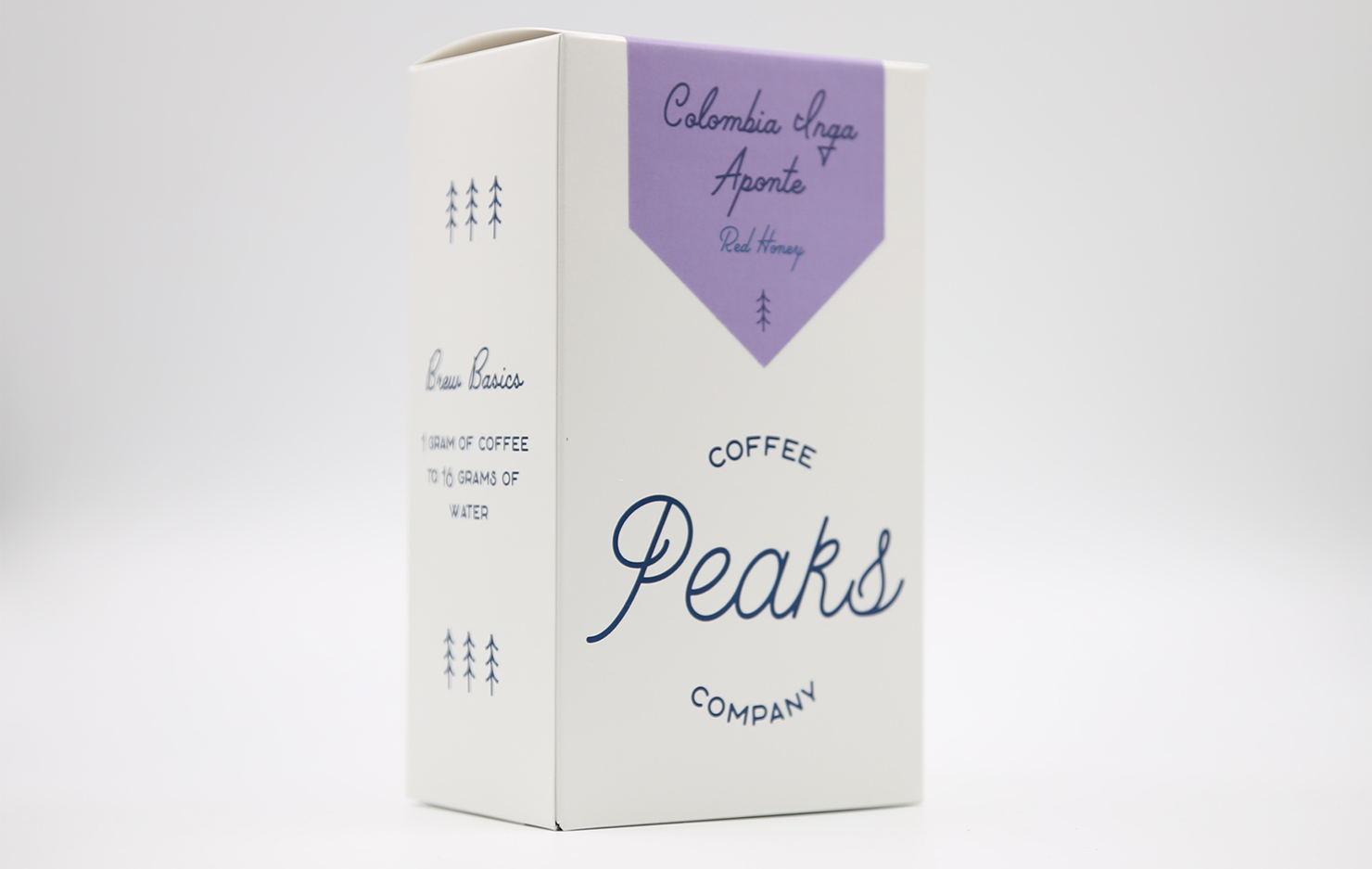
Coffee Design: Peaks Coffee Company In Cazenovia, NY

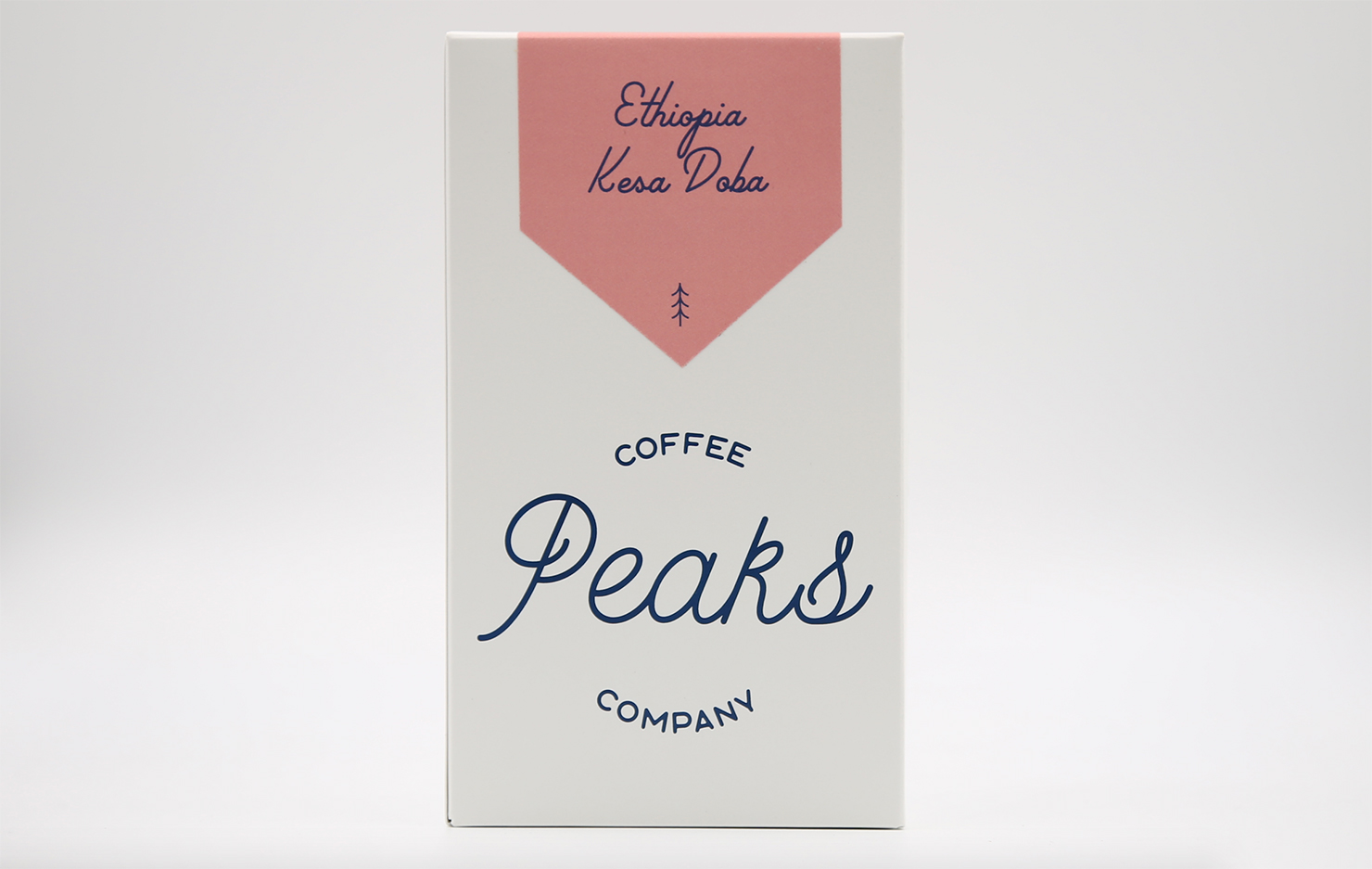
About 7,000 people call Cazenovia, New York home including Sam Bender and Kelsey Ball, founders of Peaks Coffee Company. Peaks Coffee Co. opened in the Summer of 2015 and last October debuted a fresh new look for their coffee offerings. They worked with designer Lottie Caiella to give the branding an Upstate New York camp vibe. We talked to Sam Bender to learn more.

Tell us a bit about Peaks Coffee Co.

Our company was founded in July 2015 between myself (Sam Bender) and Kelsey Ball (my now wife as of this past fall). Both Kelsey and I suffer from anxiety and depression. It was so challenging for Kelsey in her senior year of high school, that she had to be placed on homebound learning. One day when her mental health was at an all-time low, her dad told her a phrase we’d both come to lean on; that life is about enjoying the peaks and enduring the valleys.

Having been shaped by both our peaks and valleys, our goal of this company began as a desire to create a place where people of any and all backgrounds can enjoy a great cup of coffee with a friend.

We wanted to fill a hole in the market with roasting as well. Over the past few years we have started working with a roasting consultant, and establishing partner producers in Colombia through Campesino Specialty Coffee. Our goal is to source seasonally and roast fresh.

When did the coffee package design debut?

We spent roughly a year (from concept to execution) working towards our rebranding. We launched our rebrand on our second birthday, October 3rd, 2017.

Who designed the package?
 
Our rebrand was done by our good friend and self-taught graphic designer, Lottie Caiella (@thecaiellas). She is based out of Upstate herself and in spending time in both Washington state as well as LA, she is as equally passionate about delicious coffee as we are. She’s been known to infuse most of her designs with a classic Upstate NY feel; pine trees and the like, and as our passions have always been in alignment she was a logical choice to help us translate our vision for the rebrand into something truly us.

What coffee information do you share on the package? 

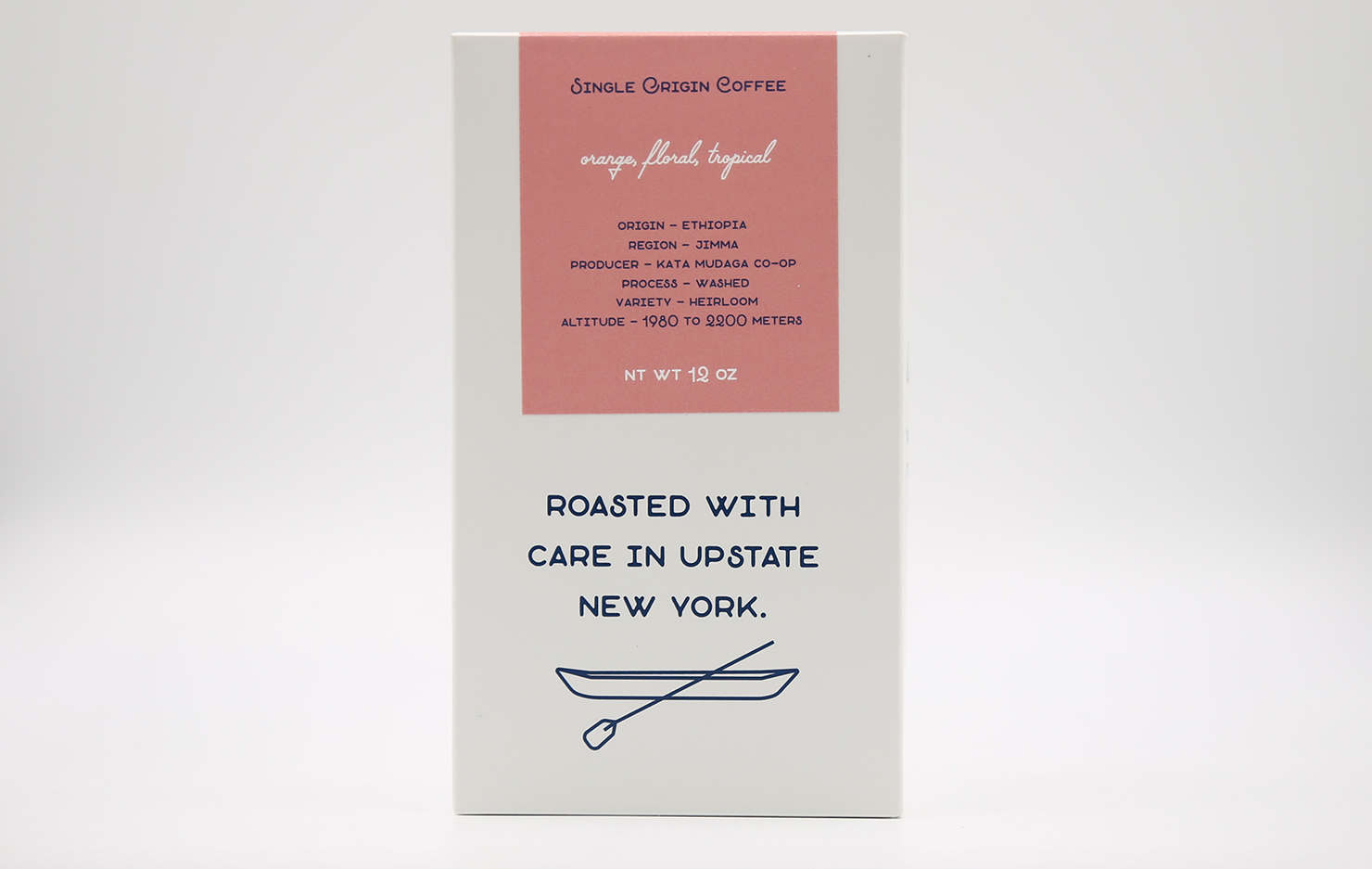
You can find the basics (our logo and information specific to each coffee) as well as our standard brew recipe and our mantra across each box (with no shortage of pine trees too, of course). We do our best to customize our labels to match each coffee’s vibe (color-wise), and they display the tasting notes, origin, producer, process, varietal, and altitude of each coffee. To keep things fun, we continued our branding on the inside of the box which is a sweet little surprise when folks crack the box open after they’ve taken it home.

What’s the motivation behind that?

By nature (excuse the pun) we are a product of Upstate, NY— therefore we inherently have a somewhat camp-y vibe. However, we are still working every day to advocate for our product and industry in this part of the country as a legitimate product. When we rebranded, we wanted our product to evoke our modern camp vibes while representing quality and care.

What are some of the improvements made in the packaging?

When we started out, we were a tiny roasting company. This meant we were hand stamping all of our bags and could afford to do so. We used brown Biotrē bags, stamped, and printed our labels in house. We were small enough to do a few packages and distribute them around town.

Our old packaging was relatively fragile and did a poor job communicating who we are as a company or perhaps more importantly, what sort of flavors and experiences lied inside. Not only did we overhaul the visual components, but we wanted our new package to withstand being tossed into your backpack for a drive up to Maine.

As we transitioned into becoming primarily a wholesale business, we needed to streamline our production. We now use custom professionally printed boxes and labels.

We wanted to create a product for consumer and business alike that when they looked at a package from Peaks, they knew what our aesthetic and mission was right away without having to be in our shop.

Why are aesthetics in coffee packaging so important?

Since prioritizing communicating our brand via our packaging, we’ve seen across the board an overwhelmingly positive response from customers both in our shop as well as at stockists’ businesses. We always felt like aesthetics were important to us, but have truly learned a great deal in what that actually looks like in this year since rebranding. If we neglect putting as much care into the visual representation of our product as we do in actually sourcing and roasting amazing coffee, we’ve failed to do a complete job.

Where is the box manufactured?

The box is currently printed by The Mid-York Press in Sherburne, NY. All of the board comes from GP Mills in Baton Rouge.

For package nerds, what type of package is it?

The boxes are on .018 SBS (Solid Bleached Sulphate). They are PEFC, SFI, FSC certified. These cartons were coated with a Matte Coating which provided the flat finish and the textured surface.  The carton was printed on our Xerox Igen 150 using Matte Dry Ink which is FDA approved for consumable goods.

Is the package recyclable/compostable?

The packaging is 100% recyclable.

Where is it currently available?

Our packaging is currently available at our retail location in Cazenovia and around the Syracuse region with our partners. Soleil Cafe (@soleil_cafe) and Flour and Salt Bakery (@flourandsalt) are two well known retailers in the local area. We also work with multi-roasters out of state and they will pick up some cases to sell. You can also buy online at www.peakscoffeeco.com.

Company: Peaks Coffee Co.
Location: Cazenovia, NY
Country: United States
Design Release: October, 2017
Designer: Lottie Caiella 

Zachary Carlsen is a co-founder and editor at Sprudge Media Network. Read more Zachary Carlsen on Sprudge.

The post Coffee Design: Peaks Coffee Company In Cazenovia, NY appeared first on Sprudge.


from RSSMix.com Mix ID 8200593 http://sprudge.com/coffee-design-peaks-coffee-company-in-cazenovia-ny-133186.html

How to Run SCA Courses in Producing Countries: A Checklist

Producing countries could be the future of specialty coffee: they have the farms, the coffee shops, the roasteries, the passion and dedication to drive our industry forward. But they’re arguably also where SCA training is most in demand – and where it can have the biggest impact.

I’m a travelling freelance Authorized SCA Trainer and the Founder of Karibu Kahawa Camps, which provides affordable SCA education in East Africa. If you’re thinking of providing SCA training at origin, I encourage you to do it. Let me tell you why – and I’ll also share my checklist for preparing.

You might also like How Training Cuppers Supports Honduran Specialty Coffee

coffee trainingSCA training with Women in Coffee Ethiopia and Asli Yaman of Kimma Coffee. Credit: Régine Léonie Guion-Fírmin

Why Are ASTs Needed?

As an Authorized SCA (Specialty Coffee Association) Trainer (AST), I’m qualified to teach a variety of SCA courses. And as a traveller trainer, I must be ready to run coffee courses anywhere with what I have available.

But why am I needed? Especially when more and more producing countries have Q graders?

Q graders are certified coffee cuppers, meaning they can assess the quality of a coffee and also run assessment courses. However, an AST runs training courses. Both have their importance and are needed in producing countries.

A Q grader can help coffee producers understand the quality of their coffee and where it needs improvements. An AST can help a producer understand how to make those improvements. They also train baristas and café owners, roasters, and more – something that producing countries need to boost internal consumption of specialty coffee, creating more demand for the product.

However, while Q graders are quite well-represented in producing countries, ASTs are often lacking – and it’s at origin where their courses are often needed the most.

Remember that coffee producers are always seeking more knowledge, not just for themselves but also so they can transfer this knowledge to their children, who, very often, leave the coffee farming life behind because it’s too hard to make a profit.

BaristaEdward Gómez, Owner of specialty coffee shop Café Con Alma, after SCA training. Credit: Régine Léonie Guion-Fírmin

What Should You Do Before You Fly?

Get vaccinated. Yellow fever is one of the most important ones, depending on your destination. Take Kenya: if you arrive overland during the rainy season, you won’t be allowed to enter without a certificate of vaccination.

Get good insurance that’s valid in the countries you’re going to – accidents can happen anywhere!

Get a bank card you can use abroad. Whether it’s a prepaid cash card, Visa, or Mastercard, you want something that will be accepted by most ATMs and with minimal charges. (Or you can get traveller’s cheques, if they’re still in use where you’re going).

Get enough luggage! As you may need to bring your own equipment, choose the airline that offers the biggest luggage allowance and/or most affordable extra luggage.

making espressoSCA training in Kenya with Embu University and Rafael Mlodzianowski. Credit: Régine Léonie Guion-Fírmin

What Do You Need to Pack for Your Courses?

Think plastic! It’s much more transportable and durable than either glass or ceramics. Put your aroma vials in plastic boxes, bring plastic cupping bowls, plastic V60s…. you get the idea.

Think carefully about the coffee beans you bring. Generally, producing countries don’t import coffee from other countries, so if you want to expose your students to different origins and potentially different varieties or processing methods, you will have to bring that coffee with you.

Barista toolsPlastic cupping bowls, aroma vials, and more. Credit: Régine Léonie Guion-Fírmin

Don’t Forget!

Language: You may need a translator, whether it’s for Spanish, Swahili, French, Cantonese…

Respect: You have been invited to a different culture. Be humble. In some cultures, men might be asked to not be alone with women. Or women may have to wear a head wrap.

Get involved: One of the best ways to start is to do it gratis. In coffee-producing countries, most of your students won’t be able to afford SCA courses. However, they will be happy to offer lodging, food, and green beans for your services. Later, they can become great connections at origin, introducing you to new students and involving you in their coffee projects.

And finally: donate more, earn less, gain a lot!

coffee producerRégine, the author, with her student Angie Molina Ospina on Finca La Noreña in Tolima, Colombia. Credit: Jhon Espitia

Follow this checklist to help you prepare to deliver valuable training all over the world. Remember: the future of specialty coffee is at origin – and we can help nurture its growth.

Enjoyed this? Check out How Training Cuppers Supports Honduran Specialty Coffee

Written by Régine Léonie Guion-Firmin, Freelance AST and Founder of Karibu Kahawa Camps.

Perfect Daily Grind

Want to read more articles like this? Sign up for our newsletter!

The post How to Run SCA Courses in Producing Countries: A Checklist appeared first on Perfect Daily Grind.


from RSSMix.com Mix ID 8200593 https://www.perfectdailygrind.com/2018/05/how-to-run-sca-courses-in-producing-countries-a-checklist/